

Pork Ribs Are Far More Flavorful When Paired With This Asian-Inspired Sauce
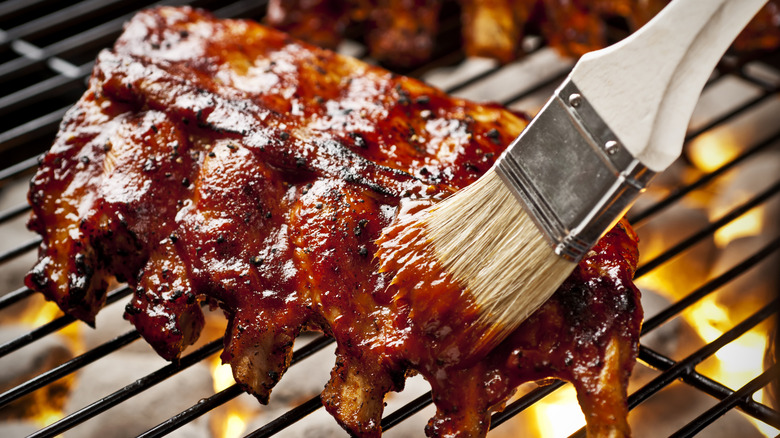
Juicy, fall-off-the-bone pork ribs are more than just a summertime barbecue staple. While they're a natural fit for a smoky grill and a warm-weather cookout, ribs are also an ideal canvas for bold flavors all year long — and few ingredients complement them better than gochujang sauce. You might even call it a perfect pairing.
So, what is gochujang exactly? Super pungent, savory, and ever so slightly spicy, gochujang is a condiment we love to keep stocked in the refrigerator. TKorean chile paste can be incorporated into everything from ramen and baked pasta dishes to fried rice and tacos, but it might just be at its best slathered over a meaty and hearty protein, like a rack of pork ribs.
Made from gochugaru (dried Korean red chile flakes), glutinous rice, fermented soybeans, barley malt powder, and salt, gochujang is thick and intensely flavorful, with a vibrant red hue that permeates whatever dish it touches. The fermented soybeans lend dishes a funky, deeply savory umami, while the glutinous rice brings a subtle sweetness that helps balance its heat. When mixed with a few other ingredients to create a sauce, magic happens on the grill: Gochujang's natural sugars caramelize over the heat, creating a glossy coating on the pork with layers of sweet, savory, and spicy flavor.
How to deepen the flavor of your gochujang sauce
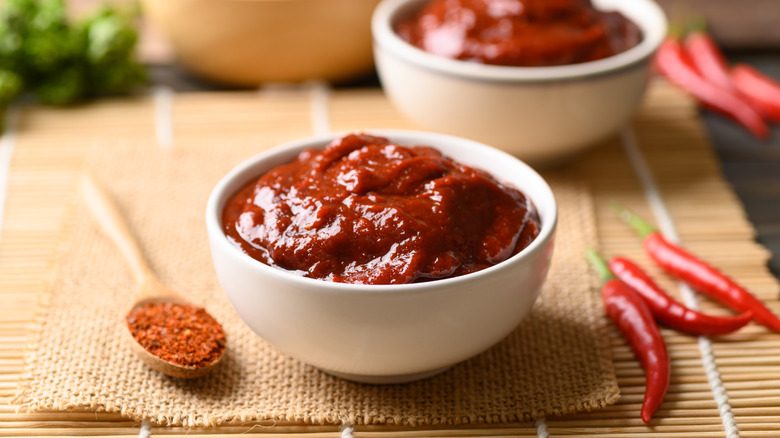
Friendly reminder: Gochujang is a paste and not a sauce. So when you're planning to slather it over a rack of ribs, you'll want to combine it with a few complementary ingredients like ketchup, brown sugar, rice or white wine vinegar, soy sauce, or Dijon mustard, to create the desired flavor profile you're after. Whisk everything together and simmer until the mixture thins to a slatherable consistency. (First-timers can direct their attention to our super-simple gochujang pork marinade recipe.)
From there, you can customize your gochujang-based sauce with additional ingredients. Honey brings a sweet-and-spicy balance to gochujang, while soy sauce further deepens its savory umami. Fish sauce, Worcestershire sauce's secret ingredient, also adds another layer of umami, enhancing the flavors of the meaty pork. Freshly grated garlic and ginger — and this is not an or situation — add brightness to the gochujang. Acids such as apple cider vinegar and lime juice help cut through the richness of the pork and the spice of the gochujang, keeping each bite balanced.
The result is a rack of ribs that's smoky, sticky, spicy, and deeply satisfying whether it's cold or hot out — proof that you don't need to wait for summer to fire up the grill.