

Why Storing Your Eggs Pointed End Down Is A Game Changer
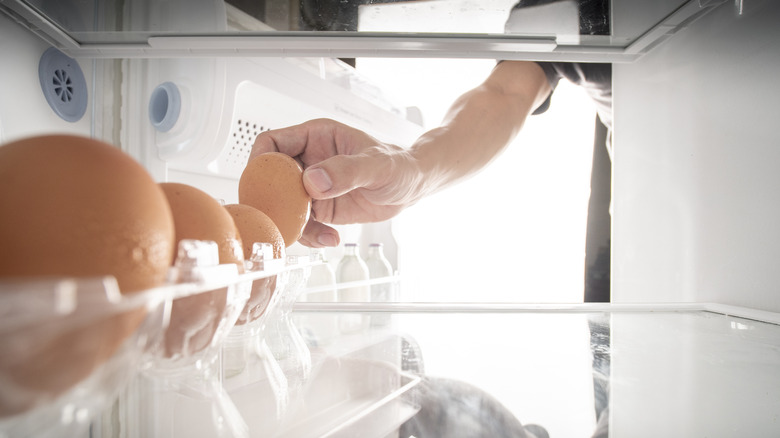
Whether you prefer them sunny-side up, scrambled, poached, or folded into a light, fluffy omelet, eggs are a staple breakfast food for a good reason. They're packed with nutrients, delicious, and incredibly versatile. Yet, getting the most out of them begins long before they hit the pan, which means proper storage is crucial. And, as it turns out, storing them with the pointed side facing down can affect, or rather, extend their shelf life.
As strange as it might sound, there's actual science behind this little kitchen hack. It all comes down to the egg's anatomy. An egg has two distinct ends: a narrower, pointed end, as mentioned above, and a wider, rounded one. The latter has a tiny pocket of air known as the air cell, which expands with time. Besides air, it can also collect bacteria through the eggshell's pores.
Since the air cell is, well, mostly filled with air, it's lighter than the egg white and yolk and tends to move upward. Hence, with the egg stored rounded end down, the air cell's movement toward the top could transfer bacteria to the yolk. But, if stored the other way around, the air cell will simply stay at the top, without causing any unnecessary motion. In addition, the egg's structure will remain intact. Of course, this easy storage habit won't make your eggs last indefinitely. But, if they're going to sit in the fridge for more than two weeks, it may be worth a try to preserve their quality.
Orientation matters, but don't forget the other storage basics
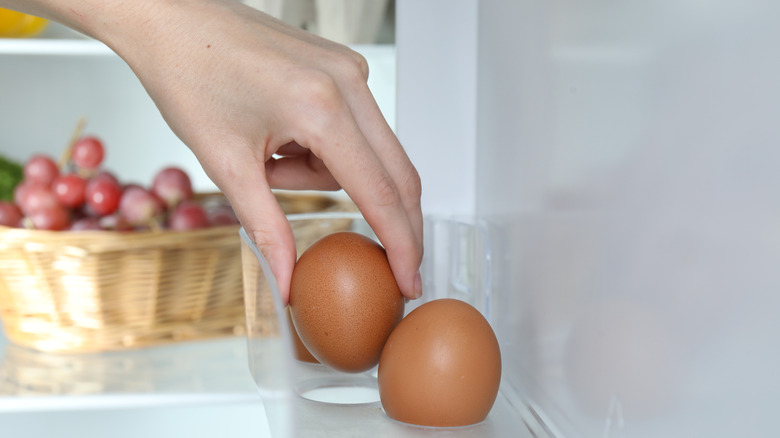
You could try this trick with both supermarket eggs and those fresh from the farm. Just keep in mind that farm fresh eggs tend to have a longer shelf life to start with. They reach your home much faster and skip the long journey to supermarket shelves. That said, egg orientation isn't the biggest concern with your average egg carton. As a matter of fact, there are a couple of other factors that have a much greater impact on their lifespan.
Fresh eggs boast a thin protective protein coating known as the cuticle or bloom. With store-bought eggs, on the other hand, this layer is washed away, which is why refrigeration is necessary. According to the FDA, fresh eggs should be kept in their original carton at 40 degrees Fahrenheit (4 degrees Celsius) or colder. However, if you're not sure how cold your fridge is, a thermometer can provide an answer. Typically, 35 to 38 degrees Fahrenheit (1.7 to 3.3 degrees Celsius) is the temperature sweet spot to keep your refrigerator at.
Ultimately aim to eat your eggs within three weeks of purchase. This will reduce the chances of bacterial exposure, particularly Salmonella, which can lead to food poisoning. It's also best to store them on a refrigerator shelf rather than in the egg tray on the door. This area is repeatedly exposed to warm air every time you open the fridge and can cause them to spoil faster.