

For Creamy, Unforgettable Coleslaw, Add This To The Mix
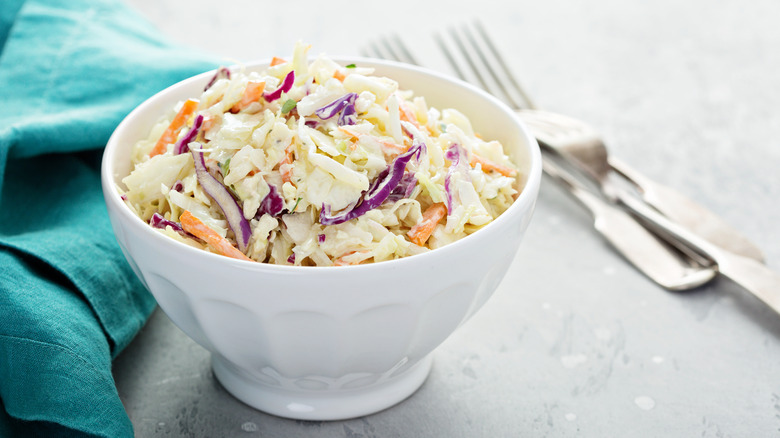
When it comes to the ultimate side dish, coleslaw just might take the crown. There's something truly impressive about how a few ingredients, like shredded cabbage, carrots, and a creamy dressing, can create so much flavor when mixed in the right proportions. Of course, with coleslaw, the creamier the final result, the better. One way to get there is to add sour cream to the dressing, rather than sticking with mayo alone. Tzatziki is another creamy option, and a simple way to put a Greek spin on coleslaw. But if you'd like an equally creamy result with a cleaner, tangier edge, give buttermilk a try. It's also lower in fat than sour cream and keeps the dressing's texture airy and light without sacrificing the creaminess. Plus, it has none of the additions as tzatziki, like garlic and cucumber, that can impact your coleslaw's flavor.
Despite its name, buttermilk doesn't actually contain butter. In fact, this dairy product gets its name from the liquid that remains after the milk is churned into butter. By contrast, most buttermilk available today is cultured, and you can even make it with two everyday ingredients: whole milk and an acid (including lemon juice or vinegar). This makes it thick, pleasantly tangy, somewhat similar to yogurt, and an outstanding addition to coleslaw.
Buttermilk can also make coleslaw fresher and lighter. Because it's mildly acidic, it will cut through the mayo, and add a brighter, lactic tang to the dish. On top of that, it will thin out the dressing while keeping it creamy enough to coat all the ingredients evenly. And perhaps the best part about it is that working it into your coleslaw is incredibly easy. You just need to know the right ratio.
Take a look at the base of your dressing when adding buttermilk
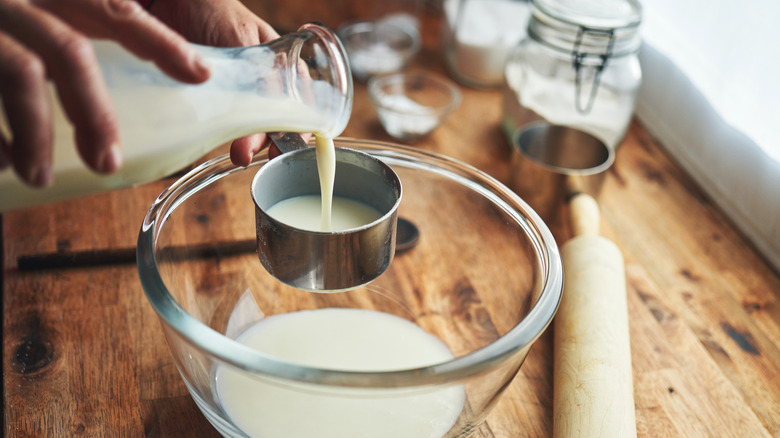
Before reaching for buttermilk, it's crucial to understand which types of coleslaw recipes it will work best with. Buttermilk pairs beautifully with creamy, mayo-based slaws, particularly classic Southern-style versions (where it is already a common ingredient). Feel free to experiment with the ratio based on your preference. A 1:1 mix of buttermilk and mayo is a great way to add tang to your coleslaw while keeping it balanced. At the same time, if you're after a runnier dressing, you could go with a 2:1 or 3:1 buttermilk-to-mayo ratio. In such cases, you may want to consider cutting back on other liquids to keep your slaw from turning too watery. Another trick is to salt the cabbage beforehand to draw out the excess water. Similarly, for a thicker, fattier slaw, use more mayo.
On that note, vinegar- and oil-based versions are a totally different story. The reason comes down to how dairy proteins react to acid. Buttermilk has a pH of around 4.4 to 4.8, which means that adding more acid can naturally lower it further. As a result, the milk proteins present in buttermilk (casein, whey protein, and MFGM proteins), will lose their stability and change their shape through a process known as protein denaturation. Once unfolded, the proteins will start sticking together, forming clumps, and cause the buttermilk to curdle. That's why you might want to avoid adding buttermilk to recipes like this spicy peach coleslaw, which gets its tang from a vinegar- and oil-based dressing.