

Don't Skip This Crucial Step If You Want Perfectly Juicy Fried Chicken
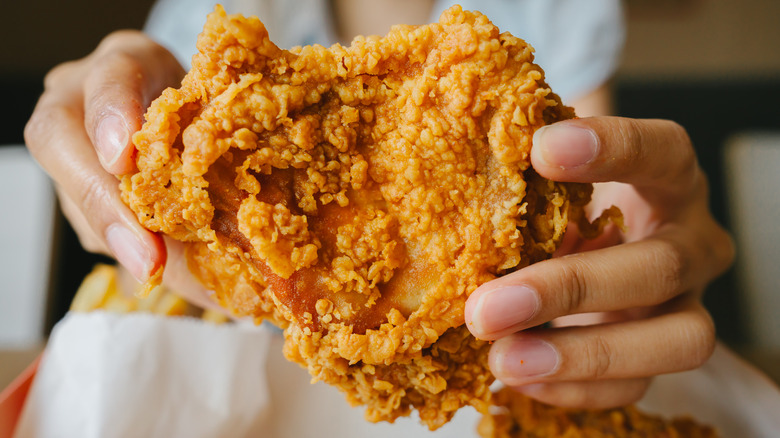
There's something incredibly satisfying about homemade fried chicken. Science says that's because comfort foods trigger the release of feel-good hormones, which can create a sense of happiness. It's tender and juicy on the inside, while perfectly golden-brown and crunchy on the outside, and hits all the right spots. Still, even simple fried chicken requires a little know-how to reach the desired level of juiciness. That's why tenderizing the meat before it hits the oil is the one step you should never skip.
There are a few reasons why tenderizing chicken is crucial. For starters, it breaks down all the tough muscle fibers and connective tissue and helps the meat soak up more flavor from marinades and seasonings. Additionally, it makes the meat less chewy and leads to a better texture, which results in a more enjoyable bite. What's more, it also creates a more even surface. This, in turn, allows the chicken to cook evenly and consistently. It also prevents the edges from drying out before the center is done, which means you won't be left with undercooked thicker parts and overcooked thinner ones.
Tenderizing can also increase the chicken's surface area. That means more room for the flour, batter, or breading to stick and results in a crispier, crunchier fried chicken. This also speeds up the cooking process by promoting even heat distribution.
Find the tenderizing method that suits you best
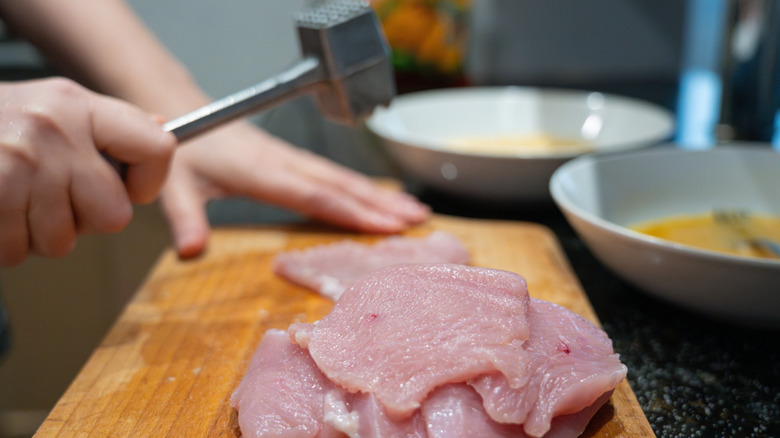
One of the most common tenderizing methods involves pounding the chicken. This is also the secret to a quicker, more even cook. Cover the chicken with plastic wrap or parchment paper, set it on a cutting board, and gently pound the thicker areas with a meat mallet. If you don't have a mallet, a rolling pin or even a heavy pan can also do the job. Make sure to work from the center to the edges and avoid using too much force.
Pounding may be one of the fastest and easiest methods, but a marinade can be an equally good tenderizing option if you have more time to spare. Marinades typically contain an acidic ingredient, whether lemon juice, apple cider vinegar, buttermilk, or wine. The acids can soften the chicken by breaking down the proteins. That's why, for instance, Mark Bittman's chicken tenderizing hack starts with a boozy twist: poaching it in white wine.
You can always soak the chicken in a salty brine. The meat will hold onto more moisture and come out extra flavorful and juicy when cooked. This usually takes about half an hour. For a quicker option, submerge the chicken in a baking soda solution for around 15 minutes. Finally, if want to try something different, turn to papaya, kiwi, or pineapple juice. They all contain useful enzymes that can tenderize the chicken.