

Where Does Aldi's Salmon Come From? Why Some Customers Were Disappointed By The Truth
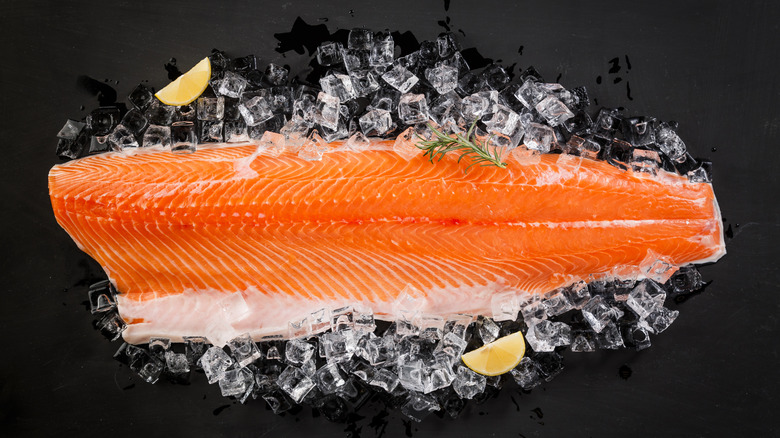
Germany-based Aldi has become one of America's favorite grocery chains. Widely known for its collection of private-label brands mimicking well-known products at lower price points, Aldi offers an untraditional shopping experience that almost always manages to stick the landing. Every department carries low prices, including its seafood, which draws an endless stream of customers for products like the Specially Selected Snow Crab Clusters, which was named a 2025 Product of the Year in the seafood category. But the question still remains: Where exactly does Aldi get its salmon from? All of the information can be found on the company's website with a little search.
Aldi's seafood buying policy applies to all seafood products, whether it be frozen, chilled, or shelf-stable, and all seafood is marketed as sustainable. Although the chain has faced investigations and customer backlash in the past regarding its sustainability, Aldi says it follows specific best practices for wild-caught seafood, including maintaining abundant, well-managed fish populations; improving traceability throughout the entire supply chain; and the exclusion of illegally caught fish, among many other requirements. The policy is reviewed on an annual basis, and revised if necessary — which may explain why shoppers might be surprised by the sudden change of a favorite product.
The brand also maintains an Ocean Disclosure Project page — a database listing every fishery from which its private-label seafood products are sourced that's updated annually. The database, launched by the Sustainable Fisheries Partnership in 2015 and maintained through FishSource.org, indicates that some of Aldi's sockeye salmon is sourced from Alaska's Cook Inlet, Annette Islands Reserve, and Bristol Bay districts.
Tracking how Aldi's seafood is sourced
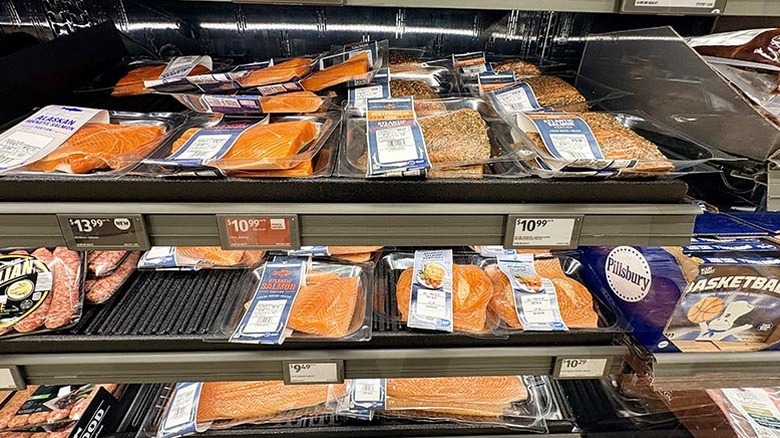
Although the database does not identify specific fisheries, Alaska is widely regarded as the "gold standard" of sustainable fishing due to its strict policies, labor laws, and regulations. Aldi's pink salmon is also sourced from Alaska at Prince William Sound, as well as from Iturup Island Sakhalin in Russia.
Aldi's salmon sourcing has had a somewhat slippery slope in the past thought. In 2017, the company faced an investigation over seafood products imported from China that were allegedly processed by North Korean laborers. Then, in 2021, GMO/Toxin Free USA filed a lawsuit claiming that Aldi's farmed salmon was sourced from industrial fish farms in Chile that used unsustainable and environmentally destructive practices, in addition to toxic chemicals including ethoxyquin (banned in the European Union). The lawsuit was eventually dismissed in 2024, with Aldi stating it would revise the labeling and marketing of its fresh Atlantic salmon, and transition its salmon products to facilities certified by the Aquaculture Stewardship Council. Some customers were disappointed with the truth, but Aldi seems to have shifted practices since then.