

Where Do Costco's Red And Green Grapes Come From?
We may receive a commission on purchases made from links.
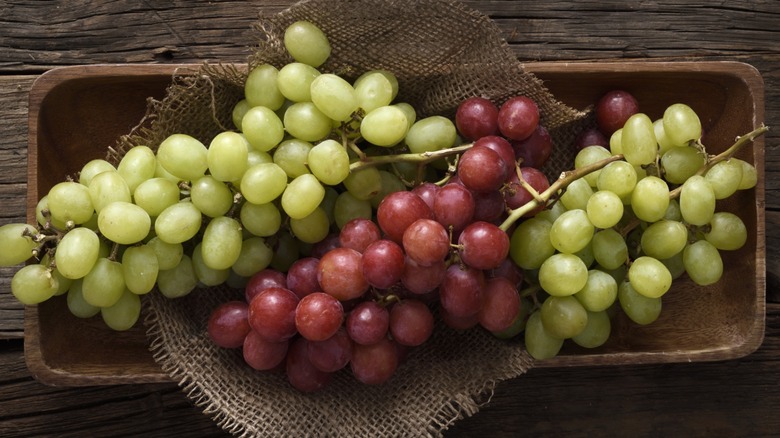
Costco sells both green and red seedless grapes in a 3-pound package year-round. That's good news because the tiny fruit packs major health benefits in addition to being a classic on-the-go snack. But consistently seeing grapes throughout the seasons may cause you to wonder about Costco's source for grapes. The answer is difficult to pin down precisely, but the company lists eight countries: the United States, Mexico, Chile, Peru, Spain, Brazil, South Africa, or Egypt.
Depending on the season and the brand name of the grapes you buy from Costco, they can originate in any of these eight countries. It's similar to the way Costco sources its strawberries, which come from a variety of suppliers in different regions, depending on the growing season. You can still figure out where your grapes came from by looking at the package. Because of the USDA Country of Origin Labeling laws, grocery stores are required to list the country of origin for fresh fruits, vegetables, meats, and seafood. To find where the Costco grapes you're thinking of buying came from, just look on the label of that particular package. If it's not there, you should find it on a nearby display or sign. As the grapes originate from a variety of countries and growers, you may discover differences between the fruit from one region to the next.
Why Costco grapes may taste different from one carton to the next
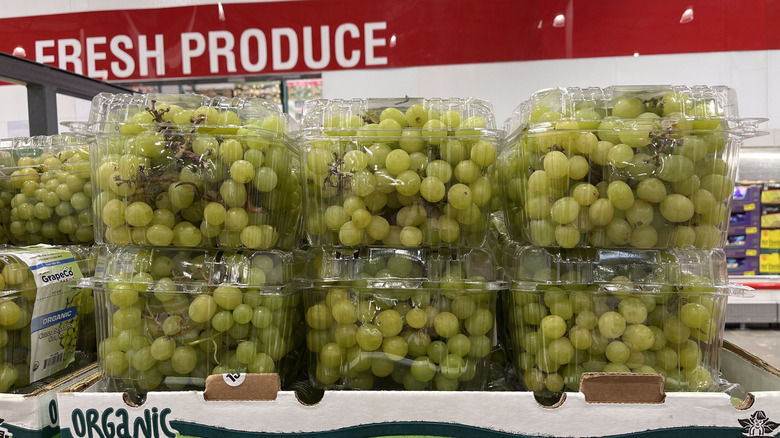
The variation in sourcing for Costco grapes means there can be different growers, packagers, and distributors for different regions and brands. Because of this, some grape batches may be sweeter, plumper, or crisper than others. One Costco reviewer of red seedless grapes from Mexico mentioned that Chilean and Brazilian grapes taste sweet to them, while the grapes from Mexico tasted more sour. This doesn't mean that Mexican grapes are inherently tart, though. Sourness can occur if a batch happened to be harvested too early, not allowing the sugar level to mature. Different varieties of red (or green) seedless grapes also have different tartness levels.
On Reddit, one Costco customer comments that there's so much variation among grapes there that it's hard to know which carton will be best. One commenter replies, "I look at the country of origin and I pay attention to the season." They may have a point. According to a paper from Horticulture Research, the diversity of tastes in grapes can be traced to the composition and concentration of volatile compounds, chemicals that influence flavor. These compounds are determined by genetics, species, growing location, climate, and how the grapes are cultivated. This means that Costco grapes grown in different regions of the world, with variations in climate, soil, and cultivation methods, could have a distinctive flavor.
It's similar to how the soil in a specific wine growing region affects the flavor of wine, giving each one a unique terroir. So, the next time you pick up a bunch of red or green grapes at Costco, you may find that their flavor is unique, depending on the season, variety, and country of origin.