

Roasted Potatoes Get Absurdly Flavorful When You Add This Spicy Canned Sauce
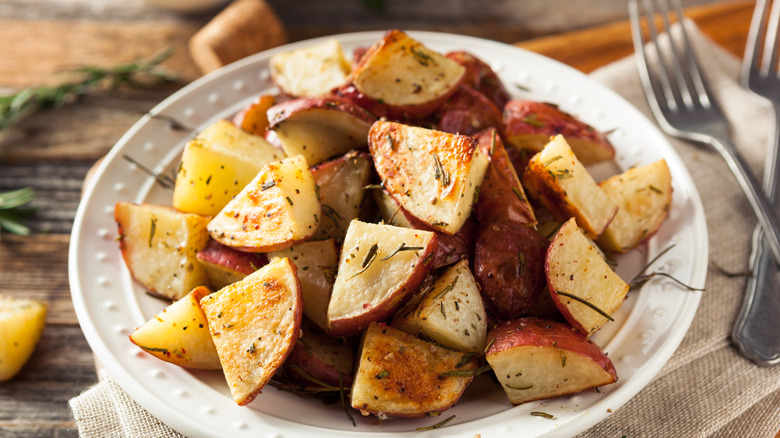
Originally cultivated in the Andes Mountains over 8,000 years ago, potatoes have since migrated all over the world, embedding themselves in culinary traditions throughout Europe, Asia, and North America, and it's easy to understand why. Potatoes are among the tastiest, most versatile crops on the planet, with roasted potatoes being the biggest reason why you should always have a can of chipotles in adobo in your pantry. Crisp, fluffy roasted potatoes are especially delicious smothered in adobo sauce, as their comforting starchiness is the perfect vehicle for such a big flavor.
Like potatoes, Mexican adobo also has a storied history, coming from a fusion of ingredients and cooking techniques that occurred during Spain's colonization of Mesoamerica. Named for the Spanish word adobar, which means "to marinate," this blend of rehydrated dried chilis (often guajillo or ancho) with lime juice, garlic, onions, cumin, and various herbs is most frequently used to marinate shrimp, pork, and other proteins in preparation for making tacos or soups. The sauce is usually thick and fairly dense, with a rich, dark red color.
These strong, deep flavors also pair beautifully with golden oven-roasted potatoes. Split open to reveal their steaming interior, roasted potatoes soak up all that warm, spicy, complex flavor from the adobo, taming its sharp edges ever so slightly. The potatoes' savory earthiness also complements the complexity of this sauce, creating a balanced dish where both main ingredients elevate each other.
The art of applying adobo to your potatoes
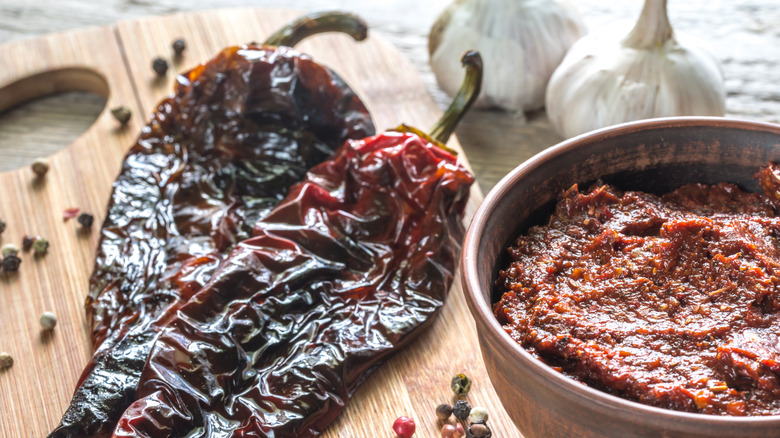
Though you can certainly make your own adobo sauce at home, it's also fairly common in most grocery stores, sold alongside boxes of taco shells and jarred salsa. Its density and big flavor make it perfect for building delicious 3-ingredient marinades, but can be a bit problematic when trying to evenly coat roasted potatoes. Luckily, there's no rule against thinning it with a little broth (beef and chicken are both delicious) or even water to make it easier to drizzle over your spuds.
Thinned or not, we also recommend warming your adobo sauce through before tossing it with your potatoes, as the heat helps to bloom the flavors inside and soften and caramelize any harsh acidity remaining from the astringent, spicy ingredients it contains. You can also toss raw potatoes in adobo sauce before roasting them, to caramelize the adobo and marry the spices to the starchy potatoes at the same time. Just be sure to use a lower temperature (around 400 F) and cut your potatoes small, so they need less time in the oven. Otherwise the adobo could scorch.
Normally, it's a good idea to season every layer of a dish, to build flavor, but adobo is so complex and flavorful on its own that you can get away with minimal seasoning on your potatoes. Just a dash of ordinary salt and pepper should do, as they'll enhance the other ingredients without overpowering them.