

Make Lobster Rolls For A Fraction Of The Cost With This Affordable Seafood Swap
We may receive a commission on purchases made from links.
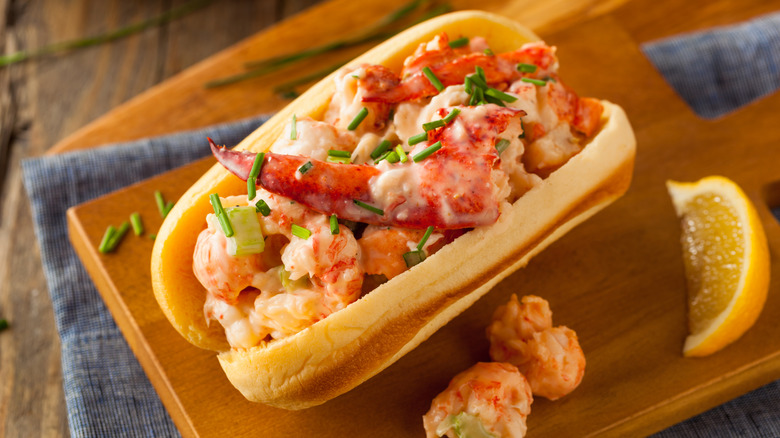
If you're craving a rich, buttery lobster roll but fresh lobster feels out of the budget, there's a decently satisfying alternative that won't break the bank: imitation crab. At about $1.50 to $5 per pound for imitation crab (depending on which kind you buy) versus the roughly $30 to nearly $70 per pound you might pay for various types of fresh lobster, it's clear that imitation crab offers a delicious and financially responsible choice. Additionally, there are plenty of tips for making the perfect lobster roll that you can lean on to make this sandwich taste a little closer to the real thing.
The key, here, is understanding exactly what imitation crab meat is and how to cook it properly. Generally made from fish paste mixed with crab extract, imitation crab meat's texture is slightly chewier than either real crab or lobster, with a milder flavor. However, these things can work in your favor when putting together your rolls, as it'll easily absorb any seasonings you pair it with, especially if you give the crab-mayo mixture time to rest so the flavors can blend and bloom.
Since it also comes fully cooked and is safe to eat right from the package, you can simply chop it up, mix it with your favorite blend of mayo, lemon juice, and Old Bay, and stuff it into a buttered and toasted roll. You can also give imitation crab a more authentic flavor with a light simmer in garlic butter, as it'll soak up the fatty richness of the butter and astringence from the garlic, giving it a touch of the lush complexity associated with lobster.
Giving your imitation crab rolls gourmet treatment
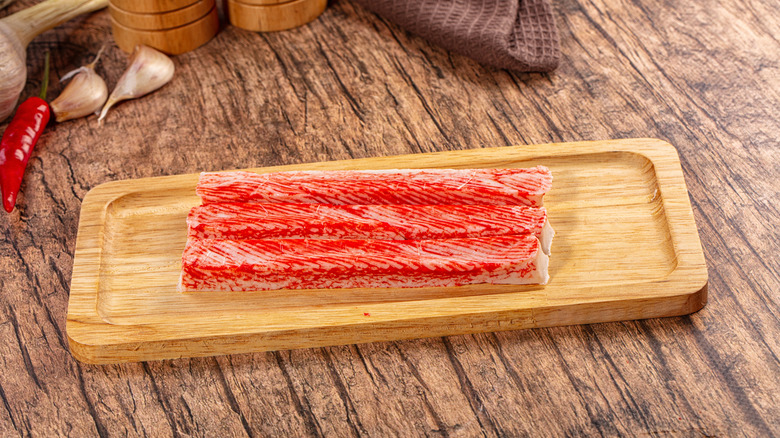
Though you don't have to saute your imitation crab if you prefer a lighter, subtler flavor, giving it a toss in a pan with some fat and seasonings is the best way to make it taste more gourmet. In addition to (or in place of) garlic, you can also use dried spicy pepper flakes, paprika, onions, or dried herbs like tarragon to make the flavor more layered and complex. It's also fairly easy to find lobster extract such as Sasami Lobster Flavor Concentrate on Amazon and from other online retailers. Budget-friendly bottles are fairly small, but you only need a drop or two for a mellow, authentic lobster flavor.
Another way to make these sandwiches feel more fancy and like real lobster rolls is to avoid drowning the imitation crab in dressing. Use just enough mayo to hold everything together, focusing instead on things like bright lemon juice (and zest for extra freshness), fresh chopped cilantro and parsley, and seasonings. Fresh ingredients will also help curb the occasionally cloying sweetness of the imitation crab, bringing out its briny seafood undertones. They'll also help the sandwich taste more luxuriant overall.
The final component to pay close attention to is the bun. Soft, pillowy brioche is traditional, though an earthy, sweet potato bun will do in a pinch. Either way, buttering and toasting the interior of the bun adds crisp, toasty warmth to the sandwich that's practically required for seafood rolls, be they lobster or imitation crab.