

The Budget-Friendly Steak Cut Anthony Bourdain Preferred Over Filet Mignon

The late culinary celebrity Anthony Bourdain had so many colorful food takes that it's easy to overlook the kitchen pro's contributions to actual, practical home cooking. But for every shockingly strong opinion that Bourdain may have had on, say, club sandwiches, he also had a lot more actionable wisdom about omelets, pasta, and all manner of meats. In a Tech Insider clip posted to YouTube, for example, the multimedia personality eschewed filet mignon's virtues in favor of less fancy, more affordable sirloin.
Even while noting its tenderness, Bourdain says that the "boring and uninteresting" filet mignon prized by the public is an industry insider joke, shunned by chefs when they dine out. Second only to steak from the rib section, sirloin, instead, sourced from the cow's lower back, is just a better bet, he says, implying that sirloin occupies a figurative sweet spot between the most yielding but less flavorful cuts and the sometimes tastier but tougher selections. And unlike a lot of other super-spendy or hard-to-find items, sirloin is relatively affordable and reliably available at most local supermarkets or grocery stores.
Making sirloin steak at home
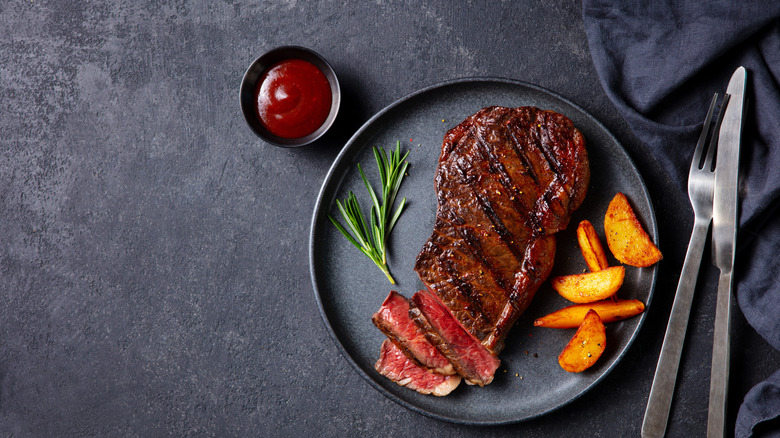
A standalone sirloin, from below the animal's ribs, should have a fair amount of marbling, a substantial but still yielding texture, and a notable bovine flavor. It's a pretty crowd-pleasing, middle-of-the-road cut of meat that performs well across different recipes and preparation methods. The stovetop is probably the quickest, easiest route to sirloin success.
It's always a good idea to keep things somewhat simple when working with a new ingredient. An au poivre or chimichurri is always lovely, for example, but you may want to keep it limited to the basics — salt, pepper, and a neutral oil – in the event of your first sirloin endeavor. Serendipitously, this makes dinnertime even easier. Believe it or not, opinions fly about how and when to use even these scant ingredients, but nobody will complain if you remove your steaks from the refrigerator, salt them, and let them sit at room temperature for about 30 minutes to lose their chill before cooking. Then crank a steak-optimized cast-iron skillet to high, oil the meat, and sizzle, flipping about every 60 seconds or so for the best finish. This can take as little as around six minutes total to reach medium-rare, and you can grind some pepper over the top once it's off the heat to avoid burning the spice. It's a pretty subtle effort for a steak approved by one of the food world's boldest stars.