

Give Salsa 10x The Texture And Throw Cabbage Into The Mix
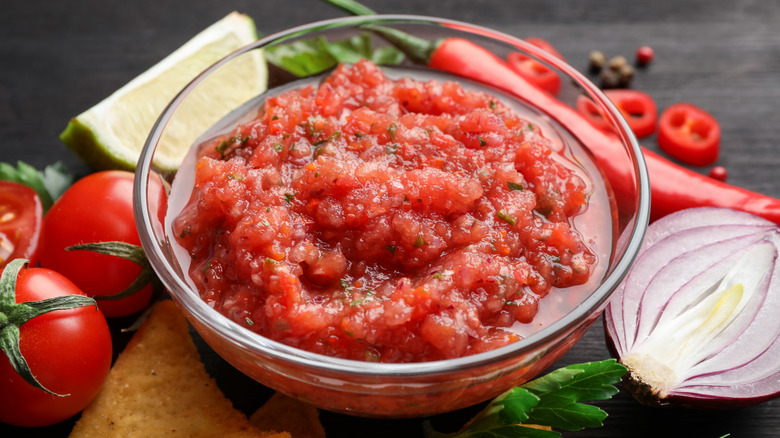
We all love salsa, whether it's blended or fresh like pico de gallo, but sometimes a homemade version can be a little too juicy. You know the type — the ones that threaten to slide off your tortilla chip or taco. Next time you have that problem, some finely chopped cabbage may be the unexpected rescue to reach for. Just a handful of very finely chopped green cabbage can give the final salsa some much-needed bite. If a handful doesn't feel like enough, you can lean all the way in and make a cabbage-heavy version with a 2:1 ratio of cabbage to tomatoes. And while red cabbage can work, green is usually a more failsafe option, because red cabbage tastes stronger and earthier than green. If you do go for red cabbage, taste test as you go to ensure it doesn't alter the flavor of your salsa too dramatically.
While cabbage is not a standard ingredient in a classic pico de gallo recipe – this Mexican staple is usually made from chopped tomato, onion, peppers, cilantro, lime, and salt — Mexican cooking is subject to plenty of variation depending on where you are. And you'll often see cabbage pop up in dishes that are served with salsa or pico such as tacos, quesadillas, burritos, and other regional Mexican street foods. There are many recipes online for cabbage-based pico and salsas, so we know the textures work together, it's just more of a modern variation than it is a traditional recipe.
The cabbage should be crisp, not soggy
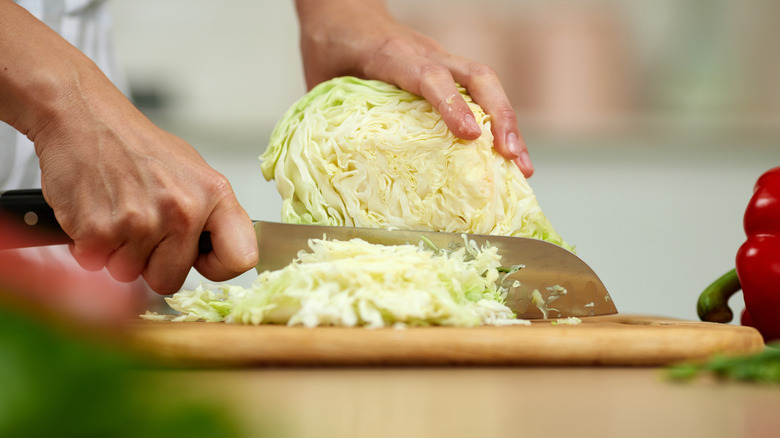
To make it all work for you, first let the tomatoes sit in some salt for a few moments. This allows them to release some of their juice, meaning there is less risk of the juice making the cabbage go soggy. Once salted, place the tomatoes in a colander or fine-mesh strainer for five to ten minutes until drained, then stir them through with the cabbage, onion, peppers, cilantro and a good squeeze of lime. And beyond pico de gallo, this trick can also work in chunkier tomatillo salsas, roasted tomato salsas, or even more fruit-forward salsa like mango-corn salsas served on salmon tacos. Cabbage can work in any kind of salsa that's built from soft and moist ingredients, lending an interesting change in texture.
Keeping the cabbage raw is essential because heating cabbage changes it quite dramatically, softening it and diminishing its crunch. Even chopping can effect cabbage's texture, so there's an argument to be made for chopping the cabbage with a sharp knife. Prep it as close to serving time as possible, as any time sitting in the salsa will undoubtedly cause the cabbage to soften.