

Unforgettable Scrambled Eggs Use This Type Of Cooking Oil
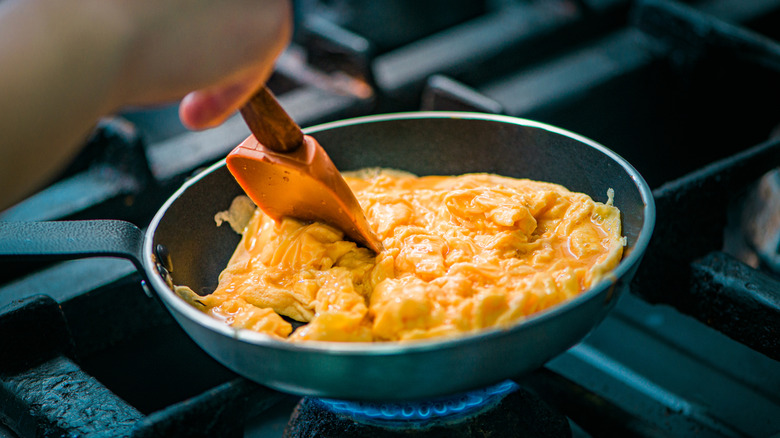
Scrambled eggs are a classic breakfast that never goes out of style. Soft, fluffy, and incredibly creamy, they're totally comforting and take only minutes to make. But when it comes to the secrets for making the best scrambled eggs, it's the little details that matter. The pan you use, some vinegar or lemon juice, and even how you beat them can make a big difference. Similarly, the type of oil you use will have an impact. According to Michelle Doll Olson, head chef and associate director of culinary at Hello Fresh, and a grande diplôme from New York's French Culinary Institute, the best scrambled eggs start with extra virgin olive oil.
The reason, Olson revealed, comes down to flavor. Extra virgin olive oil isn't just rich and buttery. It is also floral, herbal, peppery, and even slightly bitter. It'll give the eggs a whole new depth of flavor without overpowering their delicate taste. There is another reason why such an oil can beat other fats like butter. "As oil is 100% fat it heats up quickly and evenly compared to butter which contains water which can affect the cooking process of the eggs," Olson told Chowhound in an exclusive conversation. The result is super tender and silky scrambled eggs.
For the best results, using cold extra virgin olive oil is a must. Additionally, a smart hack is to add the eggs to the pan while the oil is still cold. A cold pan will prevent the proteins on the outside of the eggs from cooking too quickly before the center has a chance to warm through. "Then slowly turn up the heat and let the oil emulsify the eggs to get a smooth and silky finish," Olson explained.
The oil you choose can change the flavor of your scrambled eggs
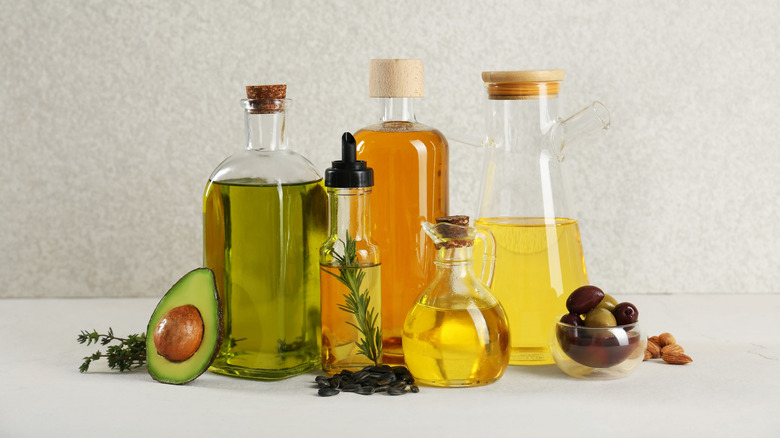
Michelle Doll Olson pointed out that the oil you choose can affect the flavor of your scrambled eggs. For instance, sesame or peanut oil will add a nutty punch to the eggs. Meanwhile, coconut oil will provide a hint of sweetness. Canola, grapeseed, and vegetable oils are far more subtle. In contrast, olive oil's taste can range from mild to intense, depending on the variety and its origin. That is why olive oil from other countries taste different.
For home cooks looking to take things up a notch, Olson recommended experimenting with flavored olive oils. Whether infused with herbs like rosemary or basil, spices like peppercorns and garlic, or even just citrus, infused olive oils will instantly upgrade your meal. "I personally love to use a good chili-infused olive oil to add a spicy twist to cut through the creaminess of the eggs."
With that in mind, Olson explained that different oils may alter the egg's taste, but not how they cook. "Unless you compare oil to fats. Fats like butter or lard can make food more rich and heavy, but can give you more color and browning to your food," she said. That browning is caused by the Maillard reaction. At high heat (over 280 degrees Fahrenheit), the proteins and sugars start to caramelize and develop a richer color. So if you're wondering whether opting for a flavored olive oil will change the texture of your eggs, it won't: "By using infused olive oils, you still get the same texture as normal olive oil but with an enhanced flavor," Olson noted.