

Never Suffer From Rubbery Pasta Again. Here's How To Prevent It
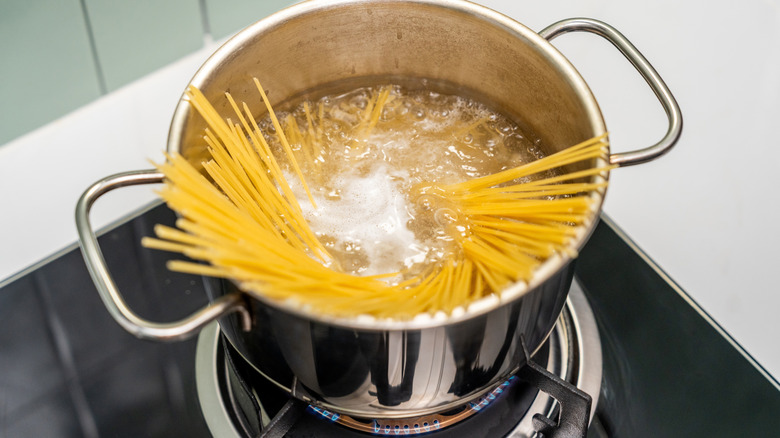
In the quest to achieve the perfect al dente pasta (and yes, al dente matters when it comes to pasta), there are a few things that could be giving it a rubbery consistency instead. Undercooking your pasta can do it, as can not using enough water, but if you're cooking your pasta properly, then it's time to consider what you might be doing after draining. Leaving pasta sitting in a colander for too long after draining can make the noodles dry out and develop an unpleasant texture.
As pasta cooks, its starch granules swell as they absorb water, while its gluten network helps the noodles hold their structure. Once you drain the pasta and leave it exposed to the air, however, it begins to cool and lose surface moisture, causing the noodles to become firm and rubbery and start to stick together. This is an issue more common with dried pasta than with fresh pasta because the former starts with much less moisture.
The easiest way to bypass this issue is to simply decide where the pasta needs to go next before you even drain it. If it's going into a sauce, reserve a little pasta water before draining, then add the pasta immediately. Combining pasta water with sauce can help loosen it as the noodles finish cooking in the pan instead of drying out in the colander. If you're making a cold pasta salad, then rinse it under cold water as soon as you can to stop the cooking process while removing some surface starch that could make the pieces stick together.
What if the pasta has to wait?
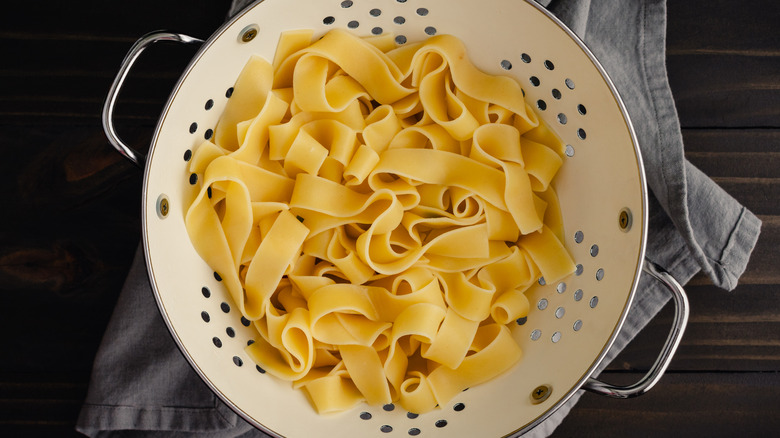
There may be times when the pasta has to sit for a while longer — maybe the classic Italian pasta sauce you're making needs a bit more time or perhaps your guests haven't even arrived yet. If that is the case, the goal shifts from adding it to the sauce as soon as possible to stopping the noodles from losing too much moisture while they wait for the rest of dinner to come together. Transfer them from the colander to a bowl and give them a drizzle of olive oil to prevent sticking before covering them, as less exposure to air will mean less drying out.
If you have a particularly long wait on your hands, then the approach needs to get a bit more proactive. If you're making pasta ahead of time, cool the pasta quickly with a rinse under the tap and store it in an airtight container in the fridge. This will help limit moisture loss while the pasta is being stored, but putting it in the fridge will always make cooked pasta firmer as its starch structure will inevitably change as it cools. When the time comes to reheat it, simply add a splash of water or sauce and this should help restore some of its prior softness.