

Does Peeling Boiled Eggs With A Spoon Actually Work? We Put It To The Test
Everybody who enjoys hard-boiled eggs appreciates the best peeling techniques, including me. So, I tested the spoon trick that's all over the internet, which uses the tip of a spoon to peel the shell, and found the results aren't as straightforward as they seem. I have multiple years of experience working in kitchens and as a sushi chef, so my knife skills are good, but using a spoon to peel eggs was completely new to me.
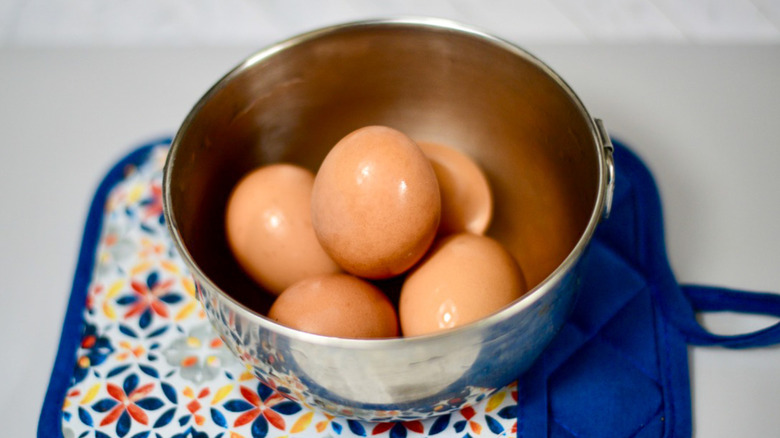
I tested this hack using five brown eggs, a slotted spoon for dunking, a standard-size spoon for peeling, a saucepan, and water, with no additional techniques or materials. I added the eggs to already-boiling water, and set the timer for eight minutes to achieve a slightly jammy, but still firm, yolk. At the eight-minute mark, I scooped up the eggs with my slotted spoon and set them in an ice bath for another eight minutes or so. There are good reasons eggs need to sit in cold water after boiling, including to stop the eggs from cooking and to help detach the shell. Fresh eggs are more likely to be difficult to peel since the membrane is strongly connected, so an ice bath can help loosen the shell.
How peeling an egg with a spoon worked for this test
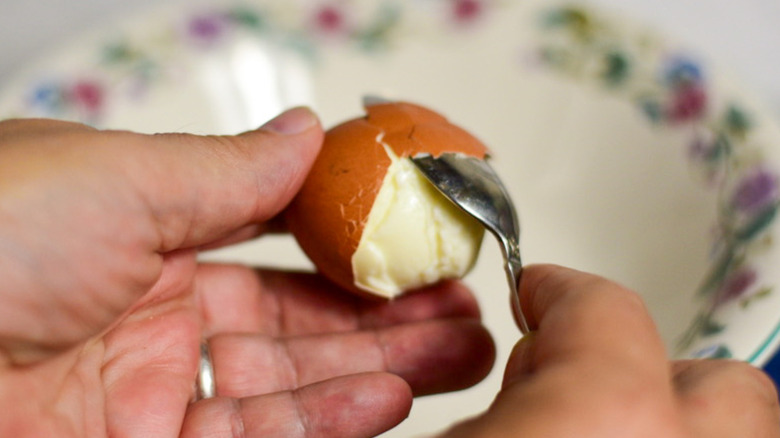
I began the test in earnest by picking up the first hard-boiled egg and tapping the side on the wide end to crack the shell and make a small opening. I then took the egg in my hand and used the curved part of the spoon to gently pry the eggshell away from the egg. The technique suggests that you just insert the tip of the spoon and follow along the egg's surface, just under the shell. This seemed promising — until the spoon drifted a little off course, digging into the firm egg white. By the time I tried to redirect it, the damage was done, and I had a large gash on the side of the first egg.
In practice, peeling an egg with a spoon can be more difficult than it appears, at least in the beginning. There can be slippage; sometimes, the spoon pokes into the egg while navigating its surface. I tried to make hard-boiled eggs using a standard, everyday method, so I leaned on standard peeling techniques at first. However, there are many egg-related skills and hard-boiled egg hacks you can use forever that may come in handy when you try this method, including using the best size of eggs or adding ingredients, such as vinegar or baking soda, to the water.
Finding the best way to make spoon-peeling work
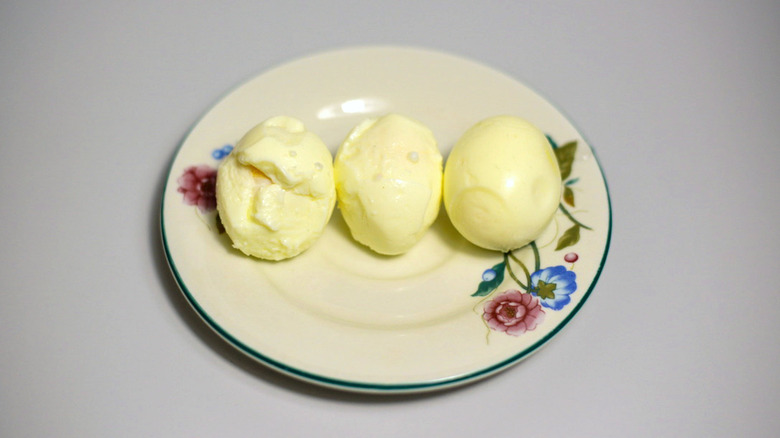
The second egg turned out better, as did the third and fourth, each coming out with more of the egg white intact. But the eggs were still imperfect, with cuts, small indentations, or pieces of the white falling off; the egg did not come out of the shell as easily or in one piece as suggested. This technique shows promise, but it may take some practice to get right. If you're a home cook with an ample amount of experience with egg peeling, or if you have the hand-eye coordination suited for creating a perfectly smooth entry under the shell, you might achieve success right away.
However, I was determined to make this technique work. I decided to use one of Julia Child's simple tips for the best boiled eggs, and peeled the last egg under running water. This achieved a nice egg with no gashes, craters, or broken areas, pictured on the far right in the photo above. Spooning on its own with regularly prepared eggs is not as easy as some cooks suggest, unless you have the magic touch. For my test, it took a while to peel a perfect egg.