

Here's Where Dunkin's Coffee Comes From
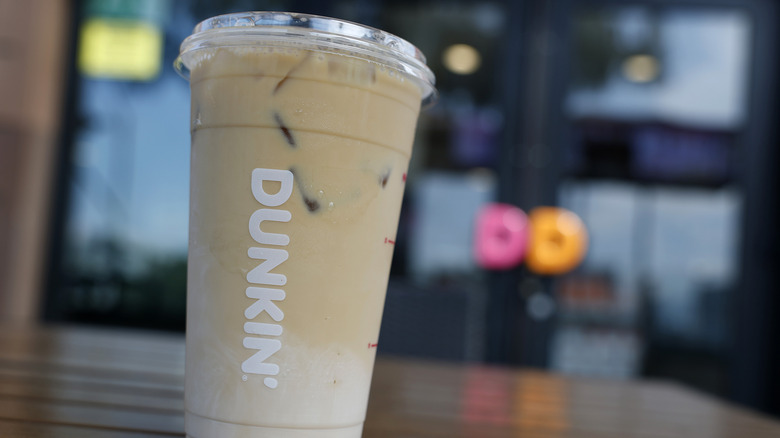
America runs on Dunkin' — I know I do. Frequenting it daily, I'm grateful that my local Dunkin' is precisely one block from my New York City apartment. Founded as a standalone shop named "Open Kettle" by Bill Rosenberg in Quincy, Massachusetts, in 1948, the chain, rebranded in 1950 as Dunkin' Donuts, now brings coffee and donuts to the masses in more than 14,000 shops in 39 countries. In 2007, Dunkin' coffee finally became available for purchase in grocery retail chains, so fans could enjoy their cup at home instead of heading to their local shop. The following year, J.M. Smucker Co. acquired the coffee brand's grocery retail arm for expansion; seasonal coffee blends and K-Cup pods would roll out within a decade. It's beloved by celebrities including Ben Affleck, Kylie Jenner, and Sabrina Carpenter (all three have had partnerships with the brand), and more than a dozen franchises are owned by former NFL player Kris Brown.
So where does Dunkin's coffee, which is available in a wide variety of hot and iced beverages, come from? Per Dunkin's FAQ section on its website, the company's coffee beans are "sourced from reputable suppliers in more than 20 countries around the world" before being roasted, ground, and packaged at U.S. facilities.
Dunkin's official tree to cup program
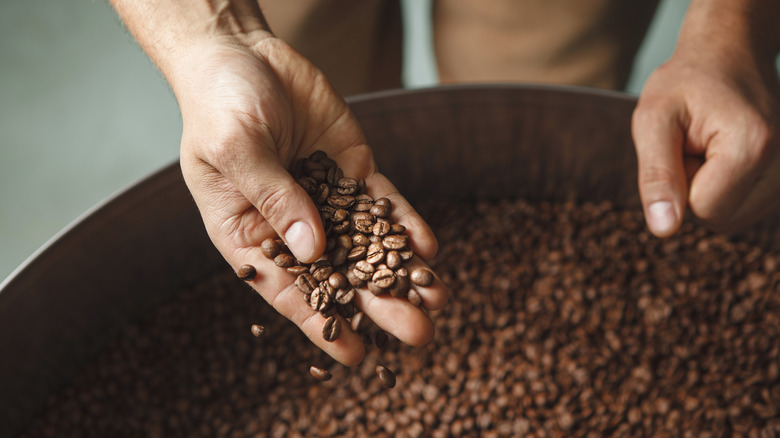
Dunkin' prides itself on its "tree to cup" initiative — the chain works with the Rainforest Alliance to ethically source Arabica beans from Central and South America including Brazil, Colombia, Mexico, Nicaragua, and Peru. Arabica beans make up more than 80% of the world's coffee consumption, and 60% of the coffee consumption in the United States. Many members of Dunkin's Coffee Quality Assurance Team travel regularly to the coffee origin countries to work closely with the farmers to make sure they're selecting the highest quality beans available. (Even Dunkin' Donuts former President of Global Marketing and Innovation, John Castello, visited a coffee farm in Brazil to partake in the process firsthand.)
From there, the beans are then blended according to Dunkin's secret recipe. The "Cuppers" — aka, professional coffee tasters — are a part of the brand's Coffee Excellence Team, which performs quality control checks in labs with Dunkin' Donuts Quality (DDQ) specifications. It can take up to a year and a half to master the art of cupping, with taste testers looking for characteristics including the coffee's aroma, fragrance, body, balance, and finish, to deem it up to Dunkin's standards. Cupping happens at the mills the brand sources its beans from, as well as its own testing facilities, including its headquarters in Canton, Massachusetts. According to the brand, some 200 cups of coffee are tasted per cupping session, and if any of the characteristics are flawed, the entire container is rejected.
The entire tree to cup process is what makes the mammoth brand unique in its hands-on approach and dedication to the end product. This, coupled with an affordable price point, is what makes Dunkin' fans keep coming back for more.