

The Smelly Reason You Shouldn't Cook Cabbage In Aluminum Pots And Pans
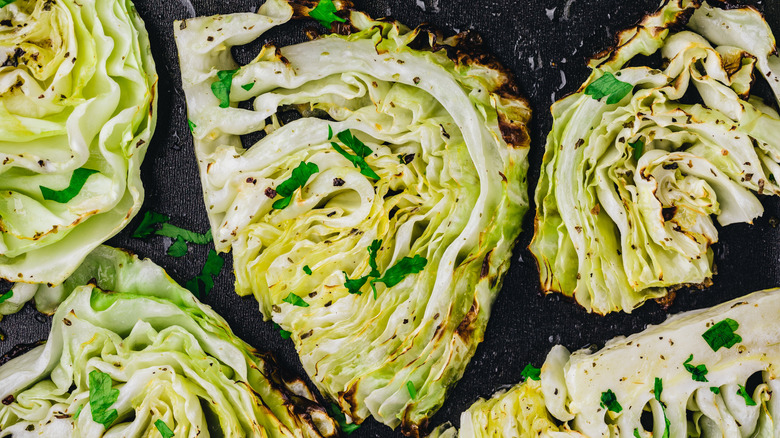
Earthy, peppery, and satisfyingly crunchy, cabbage is a cruciferous vegetable that can work its way into a number of meals. First of all, it makes a great salad; just shred it well and toss in some salt, olive oil, and balsamic vinegar. It's just as delicious when cooked. It's the nutritional powerhouse your breakfast scrambles need, and you can slowly roast it in the oven next to a rich, fatty pork shank so it soaks up all those mouthwatering flavors. Even better, you can blanch the leaves and stuff them with rice and meat to make hearty, delicious cabbage rolls. Regardless of how you prepare it, there's one thing to avoid at all cost: cooking it in aluminum pots and pans.
Cabbage is undoubtedly delicious. However, there's no way to ignore how smelly it is. That's because it contains sulfur compounds, such as glucosinolates, s-methyl-L-cysteine sulfoxide, and volatile sulfides, which are released during cooking. Once exposed to heat, cabbage cells begin to break down, bringing glucosinolates into contact with an enzyme known as myrosinase. In turn, this reaction produces isothiocyanates, which are the pungent substances that contribute to cabbage's distinctive smell. This odor can become even stronger when cooking cabbage in aluminum cookware. Moreover, the smell intensifies the longer cabbage cooks. To make matters worse, the aluminum affects the cabbage's flavor and appearance. If you'd rather avoid discolored cabbage with an unusual metallic aftertaste, consider using a different material.
When in doubt, stainless steel is the way to go
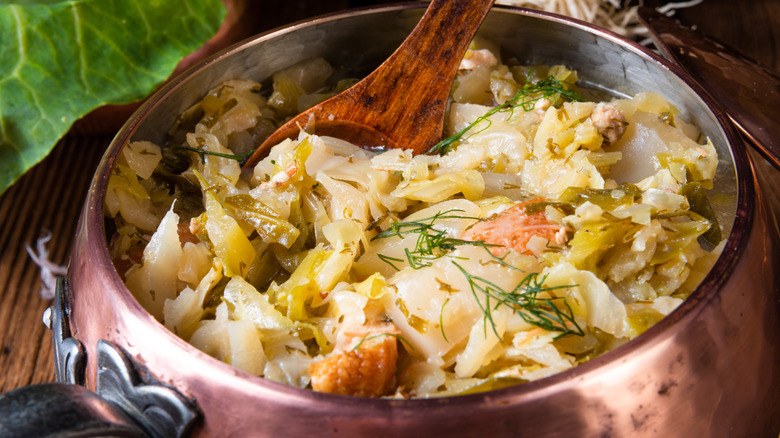
Luckily, you have more choices than aluminum when cooking cabbage. Instead, opt for stainless steel, which is non-reactive. This means it's great for boiling, steaming, or sauteing cabbage since it doesn't leave any metallic taste in your dish. Enameled cast iron is another solid choice.
In general, regular cast iron can react with certain foods, especially acidic ones, and cabbage, while not highly acidic, does contain certain natural acids, including ascorbic acid (better known as vitamin C) and folic acid (or vitamin B9). This is where enameled cast iron cookware comes in handy; the coating keeps the metal from reacting with the cabbage, or with other ingredients, such as lemon juice, tomatoes, or vinegar, that a recipe might call for. That said, cast iron can actually work well if you're preparing charred cabbage, and the same goes for carbon steel pans.
So, unless the recipe says otherwise, cook cabbage until it's nice and tender, making sure you pay attention to cooking time. Once you settle on a favorite pan, experiment with different cooking techniques. For example, for mouthwatering cabbage, fry it up the Southern way. You won't be disappointed.