

Chef Thomas Keller's Method For Michelin-Worthy Scrambled Eggs
The scientific properties and versatility of the egg are extremely important in gastronomy, and were certainly stressed upon us on an almost daily basis during my culinary school tenure. In our egg-centric class — affectionately known as "Egg Day" — my comrades and I were instructed to make egg dishes, including the classic rolled French omelet, eggs Benedict (and Florentine), and oeufs farcis (aka deviled eggs). Scrambled eggs were also taught. As someone who often whipped up two or three soft-scrambled eggs after a grueling soccer practice, I was confident in my approach.
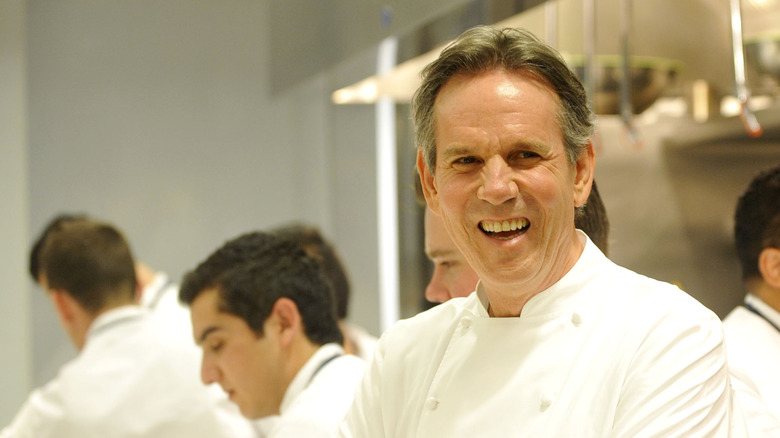
I was pleased to learn that I had the method down way before I enrolled in culinary school, and it's the same used by chefs around the globe, including those of Michelin star caliber, like Thomas Keller. He has a foolproof method for making the best scrambled eggs: blend them, pass them through a chinois, then cook them on low heat using butter instead of oil before adding crème fraîche. All you need are a few tricks of the trade to follow his lead and make soft, fluffy, creamy scrambled eggs. Here's the science behind the method to the madness.
Ways to whisk
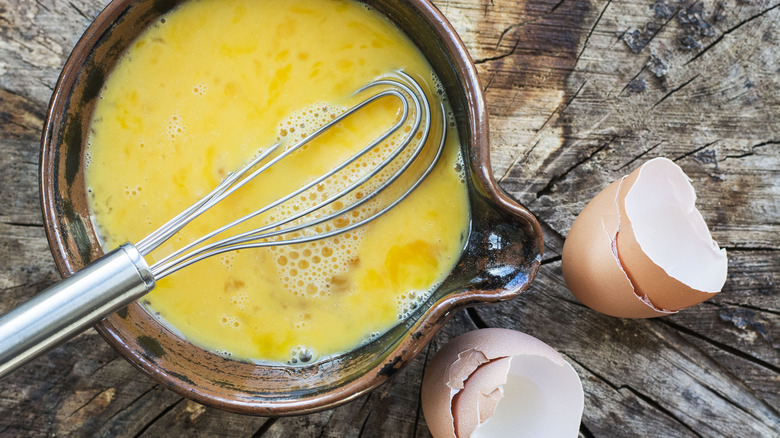
Prior to embarking on your quest, chef Thomas Keller suggests cracking eggs in a separate bowl individually before adding to your main mixing bowl (should you need to extract any broken shells or fragments). Though whisking or beating eggs with a fork is a common practice since forks are readily available in kitchen drawers, he opts to use a whisk to incorporate air into the eggs, noting in a Masterclass video on TikTok that you get "much more action with a whisk than with the prongs of a fork." This is when you should season your eggs with salt; not only does it evenly flavor them throughout, but it helps loosen up the protein, making the curds more tender.
For those wanting to take it one step further for an extra-luxe creamy consistency, he advises using an immersion blender, then passing the eggs through a fine-mesh chinois. Immersion blenders are exactly what they sound like: handy kitchen tools used to blend things via immersion to your desired smoothness (they're also a secret weapon for upgrading your average canned soup). Passing the eggs through a chinois, a cone-shaped, fine-mesh strainer commonly found in restaurant kitchens, ensures the removal of any grit or shell.
The grand finale (and secret ingredient)
Nonstick skillets are the cooking vessels of choice for eggs in general, letting perfectly cooked eggs be removed with ease. They also typically provide even heat distribution. As an added bonus, they're also easy to clean, and they only need a minimal amount of fat. (Friendly reminder to start your eggs in a cold pan!) Chef Thomas Keller adds butter instead of oil since butter tends to give a richer texture, mouthfeel, and flavor, which neutral oils don't have. Butter is also a natural emulsifier, helping the whites and yolks blend together harmoniously.
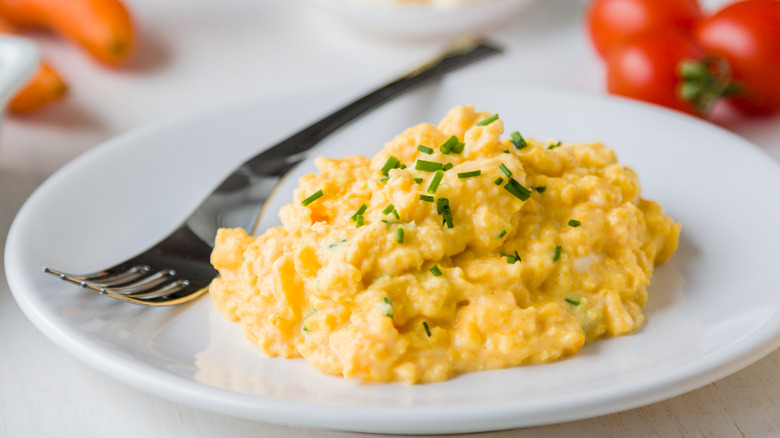
Like risotto, perfect scrambled eggs require attention — you should continuously whisk them over a low flame so they begin to coagulate into a soft texture. Gently heating eggs prevents them from firming up too quickly, thus giving them that glorious creamy texture. The pro chef also advises to remove the eggs from the heat just before they finish cooking so they continue to cook without drying out. The pièce de résistance for his scrambled eggs: a dollop of crème fraîche, whisked in just prior to serving to give it a rich, thick tang.