

Why Your Pork Chops Came Out Tough — And How To Prevent It Next Time
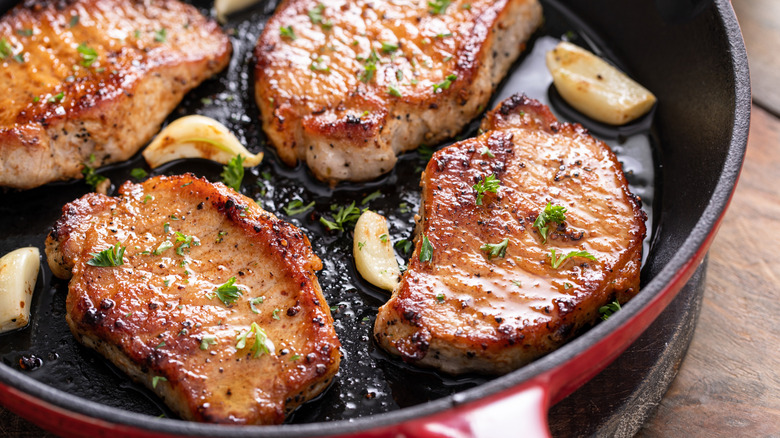
It can sometimes seem as though there are as many ways to make your pork chops wrong as there are to make them right. You'll want to first study the options at the butcher's counter, skip the boneless pork chop variety for the best shot at juicy deliciousness, and then select the proper seasonings to further maximize your flavor. But at least the ideal time and temperature should be easy enough to determine, given their explicit inclusion in all of your porcine recipes, right? Not so fast. Some instructions advising you to sauté, bake, or grill those chops at whatever-degrees Fahrenheit for however long might not be accounting for a little, potentially ruinous, kitchen phenomenon: carryover cooking.
Carryover cooking is exactly what you've probably guessed by now, and it can take those pork chops from done to overdone in spite of your most concerted efforts. It's the residual heat that essentially keeps cooking your precious meat even when you've turned off the heat source. Some proteins can handle it better than others, but an overdone pork chop is, pretty famously, a tough one.
So, what's a person to do when they've prepared their pork to the purportedly perfect specifications, particularly when underdone pork is also so famously dangerous? As risky as it may at first seem, you should actually pull your pork chops a little bit before they reach your intended internal temperature to accommodate for carryover cooking. Continuing to watch the clock while relying heavily on your meat thermometer will ensure pork chops that are not only safe but also tender and delicious.
When to pull out that pork to prevent overcooking
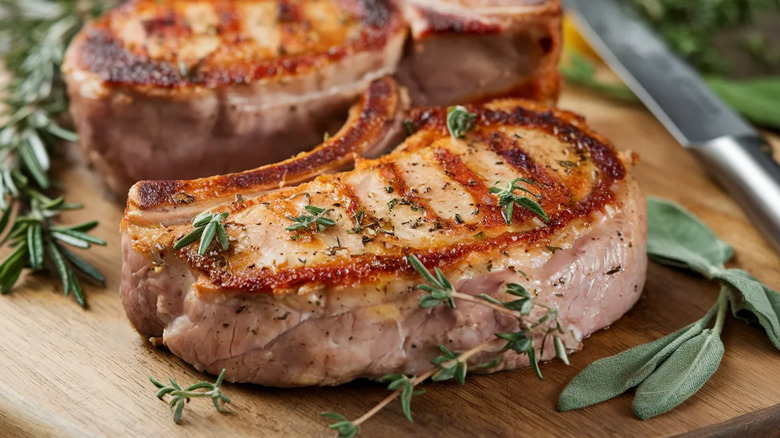
The trick is to pull your pork chops from whatever their heat source may be once they reach an internal temperature of 140 degrees Fahrenheit, regardless of how many minutes may be remaining on the clock. To be clear, they are not finished at 140, even though you have removed them from the heat. Pork only becomes safe to consume at 145 degrees Fahrenheit, and carryover cooking will result in the temperature climbing the extra five degrees after a few minutes of rest time . It's the key to really make carryover cooking work for you.
You must also test the chops with your meat thermometer to make sure that they really do reach that safe 145 degrees Fahrenheit. Beware of any meat thermometer mistakes, too, as these seemingly scant few degrees can potentially make you sick. Make sure that your device is calibrated for an accurate read, and be sure to test the thickest portion of the chop, away from any bone or fat, which can register a false number. Simply abandoning the oven, stove, or grill grates in these final, critical moments is free, easier than any of the other tenderizing tips you can find, and a pretty terrific insurance against tough chops.