

Pan-Fried Pork Chops Stay Juicy With A Simple Flipping Trick
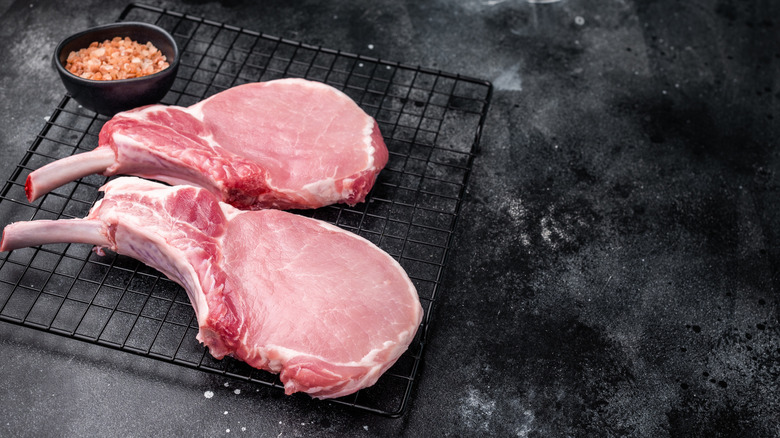
Once you've studied the merits of pork chop varieties, wisely left boneless in the second-place dust, and selected a preparation method, you want to be sure to cook the darn things to perfection. Pan-frying is a brilliant method for creating a golden, Maillard reaction-powered pork chop exterior and a moist, tender interior — provided you do it right. And you can reach porcine perfection with little more than the flick of a wrist when you flip those chops early and often.
Pork chops do not take very long to cook — typically ten minutes, max, on the stovetop — and frequent flipping can help them finish evenly without overheating into the dreaded dry zone. The outside of the meat will change into the golden color you desire and sizzle to crusty perfection, while the constant motion will keep you from having to swap your steak knife with a chainsaw. Flipping about every minute will really do wonders. That might sound like a lot, but flipping the pork chops every minute is actually way less labor intensive than the arm and jaw strength you'd otherwise need to really power through a tough, overdone cut. Your pork chops will also turn out a lot tastier this way, too, provided you keep a few other details in mind.
Flipping over better pork chops at home
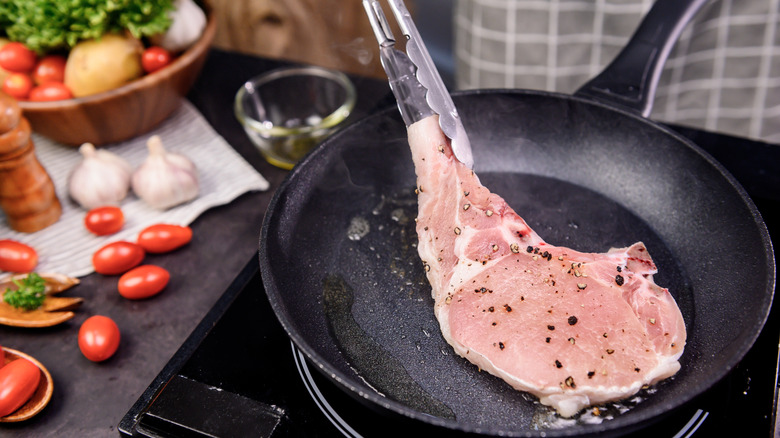
You can follow a lot of your existing favorite pork chop recipes and merely accelerate the flipping for a notable improvement ... within reason. You'll still want to apply the usual tricks for better pan-fried pork chops. An easy marinade, for example, is still great for both tenderizing the meat and getting some extra flavor to penetrate a bit, but you'll actually want to shake off any excess moisture and pat your chops dry before you fry them. This will prevent any errant liquid from accidentally steaming your protein rather than browning it. A simple seasoning and flour dredge will obviously eliminate that extra step, as well as prime your pork's surface for peak crispness. Whatever your recipe, you'll want to keep your chop, somewhat paradoxically, decently dry to the touch for a nice, juicy center.
Once the pork hits a hot, oiled pan, the crucial flipping will almost immediately begin. Set a timer, count in your head, or do whatever you need to do to be able to flip the chop every 60 seconds. This is not a looking-at-your-phone kind of preparation, so you'll want to stay engaged. Tongs are also easier for this king of repeated turning than the spatula that you might ordinarily reach for. They just allow for better grip and control, eliminating excess hot oil spits and splatters as the meat repeatedly slaps the metal. You'll also want to begin checking the pork's internal temperature with a meat thermometer at least halfway before you think it's done. Once it reaches 145 degrees Fahrenheit, your chop should not only be safe to enjoy, but moist enough to actually do so.