

The Average Shelf Life Of Butter — Both Room Temperature And Refrigerated
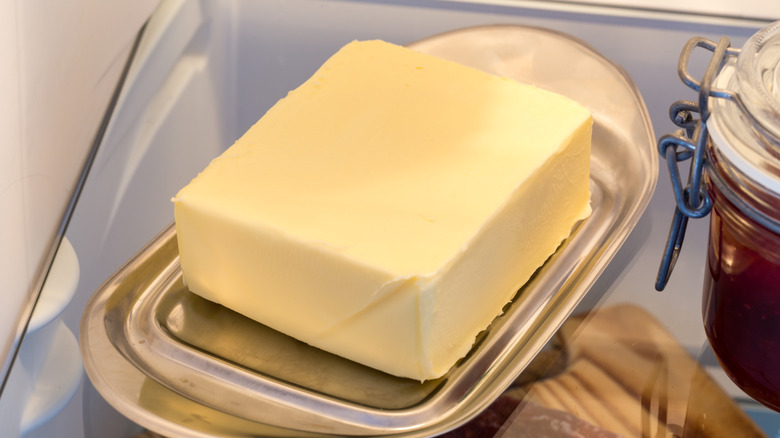
For a dairy product, butter is pretty hardy: Its low water content and high fat mean it's relatively resistant to bacterial growth, particularly in comparison to its more easily spoiled counterparts like milk and soft cheeses like ricotta. Yet its shelf life varies based on where you store it.
If you're spreading unsalted butter on bread, you may be tempted to keep it out at room temperature (although, consider whipping it as an alternative). However, you'll want to get through that stick of butter relatively fast if you're doing this: If the butter is covered and your kitchen is decently cool, it will last a few days. And don't think salted butter is the same as unsalted: Salted butter can handle a week or two at room temperature. However, some argue that you can only leave it out for hours, not days (Land O' Lakes says no more than four hours). For the most official advice, the USDA says one or two days at room temperature is fine.
Butter has a longer life in the refrigerator: Different sources give different timeframes, but if wrapped properly, you should expect a three month lifespan — some say four, with salted butter lasting around an extra month. If you freeze it, it can last six to nine months. You may be tempted to just rely on the date on the package, but this is more of a suggestion than a rule. The USDA has noted that these "best by" dates are about quality over safety.
Detecting butter that's gone bad
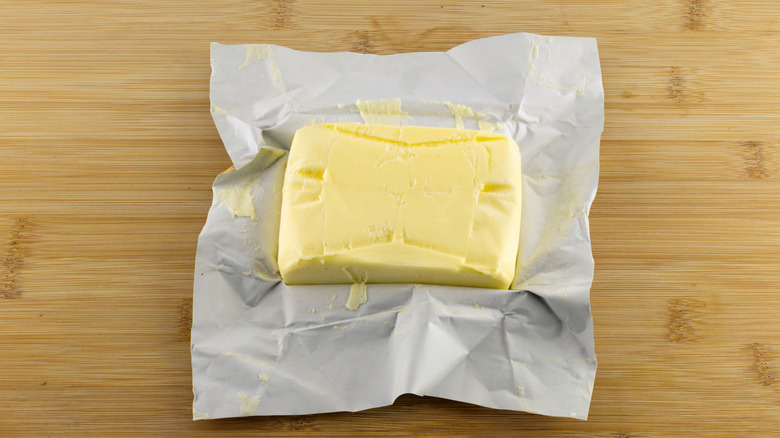
If you've forgotten how long your butter has been in the refrigerator, there are some ways to assess whether it's still okay. As mentioned, the high fat and low water means bacteria isn't such a worry; instead, you're looking for oxidation — or in everyday language, whether the butter has gone rancid.
Fresh butter shouldn't have a particularly strong scent beyond a mild, milky note, so if you detect a sour smell, it might be time to throw it out. The same goes for scents that remind you of blue cheese. You can also use your eyes: When fresh, butter should have a uniform color (pale yellow) and smooth texture. If the edges are darker, or there's any hint of a granular or slimy texture, it may also be in the rancid zone. You can also do a little taste test, and rancid butter will taste a little sour or bitter instead of butter's normal creaminess. (Don't worry: A tiny bit of rancid butter won't make you sick; even in larger amounts. It might make you feel unpleasant but it typically won't cause serious troubles.)
There is one big red flag: If your butter has mold. Any fuzzy spots are grounds for immediately throwing it away, and the same goes for odd colors beyond the darker yellow signs of rancidity mentioned above. But this relatively unusual case aside, if the butter looks, smells, and tastes normal, it probably is.