

Forget Butter: Why Traditional British Bakers Still Swear By Suet For The Flakiest Pastries
We may receive a commission on purchases made from links.
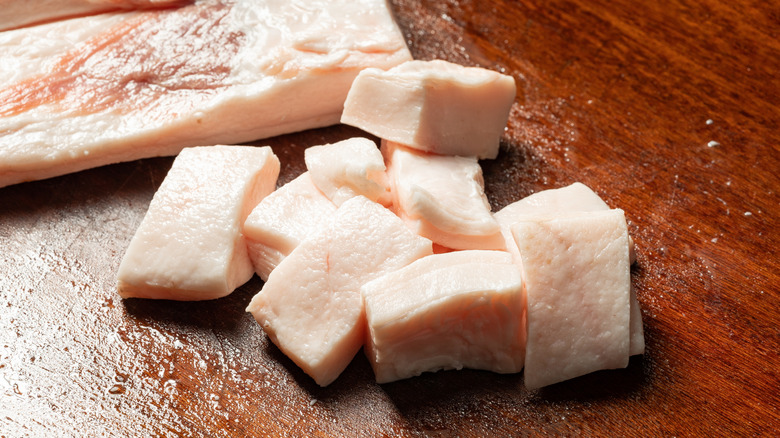
If you've never baked with suet or haven't even heard of it, don't fret: While it exists in the United States, it's not exactly a mainstream baking ingredient. But in the United Kingdom, it's far more common, appearing in many baked goods both sweet and savory, from Christmas puddings to steak and kidney pie. For the uninitiated, suet is a hard, crumbly fat that comes from around the kidneys of animals (usually cows and sheep). It's not like the fat cap you'd see on a steak, though: It's sold in solid pieces at butcher shops or dried, shredded, and ready to use in its packaged form.
Suet is firmer than other fats that might appear in baking like butter or lard, and at room temperature, it also retains its shape in a way that many other fats don't. This is a key reason why traditional British bakers love it: Its higher melting point means that it'll stay solid longer during the cooking process. It may melt only once your dough or batter has started to set, and that melting leaves small pockets of air. Once out of the oven, it firms up faster, resulting in a less-greasy texture than faster-melting fats. Overall, it yields a lighter, fluffier product, while suet's firmness at lower temperatures means finished products can contain heavier, wetter fillings without collapsing. And the whole "animal fat" part? Although suet obviously isn't vegetarian-friendly, it's still considered fairly neutral in flavor and won't add an undesirable meaty taste to sweet recipes.
The downsides to suet, and how to use it

Despite its advantages, suet isn't a magic bullet that works wonderfully in every baked item you can imagine. Its sturdy nature makes it great for pie crusts or dumplings where it'll be up against heavier and moister fillings. That's what makes it so great in British-style steamed puddings, where it won't get soggy against some heavy-duty water vapor. So overall, suet seems to be most in its element in desserts and baked goods that feature wetter ingredients, including dumplings, puddings, and pies. These can be savory meat pies, or sweet ones like fruit-based mincemeat pies served around the winter holidays; fruity and creamy spotted dick and Roly Polys are also a couple of desserts where you'll see it used.
Notably, these are all dishes that tend to be served warm or hot, as this is where suet's strength lies. If you use it in baked goods that are served more at room temperature, like cakes or cookies, it's considered a bit less desirable, as it can turn waxy. Then there's the nutritional side: Suet is very calorie-dense (854 calories per 100 grams), even more so than butter; it's also particularly high in saturated fats (only coconut oil has more).
Finally, if you're outside the U.K., getting your hands on whole pieces of suet might be tough. Your best bet is asking your local independent butcher. You'll have an easier time finding the packaged stuff — products like Atora Shredded Beef Suet are available for purchase online from retailers like Walmart and Amazon.