

Here's The Average Lifespan Of A Rice Cooker
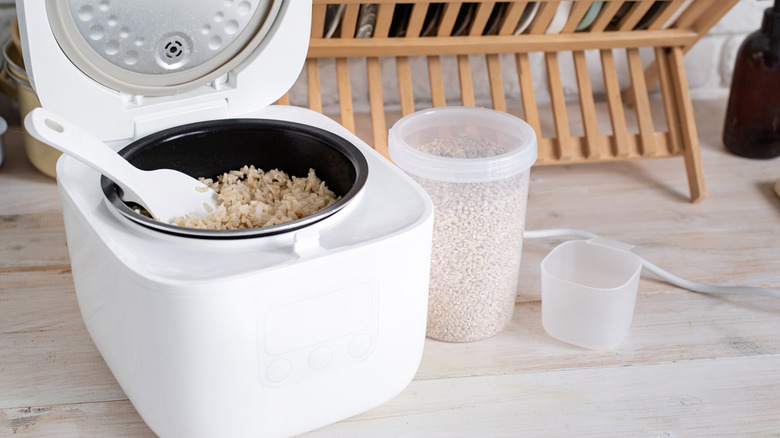
A rice cooker is an incredibly handy kitchen appliance that many couldn't imagine living without. And whether you'd like to admit it or not, it's your best bet for making perfectly fluffy rice every time. However, rice isn't the only thing that this multi-purpose tool can make. There are at least a dozen more foods you can make in a rice cooker, other than rice. Whether you use it to bake a delicious, spongy chocolate cake, make a Chicago-style deep-dish pizza, steam your favorite veggies, or even prepare a warm cup of hot chocolate, it might surprise you how versatile the appliance is. But with so many uses, it's natural to wonder how long you can expect your rice cooker to last.
In general, most rice cookers last up to eight years under regular use. If you use it very frequently, however, your rice cooker's lifespan may reduce to approximately five years. Still, not every rice cooker follows the same timeline. Its lifespan further depends on factors including cleaning, storage, maintenance, and the quality of the appliance, and there are plenty of ways to prolong how long it lasts.
The first thing you need to know about the average lifespan of kitchen appliances like your rice cooker is that proper and regular cleaning should be your top priority. With time, starch, moisture, and food residue can build up around the appliance's inner pot and lid as well as the steam vent. Cleaning these parts after every use is therefore essential. Wash the inner pot and lid with soapy water and use a damp cloth to wipe the heating plate and exterior. The steam vent in some rice cookers may be removable for easy cleaning, but if not, you can wipe it with a gentle brush.
Common mistakes that can shorten your rice cooker's lifespan
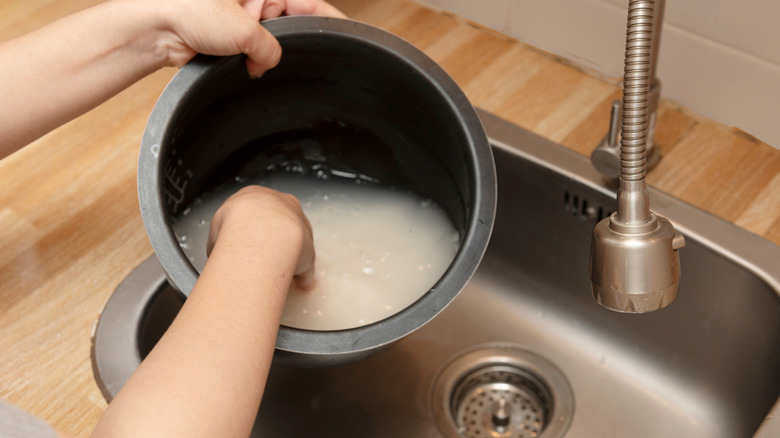
While some might consider filling the cooker with water and running a cycle the easiest way to clean a rice cooker, it may come at a cost. Extra heating cycles can wear out the cooker over time. They also won't remove the starch and food residue left inside it, which can eventually affect the cooker's heating system. Instead, wash the removable parts by hand and wipe the heating plate with a damp cloth after each use.
At the same time, how you handle the inner pot matters just as much. Many rice cooker bowls have a nonstick coating made of fluoroplastic (such as Teflon) that can easily get damaged if you use metal spoons or forks. That's why wooden or plastic utensils are your best pick. With that in mind, never scrub the bowl with steel wool or abrasive sponges if you want to extend its lifespan. What's more, overfilling the cooker is another common mistake people make. Ignoring the maximum fill line will cause the food to bubble over and can even clog the steam vent.
The way you store the rice cooker can also affect its lifespan. Make sure every removable component is completely dry before putting the appliance away. Trapped moisture can encourage corrosion and ruin the appliance's electrical components. It's also best to avoid storing the cooker in places exposed to extreme heat or freezing temperatures. It can damage its plastic components and seals over time. Finally, protect your rice cooker from power surges to help it last longer.