

Use The Classic 3-To-1 Method To Create Perfect Salad Dressing Every Time
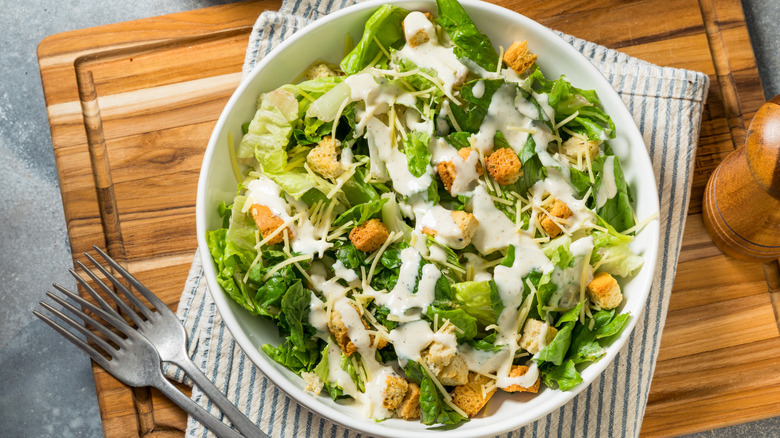
A salad dressing can make or break a salad. Whether a French dressing for a leafy green salad, a classic vinaigrette made with vinegar and olive oil, or ranch, everyone's favorite creamy, savory pleasure, getting it right makes a massive difference in flavor. In essence, a good dressing is all about nailing the perfect acid, oil, and salt balance. That's why, for the best results every time, all you need to remember is the classic 3-to-1 ratio: 3 parts oil, 1 part vinegar, and some emulsifier.
Dont' be afraid of using this ratio for homemade salad dressing — it gives you way more flavor. It's the easiest way to remember a dressing recipe by heart. A 3-to-1 blend of oil, an acid, such as vinegar or citrus juice, plus an emulsifier to keep the two together, such as Dijon mustard, mayo, or honey, are all you need. You can also experiment by adding different herbs, spices, and your favorite seasonings.
To understand why it works, let's take a look at the science behind it. In general, salad dressings are either temporary or permanent high-fat emulsions. This means they include a fatty part, such as oil, and an acidic compound, such as vinegar, which naturally resist mixing. While vinegar is polar, oil is non-polar; once combined, they separate easily. This is where an emulsifier comes in. An emulsifier is a substance with both a hydrophilic (water-loving) and a lipophilic (oil-loving) end. This means it acts like a bridge between the two, and holds them together.
The 3-to-1 formula works with almost any dressing

This formula is super easy to remember and saves you from the ratio mistake that's killing your homemade salad dressing. Once you have it, you end up with the richest, silkiest emulsion ever, which you can use as a basis to make literally any salad dressing. The best part is that it also takes minutes to make.
Begin by choosing your preferred oil. Extra virgin olive oil is most people's go-to choice, but it's far from being the only option. Avocado oil is similarly neutral, though can also taste a bit buttery. Walnut oil, on the other hand, adds a wonderful touch of toasty, nutty sweetness to the dressing. If you're a after a milder taste, you can always go with flaxseed oil.
Don't be afraid to experiment with the acid, either. It doesn't always have to be apple cider or red wine vinegar. Balsamic vinegar can do wonders with a Mediterranean-style salad. In contrast, fresh lime or lemon juice delivers a refreshing fruity note. Once you choose your ingredients, whisk everything together, add the emulsifier, and season to taste with whatever herbs and spices you enjoy most, whether garlic, some parsley or oregano, or even some chile flakes. Once you try it out, you'll stop using store-bought dressing for good.