

What's The Average Lifespan Of A Nonstick Pan?
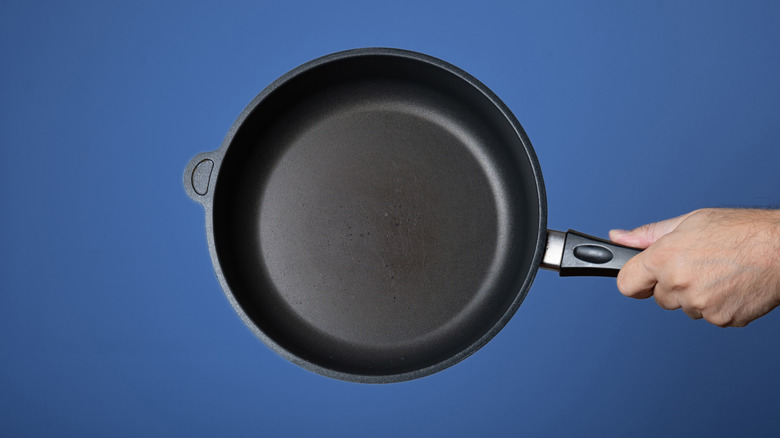
There's something about nonstick pans that can instantly make anyone feel like a cooking pro. They're super convenient, easy to clean, and will save you the hassle of having to scrub burnt-on bits off the surface after you're done cooking. On top of that, let's not forget that nonstick pans yield the best fried eggs every time. But even with all of these advantages, these pans don't last forever, which raises the question: what really is the average lifespan of a nonstick pan?
The truth is, most nonstick pans aren't designed to last a lifetime. Unlike cast iron or carbon steel cookware, you won't be able to use them for decades. With proper maintenance, though, they can easily remain in good shape for five to seven years. On the other hand, poor care can ruin a nonstick pan in just a matter of months.
A few simple habits can help your pan last for years rather than months. Repeated use of high heat is one of the fastest ways to shorten your nonstick pan's lifespan. Instead, make sure to stick to low or medium heat to preserve the coating. The same goes for regular use. The more often you cook with the pan, the higher the chances the coating will wear down fast. Once the coating becomes scratched or starts peeling, or it starts to lose its nonstick abilities, it's time to replace the pan.
How to care for your nonstick pan
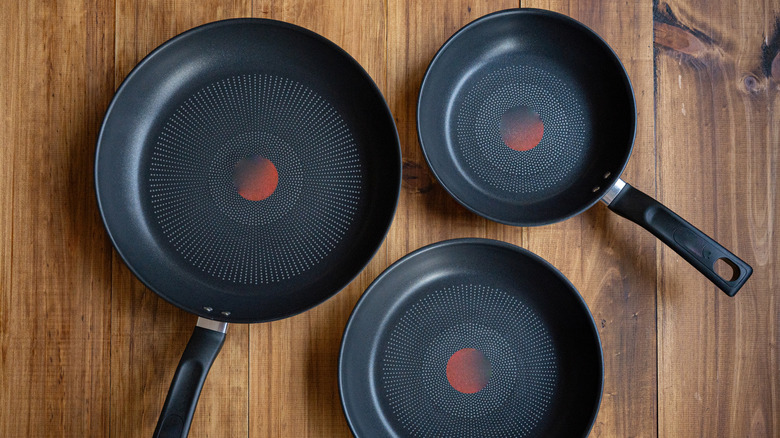
Cleaning and caring for your nonstick pan properly can also play a role in its lifespan. For starters, remember that this type of cookware doesn't belong in the dishwasher. The nonstick coating is delicate, so you have to be very gentle with it. That's why exposing it to the dishwasher's high temperature cycles and intense water jets can damage the coating. Moreover, dishwasher detergents are much harsher than regular dish soap and further wear down the nonstick surface. The safest way to clean a nonstick pan is by letting it cool first. Then just use a combination of warm water, mild soap, and a soft sponge to clean it thoroughly. If there is stubborn grime stuck onto it, a 10-minute soak in warm soapy water is usually all it takes to break it down.
How you store the pan matters, too. You can start with one easy storage tip that will extend the life of your nonstick cookware: put a soft pad between each pan to protect them from scratching each other (and the nonstick surface) when you stack them. If you don't have pads, a soft kitchen towel will work equally well. For the same reason, keep them away from metal utensils and sharp objects. Always stick to wood, silicone, or nylon, as they're much less likely to damage the pan's surface. Proper care and storage will go a long way in helping you get years out of your nonstick pan.