

Make Your Tomato Sauce 10x Creamier By Adding This Fridge Staple
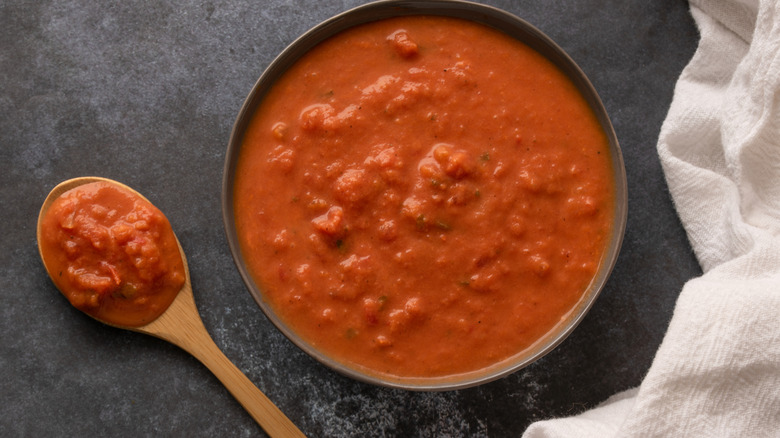
When making a thick and garlicky tomato sauce for pasta night, you'd probably reach for the heavy cream before you'd ever consider pulling out a tub of Greek yogurt from the back of your fridge. But if a creamier but slightly lighter and more protein-packed sauce is your goal, then Greek yogurt can actually be the better move. It works just as well whether you're making an Italian-style sauce for pasta or a basic all-purpose tomato sauce for other dishes, like Greek-style meatballs, stuffed peppers, or simply a dip for dunking breadsticks.
In fact, Greek yogurt will not just thicken the sauce and make it more velvety; any sauce that is loaded with sharp flavors like onion and garlic will be rounded out by the added richness from the Greek yogurt. Even a spicier arrabbiata-style sauce can be softened by a dollop of this ingredient. Greek yogurt also adds a little tang that can really work to brighten tomatoes in some of the more classic Italian pasta sauces.
When it comes to Greek yogurt, a little can make a big difference. If you're making a sauce with a standard 28-ounce can of tomatoes, then just around ½ to ⅔ of a cup of plain Greek yogurt should be plenty to make it rich without changing the flavor too much. And since Greek yogurt has a good amount of protein (about 19 grams per cup), just a few spoonfuls can boost the the final sauce.
How to make this ingredient work for your sauce
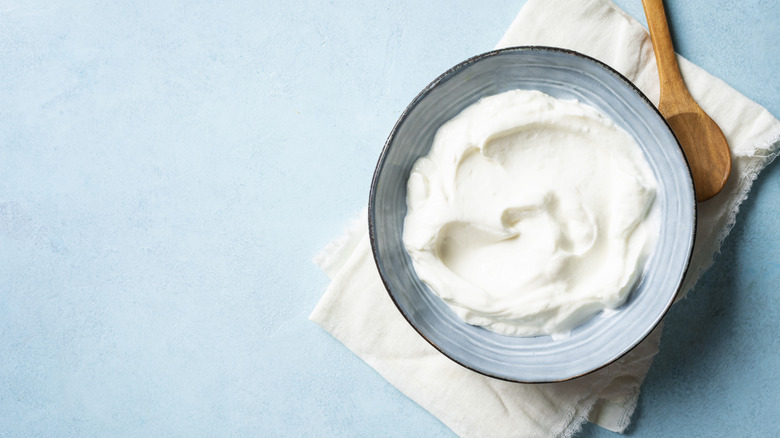
Plain Greek yogurt is the best choice here. If you just have a low-fat version in the fridge, that will work, but a full-fat version will bring the smoothest and most substantial texture. Definitely avoid sweet or flavored varieties as these contain ingredients that don't belong anywhere near a savory sauce. If you're concerned about the watery appearance of Greek yogurt that's been sitting in the refrigerator for a while, know that you can simply give it a quick stir before adding it to the sauce (as long as it hasn't gone off). With yogurt, the liquid often separates from the solids over time, but that watery layer is safe and you can simply stir it to bring back its smooth consistency before adding it to the sauce.
The most important step is to stir the yogurt in after taking the sauce off the heat because boiling hot temperatures can cause the proteins in yogurt to curdle and split. So let the sauce cool for a minute or two, then gently stir in some Greek yogurt until everything is creamy. You can also rely on tempering — a seasoned chef trick that brings a little extra insurance. Take the tomato sauce off the heat, and then mix a spoonful of the warm sauce into the yogurt first and stir until it's combined. Then add all of it into the pot of sauce. This trick works because it slowly raises the yogurt's temperature instead of doing it at all once. This makes it much less likely to separate and ensures you get a smooth and velvety tomato sauce.