

10 Soy Sauce Substitutes You Can Use In A Pinch

Soy sauce is known for its savory, salty flavor that comes from being a combination of soybeans, wheat, and salt. It's a burst of umami, which is the fifth taste that our palates can sense alongside sweet, salty, sour, and bitter. While foods with umami are generally salty, "umami" and "salty" are not interchangeable; umami represents savory richness rather than just saltiness. Adding soy sauce to food, whether a dash of it in a marinade or as the sidekick to your favorite sushi roll, elevates the umami within the dish. But if you don't have soy sauce on hand, there are other ingredients that can help pull off a similar umami sensory experience.
Certain substitutes work better in certain dishes. For example, you might pair the sweet-umami blend of ponzu sauce with a sushi roll, but you wouldn't do the same with miso paste because, texturally, it would miss the mark. When you need that oh-so-impactful flavor of soy sauce in a pinch but don't have it on hand, here are 10 different add-ons that can yield that mouthwatering umami profile as long as you use them in the right context. All of these can be used in a 1:1 ratio unless otherwise noted.
Worcestershire sauce
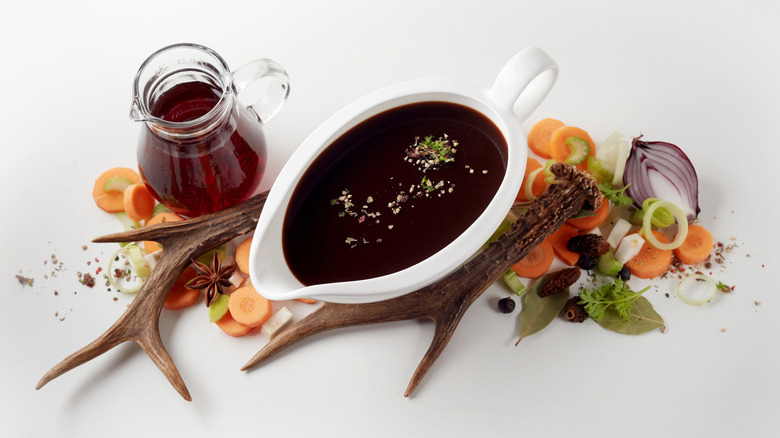
This is likely the easiest swap for soy sauce from a pantry staple standpoint. Worcestershire is a flavorful sauce primarily made from vinegar, molasses, tamarind paste, anchovies, fermented garlic and onion, and spices. The combination of these strong, boldly flavored ingredients gives Worcestershire a deeply concentrated flavor, so a little goes a long way. For marinades or as an ingredient in another sauce, you can swap soy sauce for Worcestershire.
Tamari
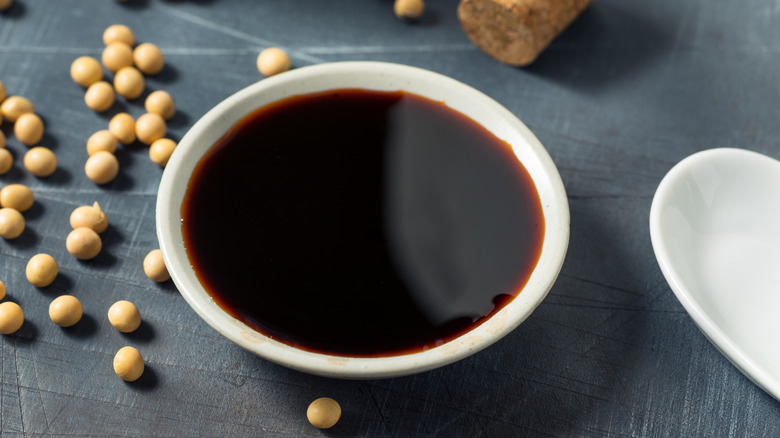
Tamari has a similar profile to soy sauce, but it's slightly richer with less sharp acidity. It's made with soybeans but doesn't contain the wheat that's often found in soy sauce, so it's a good gluten-free alternative. Tamari is commonly used as a dipping sauce, but you can swap it in place of soy sauce in a marinade or other recipe, too. Tamari does have a thicker consistency, so texturally, these two aren't exactly the same, but they're a close match flavor-wise.
Coconut aminos
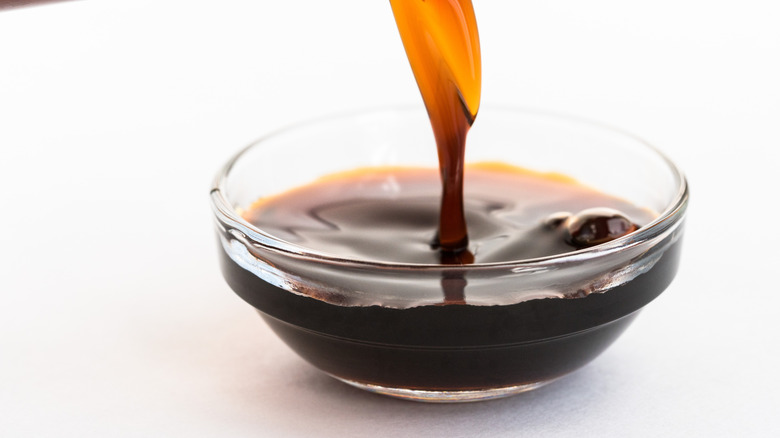
Coconut aminos are a gluten-free, soy-free alternative to soy sauce, but both products share that similar rich, salty flavor. Soy sauce is made from fermented wheat and soybeans; coconut aminos go through a similar process, but the ingredients differ: coconut palm sap, salt, and water are the main components. The result is a soy sauce-like mixture with less sodium and no soy or wheat, making it an allergen-friendly option for sauces and marinades.
Hoisin sauce
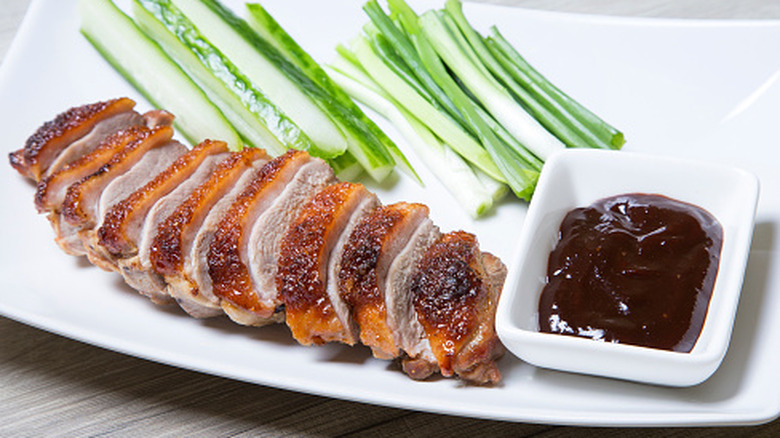
Texturally, hoisin sauce is more similar to barbecue sauce than soy sauce, but it's made from fermented soybean paste to give it that umami flavor that resembles soy sauce. The richness of the sauce is balanced with some tangy, sweet, and spicy notes, giving it more complexity than soy sauce. But since it has that same soybean foundation, it can be used as a substitute. Just keep in mind that if you're adding it to a marinade, the consistency will be slightly thicker.
Maggi
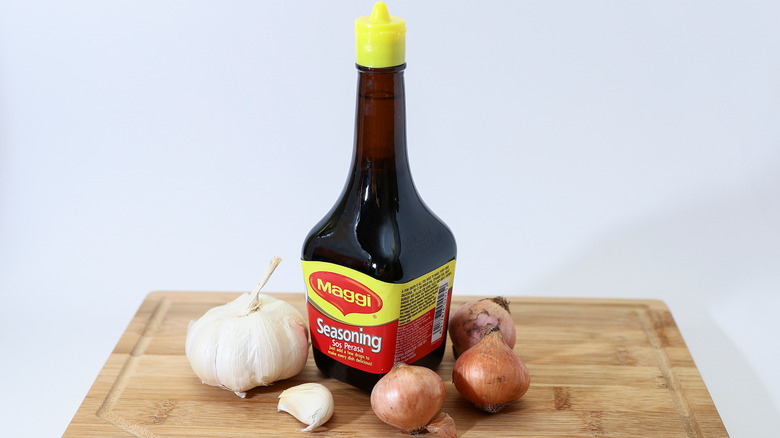
Maggi is made from hydrolyzed wheat protein, or essentially a form of wheat that's been processed with water and other enzymes. Maggi comes in powdered, cubed, and liquid form, but the latter is best when you want a similar texture and color to soy sauce. Maggi's flavor is more complex, but beyond that, the main difference between the two is their ingredients. It is used the same way as soy sauce and is often added to soups, marinades, and other sauces to build that umami flavor.
Fish sauce
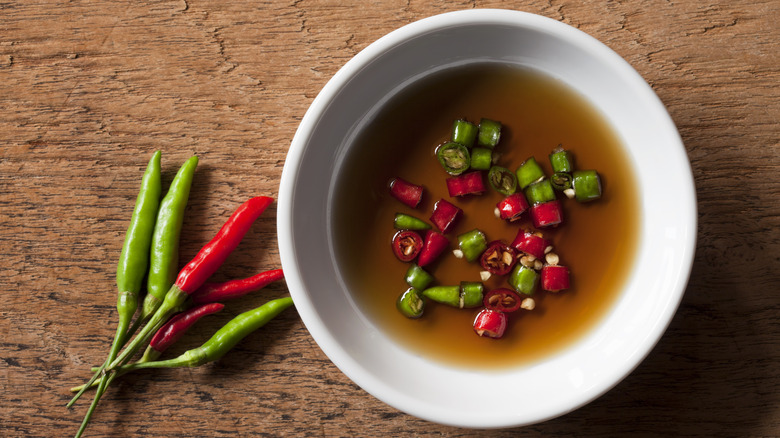
Fish sauce is another fermented sauce, but this one is made with fermented anchovies instead of soybeans. Similarly to Worcestershire, it's a savory, salty-sweet, umami-rich sauce that can be used in place of soy sauce (commonly in place of Worcestershire, too!). In general, fish sauce has a stronger, bolder, fishier flavor than soy sauce, so you might want to use slightly less than a typical 1:1 ratio if you're using fish sauce as a substitute.
Ponzu sauce

Think of ponzu sauce as soy sauce's sweeter sibling. It's often made of a soy sauce base with other balancing ingredients included, such as sugar for sweetness and citrus for brightness. Ponzu sauce is a good substitute for soy sauce if you want a little less of that salty, acidic zing and a little more of a light, refreshing note. It can also stand on its own as a dipping sauce for foods like sushi and gyoza.
Miso
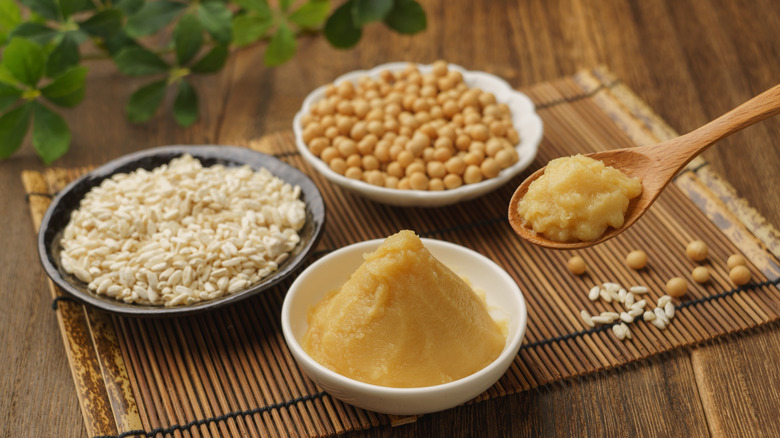
If you've ever had miso soup, then you know miso has a similar salty, rich flavor to soy sauce, but with a lighter color. Miso is a paste made from fermented soybeans, so it has that similar boldness of soy sauce. But miso also contains koji, a culture derived from certain grains (like barley or rice), which gives it a different aroma and complexity compared to soy sauce. Thanks to its rich, salty flavor, miso is a solid soy sauce substitute. For the best flavor comparison, use double the miso.
Balsamic vinegar

Since balsamic vinegar is a typical pantry staple, it's worth talking about how it can replace soy sauce. Traditional balsamic vinegar is made with fermented grapes; it doesn't have quite the salty flavor of soy sauce, and it has a bolder acidity. But if you add a little salt for balance (taste it as you go), it can be a good substitute. It's best to use a balsamic-salt blend when you need soy sauce for a marinade or brine — the flavor profiles are a little too different that it won't quite work as a standalone condiment.
Full-sodium beef broth
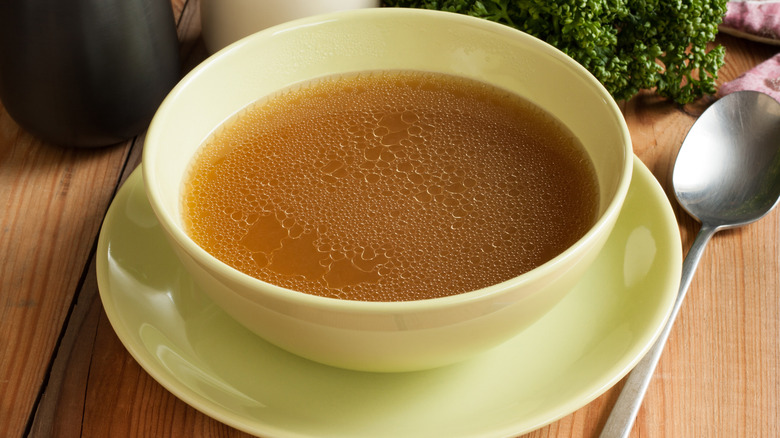
Beef broth is a good pantry staple alternative to soy sauce, though it's not a perfect match. It's far less concentrated than soy sauce, so a direct 1:1 substitute wouldn't yield the same bold, rich flavor that soy sauce would — you'd need about 1 cup of beef broth to yield a similar profile as 1 tablespoon of soy sauce. But by reducing that amount down on the stove until its flavors are concentrated, you can make an umami-rich soy sauce sub that gets the job done in a pinch.