

Why Eating Utensils Are Made From Silver
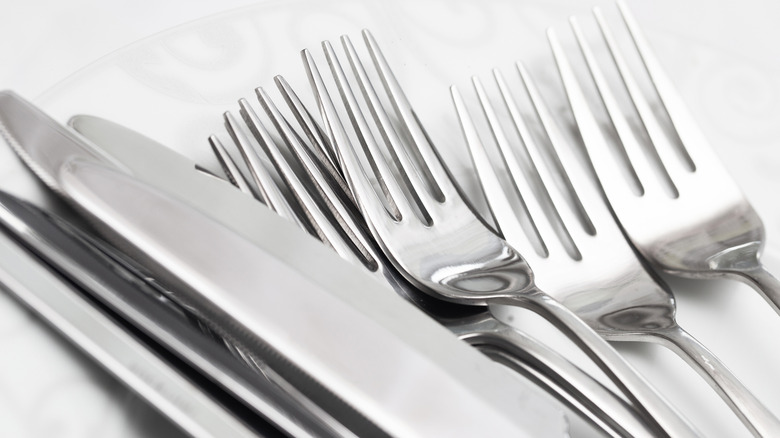
Most of the eating utensils we use today aren't actually made from real silver, so why do we call them "silverware" when stainless steel is the standard for most modern cutlery? Well, silver is closely associated with forks, knives, and spoons for good reason, and it has historically been used in highly coveted cutlery sets. For centuries, it was prized for many of its qualities — valuable enough to signal wealth and status, malleable enough to be crafted into intricate designs, and less reactive than metals like iron or copper (thus less likely to affect the flavor of food). Those qualities made it well suited to tableware — for the people who could afford it, anyway — and it remained on the tables of wealthy households throughout history, from the banquets of ancient Rome to the dining services of the Renaissance.
But pure silver is soft — too soft to sustain modern everyday use without impact — so despite the material's heavy association with tableware, a pure silver spoon used daily would eventually bend and scratch over time. To make it more durable and available for regular use, silversmiths eventually started making cutlery from sterling silver (an alloy containing 92.5% silver and 7.5% copper) or silver-plated base metals. Silver-plated cutlery has a thin layer of silver on top of a base metal, so it has a bright silver finish but it isn't as valuable as sterling silver. The base metal, like copper, makes the cutlery stronger while keeping its classic silver appearance and safety (concerns about copper cookware being safe are usually related to cooking pots rather than cutlery).
How to tell if cutlery is really silver

These days, stainless steel is often a better choice for cutlery because it's cheaper, more durable, more resistant to corrosion, and requires very little maintenance — so it has largely replaced silver for everyday use. However, genuine sterling silver and silver-plated utensils are still widely available today, with many people choosing them for formal dining, special occasions, family heirlooms, or simply because they appreciate their appearance and craftsmanship.
If you do happen to own silver tableware, know that it needs different upkeep than basic stainless steel — cleaning vintage flatware and dishware has its own set of considerations. Silver utensils generally require hand-washing and regular polishing. While true silver is unlikely to be what the average home's cutlery drawers are filled with these days, it has a long history at the dinner table, and that's why many people still refer to forks, knives, and spoons as "silverware," despite the fact that there's a good chance there's no actual silver in them at all.