

Move Over Pesto: The Italian Condiment You Need To Try On Pizza
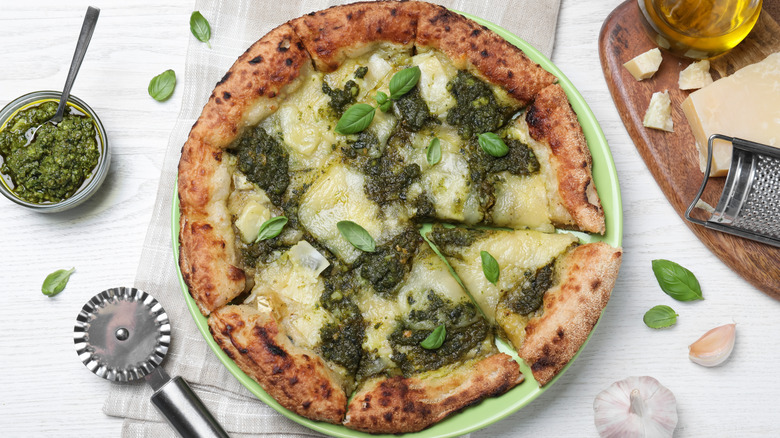
If you've been slapping basil pesto on your pizza for some extra flavor, but looking for something with a bit more punch, here's an idea: Italian salsa verde. If the name sounds familiar, there's a chance you're thinking of the synonymous Mexican salsa, which is made with tomatillos and cilantro. Its Italian namesake is completely different and doesn't share any key ingredients. It hails from Piedmont in northwestern Italy (the area around Turin), and in the local dialect, it's also called bagnet vert, aka green sauce. It originated out of the region's streets of salt (vie del sale); routes that went from the Mediterranean Sea inland to Piedmont, bringing products like salt, anchovies, and olive oil into the province.
In the 1800s, salsa verde was made with parsley, anchovies, olive oil, garlic, capers, onion, basil, and lemon juice. Nowadays, the parsley, anchovies, olive oil, garlic, and capers are still there; basil is less common, and you'll find hard-boiled egg yolks as well as breadcrumbs in the sauce to thicken it. When it comes to acid, some recipes still use lemon, while others call for vinegar. The ingredients are blended together into a vibrant green paste that texture wise is a bit like pesto: smooth but not liquid. Flavor-wise, it's a dynamic mix: The anchovies give an umami base that's infused with herby parsley and sharper notes from the vinegar or lemon and the salty capers, along with a solid hit of garlic underpinning it all. All-in-all, it will give your pizza a much more complex, salty, briny, umami-rich flavor than the nutty pesto.
What to do with it — pizza and beyond
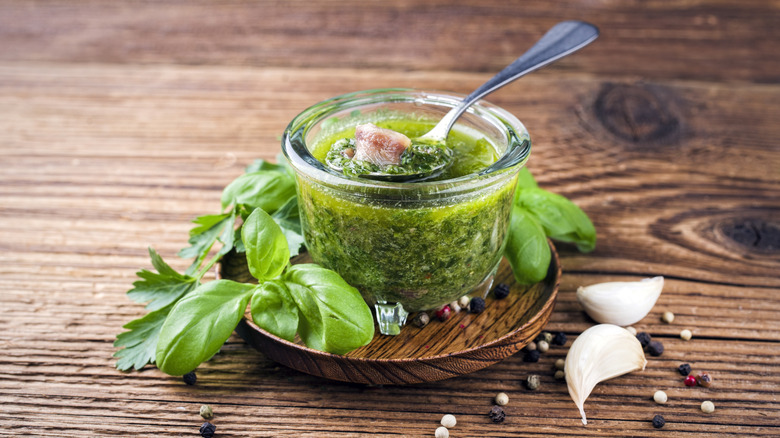
Salsa verde is a good way to add extra pizzazz to your pizza. You can use it as a green sauce base in place of pesto, or add dollops of it on top of a red sauce pizza for pops of herby, tangy flavor. Or, use it simply as a sauce to dip your pizza in. That said, you can use this condiment on more than just pizza.
Historically, Italian salsa verde went with meat dishes and was a status symbol of sorts as a result , since only wealthy families could routinely afford to serve meat. At present, it still gets served with meat, particularly with bollito misto, a very meaty stew that mixes various beef cuts with herbs, spices, and aromatics. But it now has a place beyond meat: In Piedmont, you'll see it put on tomini (small, fresh cheeses) and added to a simple, herby bruschetta as a tasty pre-dinner aperitivo snack. It also appears on other small bites like boiled eggs and crostini.
Further south, in Florence you may find it on a panini alongside lampredotto, an underrated Italian sandwich made with a tripe-like stewed cow stomach. It's maybe not for everybody, but you can draw inspiration and use salsa verde on a meaty sandwich of your choice (between this and bollito misto, a beef sandwich may be the closest fit).
Despite these traditions, there's nothing obliging you to put salsa verde on meat — it's pretty versatile and works with a range of vegetables. Roasted or grilled vegetables are strong candidates for some salsa verde, and it goes great with chickpeas or cannellini beans as a salad of sorts. Otherwise, just spread it on bread as a light snack.