

Keep Your Mixer Off The Counter With A Hidden Storage Solution
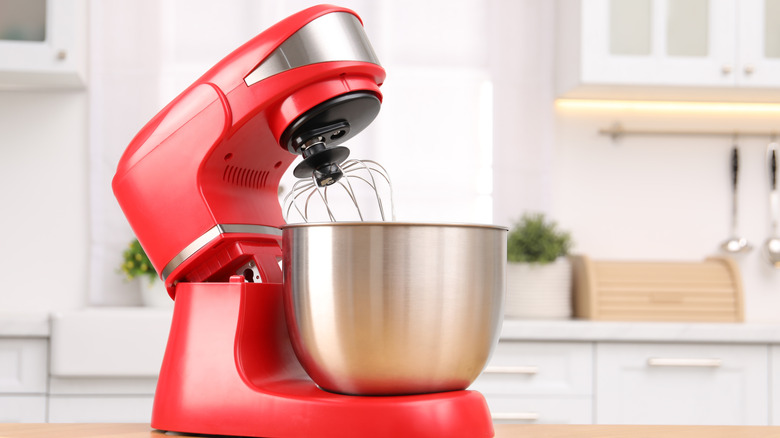
These days, there are so many things KitchenAids and other stand mixers can do, it's worth having one, even if you never bake. From turning out perfectly julienned veggies to whipping air into fluffy mashed potatoes, they can save you lots of time and elbow grease in the kitchen. The only real issue is what to do with it when it's not in use. Even if you have a unique, limited series KitchenAid color or a beautiful hue from another brand, they're heavy, clunky, and take up a ton of counter space.
Fortunately, the almighty mixer lift offers a fairly simple solution. Essentially, these lifts are floating shelves attached to sturdy metal brackets installed into one of your lower cabinets. When not in use, your mixer sits on this shelf inside the cabinet, swinging up and out to float over the floor at counter-level when you're ready to whip up a batch of cookies and cream muffins. Many also feature a soft-close mechanism that offsets the weight of the mixer, letting it basically "park" itself for use or storage with little effort and almost no risk of it toppling over.
However, these lifts do require you to sacrifice storage inside a lower cabinet to give it enough room to swing up and down safely. They can also be fairly expensive, running $300 and higher depending on the model you choose and if you have it professionally installed.
Staying within budget and adhering to safety guidelines
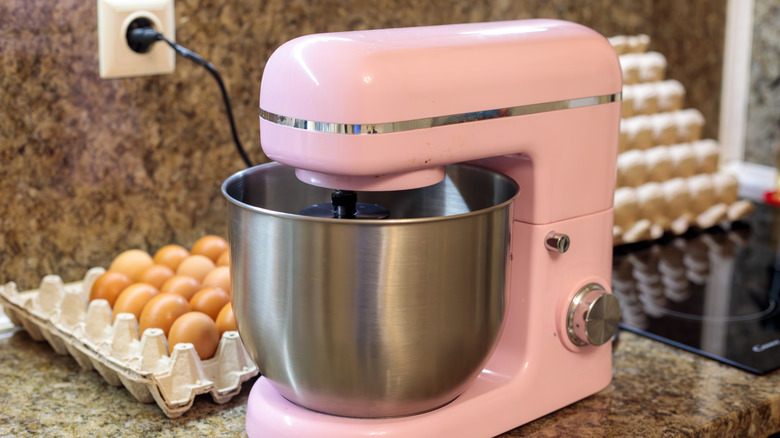
Basic mixer lift units can cost anywhere from about $80 to $160 for just the mechanism, depending on whether or not you want the soft-close feature. Soft-close is the more expensive option, but it's also the safer one since, as mentioned, it requires little strength or effort to maneuver into place. It's also a good choice for those with less upper body strength, or with disabilities affecting their arms and hands.
Price is also dependent on the style of shelf you choose since most lifts don't include a shelving block. Mixer lift retailers often sell the shelves separately, but you may be able to find less-expensive options at your local hardware store. Either way, how much your shelf choice adds to the price of the whole mechanism depends on the material you choose; something like medium-density fiberboard is naturally less expensive than maple or cherry wood, for example. If at all possible, choose a durable material with plenty of longevity — it saves you money in the long run.
The final aspect to consider is whether or not to install the lift mechanism yourself. While installation is relatively straightforward and doing it yourself saves you the extra fee, it's worth having a professional do the work if you've never done this kind of project before. Professional installation also means that person is qualified to identify and compensate for potential issues, such as leaning cabinet walls.