

The Stinky French Cheese That's Outright Banned In The US
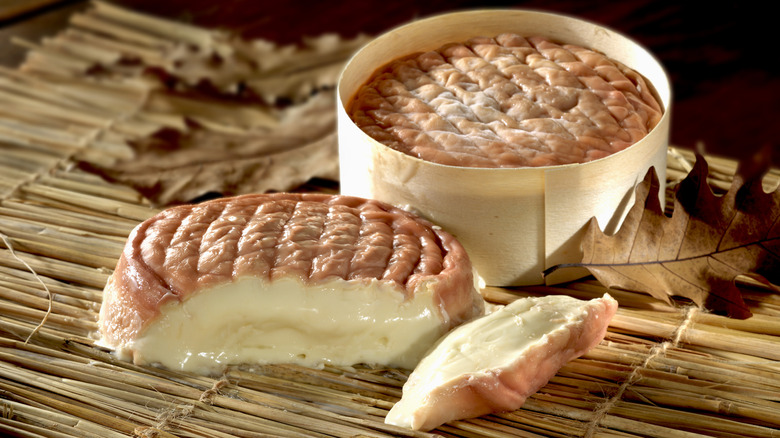
If there's one thing the French take great pride in (apart from their wine, of course), it's their cheese. France is home to nearly 1,600 different varieties of this dairy product. If that's not enough, cheese is so deeply rooted in the nation's culture that it even has its own serving time — cheese boards are served after dinner there. These boards can include everything, whether mild, creamy Brie or sharp, stinky Roquefort. However, if you think blue cheese is as strong as it gets, think again. Ever heard about Époisses? If you haven't, it may be because the traditional version is banned in the U.S.
Originating in Burgundy, Époisses (or Époisses de Bourgogne) is a pungent, soft-ripened cheese that's aged for approximately four weeks. During that time, it's regularly washed with Marc de Bourgogne, a local pomace brandy, which gives it its distinctive orange rind. It's rich, creamy, slightly tangy, and has nutty and earthy notes. It also proudly ranks among the world's stinkiest cheeses. In fact, many compare its smell to that of an "unwashed skunk." That said, as much as its notorious, rotten-egg smell might seem like a good enough reason to ban it, the real issue is that it's made from raw milk. Because the milk is unpasteurized, it doesn't meet U.S. import requirements. According to the U.S. Food and Drug Administration (FDA), raw-milk cheese must be aged for at least 60 days to be sold in the country.
Why Americans get a different version of this cheese
Raw milk cheeses are subject to stricter regulation in the U.S. because unpasteurized milk can harbor harmful bacteria, including Salmonella, Listeria, Escherichia coli (E. coli), and Campylobacter. Pasteurization, which involves heating the milk to kill bacteria before rapidly cooling it to preserve its taste and nutritional profile, reduces the risk of food poisoning and other serious infections associated with these bacteria. While the risks of raw milk are often debated online, the dangers of raw milk you won't hear about on TikTok are one reason regulators take extra precautions with unpasteurized dairy products.
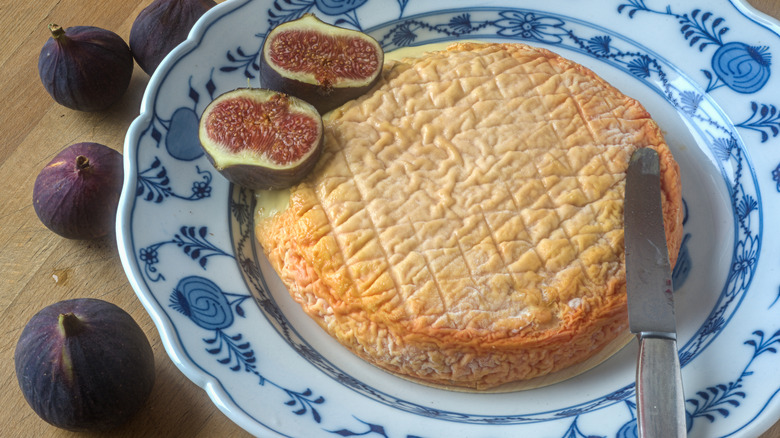
Despite efforts to expand access to authentic Époisses, for now, the Époisses available in the U.S. is produced using pasteurized milk. While it differs from the original, it's still worth a taste. It's one of the best beer and cheese pairings you need to try. It's most commonly enjoyed scooped straight from the center of the wheel and spread over crusty bread. You can also pair it with some figs or crisp apple slices. And if you're baking veggies or potatoes, let it melt on top for an extra layer of gooeyness. Ultimately, Époisses makes an outstanding topping for steaks and burgers.