

Flavor-Packed Baby Back Ribs Start With This Classic Italian Sauce
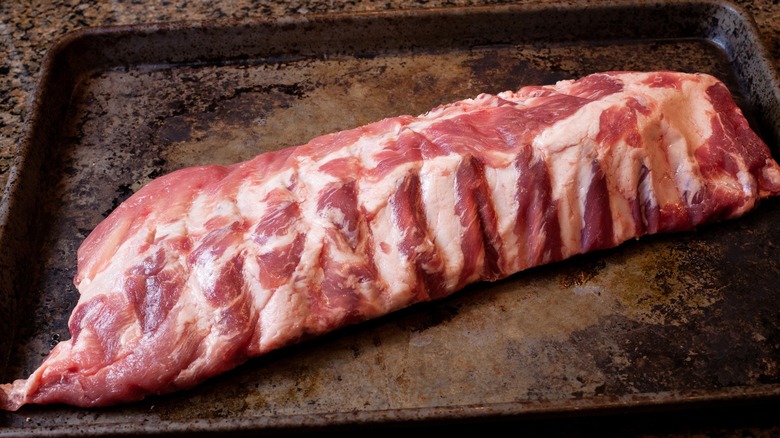
Whether you enjoy them smothered in barbecue sauce or with orange marmalade to add a delicious sweet touch to your rib meat, the options for your baby back ribs are endless. While sweet flavors make a great pairing for pork, savory additions can really make your ribs pop too. If you're looking to go beyond the typical barbecue flavors for a way to make your baby back ribs the star of your cookout, try adding pesto sauce for an unforgettable taste.
This traditional Italian pasta sauce is a tasty pairing for meats like pork because the rich, fatty meat contrasts well with the herbal flavors pesto offers. Plus, the hint of Parmesan cheese and creamy nuttiness from the pine nuts adds a wonderful umami finish. Whether you're buying one of the many tasty pesto options at the grocery store or making your own homemade sauce, baby back ribs brushed with it are sure to shine.
How to add pesto to your baby back ribs
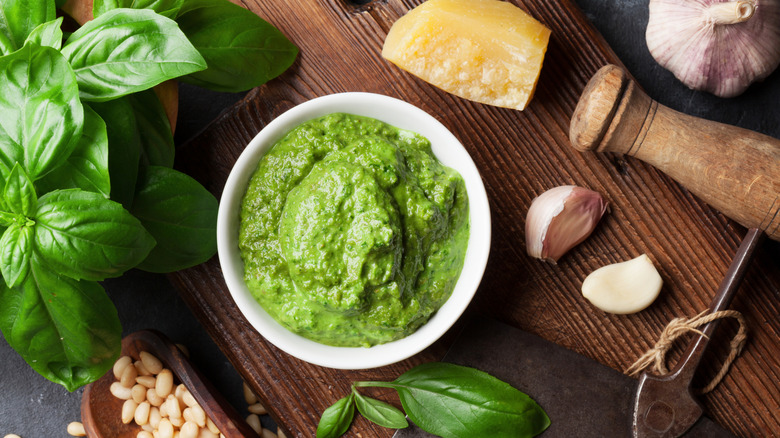
Making pesto baby back ribs starts with adding a dry rub. You can do so with a simple seasoning combination like salt, pepper, onion powder, garlic powder, and paprika, or choose something more adventurous. For example, you can mix ground red peppercorns with fennel, chile flakes, paprika, and oregano for a complementary kick.
When it comes to the pesto sauce, the classic recipe calls for pine nuts, basil, Parmesan, garlic, olive oil, salt, and pepper, but if you want to get creative, try adding cilantro and jalapeños for extra spice. You could even turn it into a chimichurri pesto sauce by adding cilantro, parsley, and lime juice to the other ingredients (homemade or store-bought). For a homemade recipe, be sure your olive oil isn't too old or it can add a bitter flavor to your pesto and therefore your ribs. When adding the pesto to your ribs, it's best to spread it on right before they finish cooking to let the flavors meld.
The final result will be juicy, tender ribs with a rich, garlicky, herby flavor. If you have leftover pesto, you can even use the extra as a dipping sauce. In fact, you might want to save some specifically for that purpose.