

This Is What Happens To Eggs If You Boil Them For Too Long — And How To Salvage Them
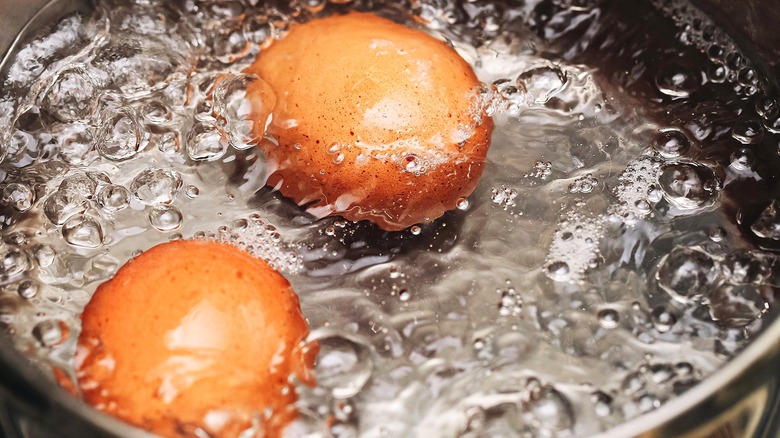
Whether you're trying to make jammy eggs with scallion drizzle for your next bowl of ramen or you're boiling a bunch of eggs for an easy on-the-go breakfast, preparing perfectly cooked hard-boiled eggs is no easy feat. Fortunately, there are a few ways to tell if you boiled your last batch longer than you should have.
In terms of texture, overcooked hard-boiled egg whites have a somewhat firm, rubbery consistency while the yolks are dry and crumbly. Beyond these distinguishing characteristics, one of the more obvious signs of overcooking is the grayish-green color that often appears around the exterior of the yolks. This unsightly off-color ring is a chemical reaction that occurs when the sulfur in egg whites interacts with the iron in egg yolks. When overcooked, these two compounds come together and form ferrous sulfide where the yolk and white meet (which is completely harmless).
As a matter of fact, overcooked hard-boiled eggs are still 100% safe to consume, but you may need to make a few adjustments to make them more enjoyable. For example, instead of eating them whole with some toast for breakfast, top your bread with mashed avocado or cottage cheese to give this meal a little extra moisture, then add sliced eggs on top.
How to make meals with overcooked hard-boiled eggs more satisfying

Beyond adjusting your go-to breakfast plate, another solid way to put overcooked eggs to good use is to incorporate them into creamy, moisture-rich dishes that mask their drier-than-usual consistency. Keep it simple by preparing a three-ingredient egg salad with eggs, mayonnaise, and mustard. You can also mash your hard-boiled eggs and add them to a multitude of other creamy salads, such as tuna or potato.
Another enjoyable way to use overboiled eggs is to add them to green salads with tons of fresh herbs and green veggies that mask their grayish-green color. You can also incorporate them into hot, brothy soups. The hot liquid can indirectly soften the texture of your eggs and make them more pleasing to your palate. All in all, there are many ways to consume and enjoy overboiled eggs.
However, perfecting your cooking method may help you avoid overcooking your next batch. For noteworthy results every time, gently simmer your eggs in boiling water for 11 minutes, then remove them from the heat. Once you get the timing right, you can then follow a few trustworthy hard-boiled egg hacks. For instance, when your eggs finish boiling, stop any risk of carryover cooking by shocking your eggs in a bowl of icy water for 10 to 15 minutes.