

Quick Pickles Are An Easy Way To Give Meals A Flavor Boost, But How Long Should They Marinate?
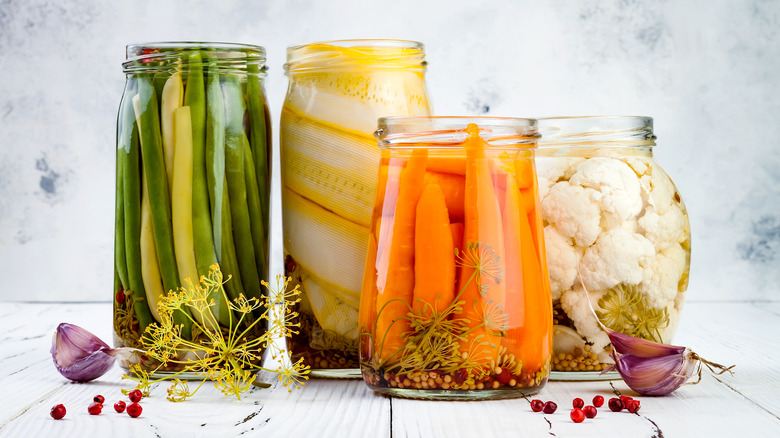
Making homemade quick pickles isn't just a practical method to preserve surplus from your garden or use up the veggies chilling in your crisper drawer. It's also a fabulous way to fill your larder with flavor. Pickling foods yourself means you can go classic with white vinegar and dill, or turn homemade pickles tangy with a drizzle of honey. The method is also fairly simple: just pack sanitized jars with your veggies of choice, add hot brine, remove air bubbles, seal, cool, and refrigerate for at least 48 hours.
It's during refrigeration that the real work happens. Essentially, the way pickling works is that the salt- and vinegar-heavy brine pushes excess water out of the veggies, and carries the brine and accompanying flavors into them. That's why pickles are crispy despite sitting in liquid, and how they take on their familiar sharp, bright, delicious pickle flavor. As you can imagine, though, this osmosis-driven process takes time. If you were to dig into one of those jars an hour or two after putting everything together, you'd just get a mouthful of vaguely vinegary raw veggies. The 48-hour mark is the sweet spot where veg and brine have had time to get to know each other and create what you'd call a true pickle — whether or not they're made of cucumbers.
Making and using quick pickles
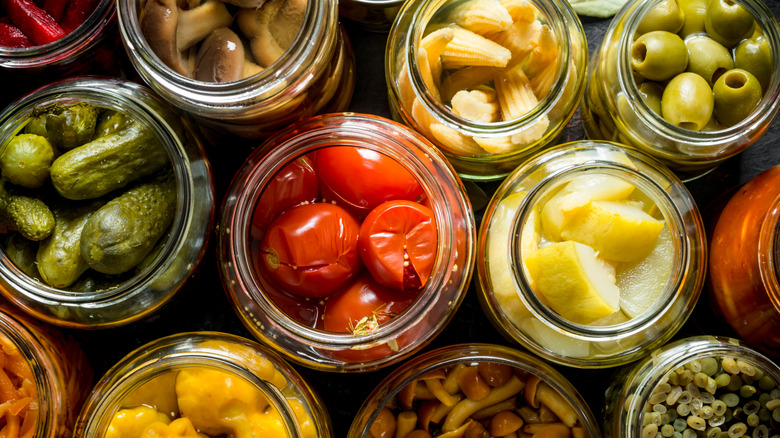
Though refrigerator pickles aren't the most efficient way to resolve a pickle craving, knowing how to make them properly can significantly reduce food waste in your home since they stay fresh and crisp for about two weeks. Even better, you can make a homemade pickle medley with that slightly wrinkly red bell pepper, half a cucumber, and container of raw cauliflower. You can also set aside fresh herbs, cloves of garlic, or that shallot you bought with the best intentions; they offer lots of bright, delicious flavor to your vinegar brine, though ground spices and dried herbs also work well. You can also get creative with your vinegar, such as using apple cider vinegar for a fruitier, sweeter mix or sticking to rice wine vinegar if you love Asian flavors.
After those all-important initial 48 hours, your custom pickle blend should be ready to stuff inside sandwiches, add to salads, or layer over roasted fish and meat. Pickles are also the perfect pairing with potatoes since the starches soak up all that gorgeous flavor while simultaneously offering a tender, hearty counterpoint to the pickles' crisp brininess.