

How To Properly Clean Electric Coil Stovetop Burners To Remove Burnt-On Residue
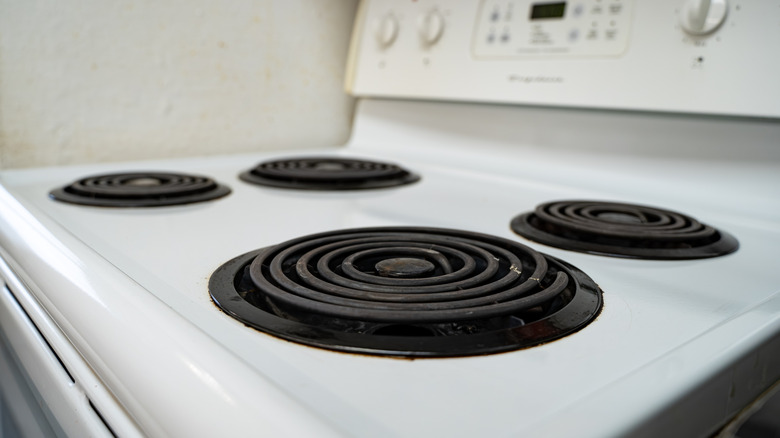
Look, we understand, nobody likes cleaning. It's the single most boring activity on the planet, and it's safe to say that nobody ever agreed to do it. Then again, like it or not, it's not optional, particularly when it comes to maintaining your kitchen's hygiene. It's generally recommended to clean the sink weekly, the countertops daily, and the stovetop after every use. However, one of the most common mistakes everyone makes when cooking on an electric stovetop is neglecting to clean the burners regularly in order to remove burnt-on residue.
Glenn Lewis, president of the leading appliance repair company in the U.S., Mr. Appliance, and part of the Neighborly family, revealed in an exclusive talk that a baking soda paste and a damp cloth are all you need to keep the coils tidy and clean. "First, make sure the burners are off and completely cooled before cleaning them," Glenn Lewis told Chowhound. "Remove any food debris and grease around the burners." While paying close attention to the manufacturer's cleaning recommendations is key, Lewis also suggested avoiding harsh chemicals, as they can damage the coils or stovetop surface.
In case of stubborn burnt-on residue, however, let the baking soda paste work its magic for about 15 minutes before gently scrubbing it with a non-abrasive sponge. Then simply wipe it clean. Moreover, wash the drip pans in warm, soapy water, and then dry them and the coils thoroughly before reinstalling. Just as importantly, make sure to avoid pouring cleaning agents over the coils, as well as soaking them in water.
Cleaning after every use makes maintenance easier
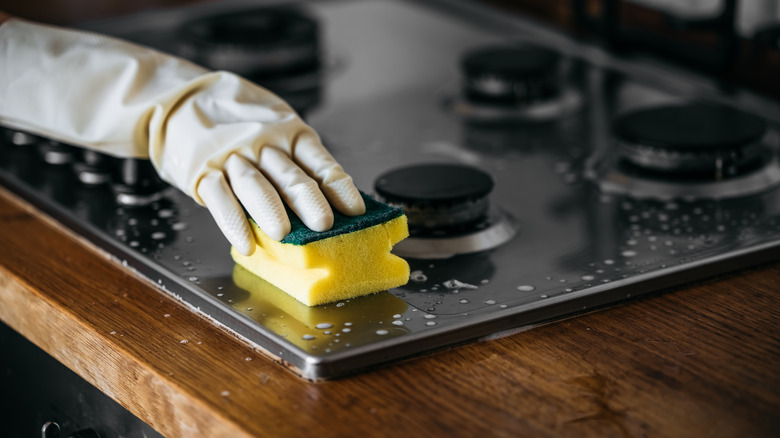
If your stovetop is gunky, don't make this huge cleaning mistake. Get to work — the sooner you clean it, the better. When asked about common cleaning mistakes that can cause damage to the electric stove burners, Glenn Lewis suggested limiting the use of harsh chemical cleaners and degreasers, especially when it comes to self-cleaning ovens. The reason for this is that they can compromise the interior for good. "Mr. Appliance specifically advises against using commercial oven cleaners before or after a self-clean cycle because they can damage the appliance," Lewis said. "Abrasive materials should also be avoided to help preserve surfaces and finishes."
Even though high cooking temperatures usually destroy bacteria from developing in the kitchen, old residue can actually trap grease, moisture, and various food particles. This, as a result, can create the perfect breeding ground for bacteria and increase the risk of contamination. To prevent residue from continuously building up, according to Lewis, the fix is surprisingly simple: Be proactive and never leave your cooktop dirty. It's undoubtedly the easiest way to keep your kitchen tidy without long cleaning sessions. "Be sure the cooktop is cooled down, then gently wipe away any debris and residue buildup," he concluded. "If you are consistent about cleaning after you cook, the less residue buildup you'll have."