

Almost Every Stove Had This Built-In Feature For Soup In The '30s. Now You Never See It
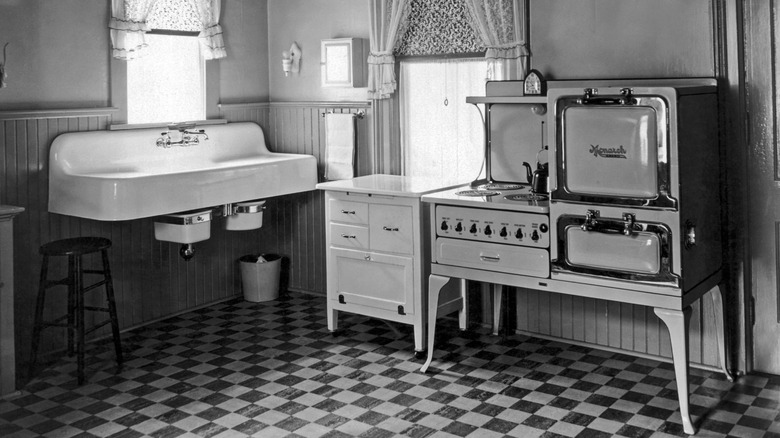
If you were suddenly transported into a kitchen from the 1930s, you'd be able to find your way around pretty well. Refrigerators were commonplace by this decade, as were large sinks and cabinetry. The stove would likely be electric too, as these were swiftly replacing gas models during this era. Take a closer look, though, and one of the stove burners might look pretty different from anything you've seen in your lifetime. Looking less like a burner and more like a deep pot built straight down into the stovetop, this would be a deep well cooker, also sometimes called a thermowell.
Essentially, this feature functioned like a Crock-Pot built right into your stove, making it perfect for soups and stews, though it could also handle foods like roasts, among others. And, although it was incredibly common in the 1930s and in the few decades following — as indicated by older Americans who reminisce about their mothers and grandmothers using this type of stove design during their youth — you'd be hard-pressed to find a modern appliance featuring a deep well cooker today.
The rise of the American housewife and the deep well cooker stove
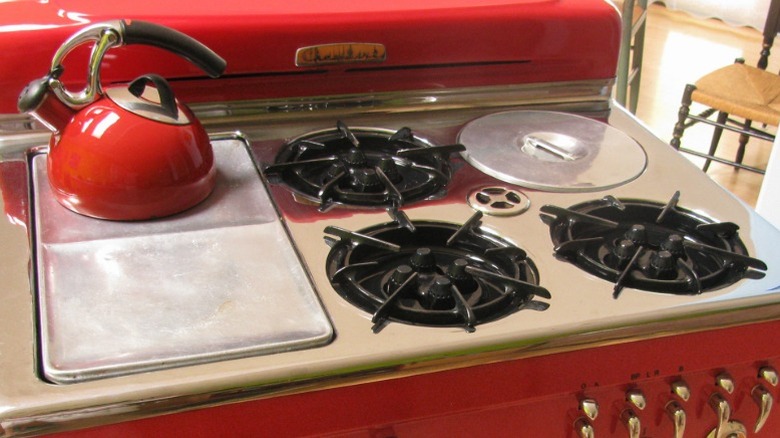
As vintage advertisements show, deep well cookers were heavily marketed for their convenience — especially when it came to the busy housewife. Although modern perceptions commonly associate the 1950s with the stereotypical housewife who cooked impressive meals while cleaning and caring for children, it was 1930s homemakers who sought convenience and frugality during the Great Depression. Deep well cookers certainly fit the bill, prioritizing function over beauty.
Although information on their development is limited, the benefits of this unique range design are clear; deep well cookers featured lower-set heating elements with a removable insulated pot, allowing soups, stews, vegetables, etc. to be cooked with more efficiency than if you were to just set them out in a regular pot atop a surface stovetop burner. Thanks to its enclosed design within the stove, food could be heated and cooked more evenly because the entire pot was exposed to heat. The person cooking could fill the pot with their desired food, turn on the settings as desired, and then leave it alone to cook while getting other tasks done. It also just worked well for busy households and kitchens with limited breathing room — since the cooking pot sat below the surface of the stove, it was less likely to get shifted or knocked over. Many models also came with their own lids for added security. It's just another reason why modern stoves aren't as awesome as vintage versions.
Why deep well cookers went away
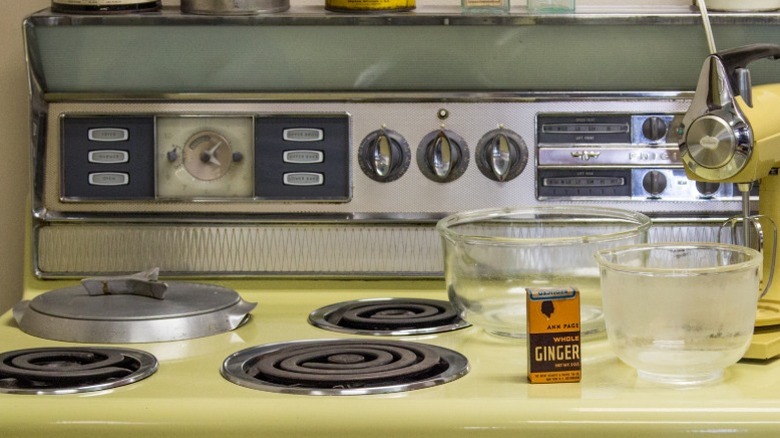
The concept of a deep well cooker may seem objectively pretty neat — especially if you enjoy things like stews, soups, and slow roasts — so what happened? Despite their advantages, deep well cookers were conspicuously absent in new stove ads from the early 1960s, indicating that they had already fallen out of favor by then. An important thing to note here is the rise of the slow cooker, an early version of which gained a patent in the 1940s and went to market in the 1950s. If you know how to use a Crock-Pot like a pro, you already know these things are as convenient and versatile for cleaning and storage as they are for cooking meals on a busy schedule.
Another likely reason for deep well cookers vanishing was simply changing cooking habits. Just as people have stopped using other vintage kitchen tools due to changing lifestyle trends and kitchen technology updates, the deep well cooker came from a time before there were other more convenient options for the same purpose. But in the 1960s and 1970s, as more households embraced frozen dinners, microwaves, and easy portable devices like Crock-Pots, the appeal of thermowells just wasn't there anymore. You can still find the inserts for them on eBay and get a look at the whole vintage oven sets among collectors on social media, but it's safe to say that the heyday of the deep well cooker is long gone.