

Pre-Chopped Onions Can Save You Time In The Kitchen, But There's A Catch
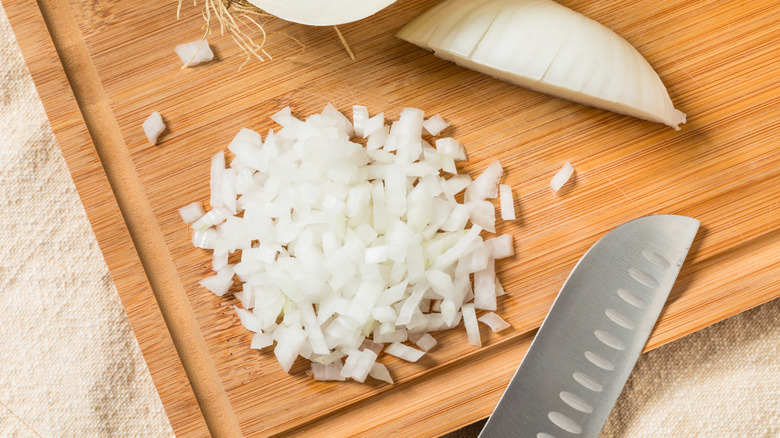
One of the most time-consuming parts of cooking is the prep work. Chopping vegetables, for example, requires precision — all the veggie pieces should ideally be the same size. But if you want to whip up some chili or fajitas and can't avoid chopping onions, there's a shortcut: purchase pre-cut produce at the grocery store. However, this might not be as solid of a plan as you think: Pre-cut veggies, including onions, carry a higher food safety risk.
When the skin of an onion is broken, it quickly makes the onions more susceptible to bacteria and pathogen growth. And if a pathogen is on one part of an onion, dicing or chopping multiple onions with the same knife can transfer those pathogens to all onions. When you purchase pre-cut onions at the store, you don't know how they were handled prior to ending up on store shelves. That increased food safety risk means it's not the best idea to purchase them pre-cut. With that said, heat does kill bacteria, so if you know you'll be sautéing or caramelizing the onions for an extended period of time, that food safety risk is lower.
Pre-cut onions are also more expensive
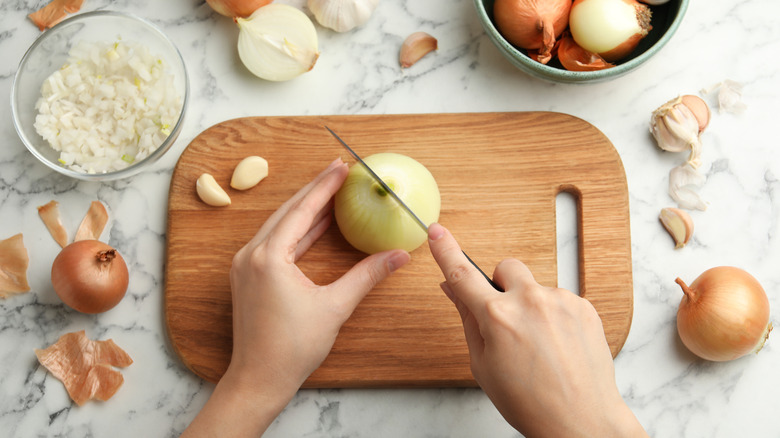
If you're someone who price checks every grocery store item, then it's easy to tell that pre-cut onions are much more expensive than buying a whole onion. If the increased safety risk wasn't enough, consider how much more you'll pay if you purchase pre-cut onions each week. One whole yellow onion might cost around $0.50, while a ½ pound container of chopped yellow onion could cost around $3. A medium-sized 3-inch onion weighs about 8 ounces, so you're spending the equivalent of nearly six onions to purchase them pre-chopped.
If you want to save money and steer clear of pathogen concerns, an easy solve is simply learning how to chop onions better. A big part of the reason chopping vegetables is tedious is because many people don't know how to do it. To easily chop an onion, the trick is to cut the onion in half through the root, then create vertical cuts from root to tip before switching the direction of the knife to be perpendicular to those cuts, and chopping again. This lets you chop the onion without the pieces flying everywhere and keeps the process streamlined. And to protect your eyes from that burning sensation, try wearing a pair of goggles (it works!). You can also chop the onion slowly with a sharp blade, reducing the amount of chemicals released.