

How To Choose The Best Pork Ribs For Your Cookout
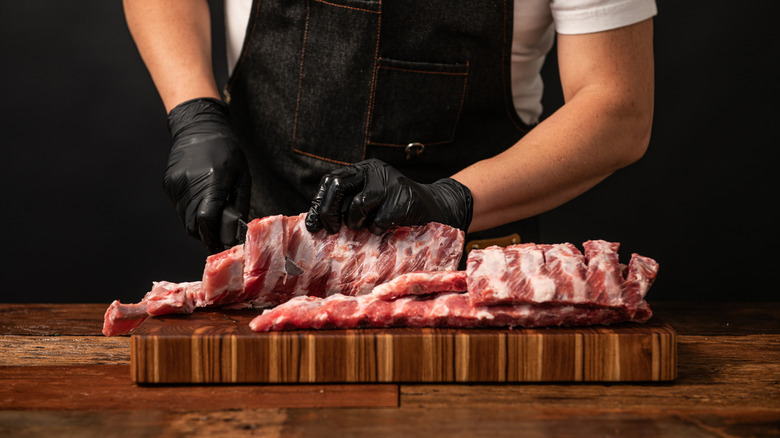
Hosting a successful cookout depends on two main factors: serving great barbecue, and having enough of it. Fortunately, it's pretty easy to guarantee both, especially when you know the secrets to choosing pork ribs. First and foremost, you need to do barbecue math to ensure there are enough ribs to go around, followed closely by understanding what to look for at your local meat market.
When choosing pork ribs, you have three main options: spare ribs, baby backs, and St. Louis style. Spare ribs and St. Louis style are both from the lower part of the rib cage, closer to the belly, while baby back ribs are literally a cut above that, closer to the spine. Spare and St. Louis are longer with more fat, while baby backs are shorter with more meat. Baby backs are best saved for special occasions since they're the more expensive option, both because they're so popular and because they feed fewer people per rack.
Spare ribs and St. Louis ribs are basically the same thing — St. Louis are just trimmed up to be a neat, tidy rectangle with less connective tissue to ensure they cook more evenly. This extra trimming also makes them more expensive than untrimmed spare ribs, so if you want to feed a crowd on a budget, spare ribs are the way to go. However, St. Louis style feeds just as many people per rack, so if you have wiggle room in the budget, they're the most impressive option.
More signs of high-quality pork ribs
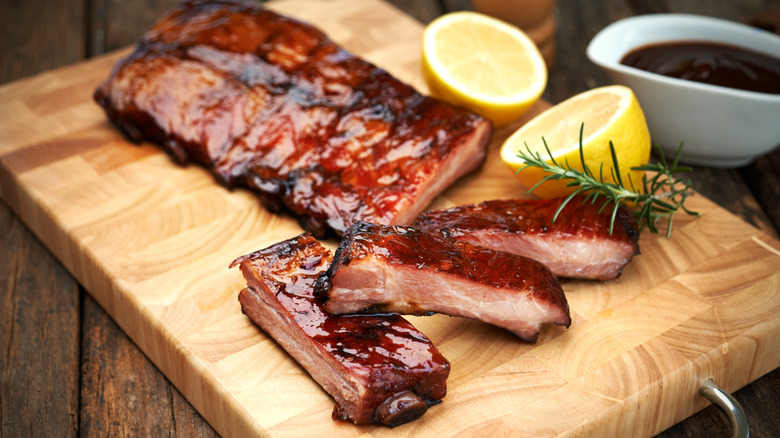
Once you've decided which style of ribs works best for your budget and the size of your gathering, it's also important to choose nice, fresh pork ribs that have been processed properly. Skip racks with patches of bone showing through the length of the ribs. Called "shiners," these areas indicate a careless butcher has removed too much of the meat, meaning less for you to enjoy. The meat should also be a uniform deep pink or rich maroon color with an even distribution of white veins of fat, indicating it's fresh with the potential to be tender and juicy once you've grilled your ribs at the proper temperature.
As with purchasing any fresh protein, avoid pork ribs that are a dulled pink color or beginning to turn gray. They should also smell sharp and vaguely meaty; avoid anything with a sour or unpleasant odor. If you get the chance to test the texture of the meat, it should feel firm and moist. If the edges are dull and look shriveled, that's a sign the pork is less than fresh, and may be tough after they've been cooked.
Of course, high-quality pork ribs can be expensive, so after picking up the freshest ribs you can find, it's a good idea to have a list of low-effort, delicious barbecue side dish recipes ready to go. That way, everyone can enjoy their share of sticky, tangy pork ribs on a plate crowded to the brim.