

The Best Temperature To Perfectly Cook Filet Mignon In The Oven
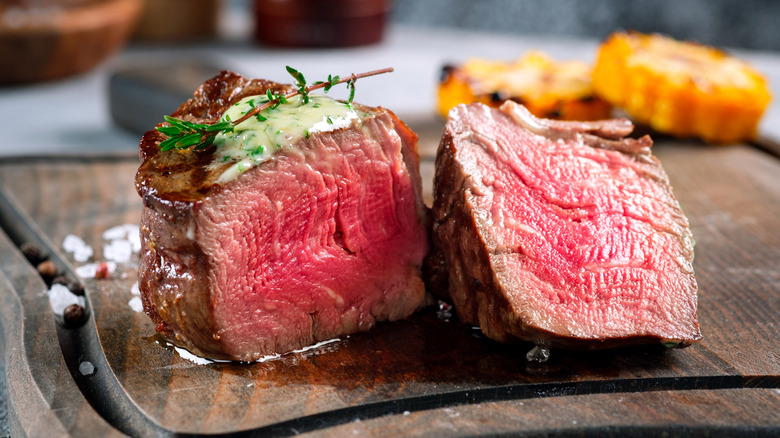
Even when you're making it at home, filet mignon is among the most expensive cuts of steak that a person can buy, so you should really aim to get it right every time. Some schools of culinary wisdom will occasionally suggest that one less conventional preparation method or another is the beefy new end-all and be-all, but a good stovetop sear and an oven finish will always do you right. And you want to set your oven to 400 degrees Fahrenheit to make sure that your spendy filets achieve the ideal doneness.
A 400-degree oven will cook your meat evenly and keep it optimally juicy. Set the dial higher, and you'll risk overdoing the outside while you wait for the inside to reach your preferred rare, medium, or (best avoided) well-done steak temperature. Set it too low and the meat will take too long to come up to temperature, drying it out and losing that coveted, flavor-enhancing moisture in the process. Paired with a stovetop sear, a 400-degree oven creates a beautifully browned crust while preserving the flavor that made you buy the cut in the first place.
How to sear and oven-finish filet mignon
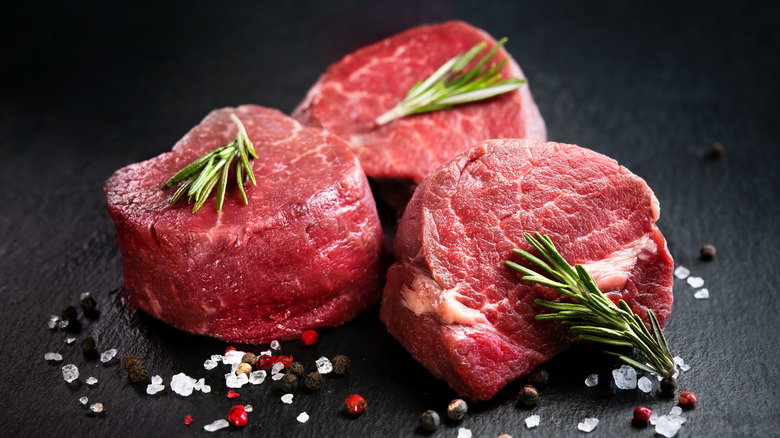
You must start your filet mignon on the stovetop to begin with before you can finish it in the oven, but go ahead and preheat that baby to 400 degrees so it's ready for the big transfer. You can pat your steaks dry, season them, and fire an oiled pan over medium-high while the oven warms up. A cast-iron pan is ideal for a steak preparations such as this. Once the oil starts to shimmer like a gently rippling pond, it's time to sizzle those steaks upon its slick surface. About two minutes on each side will activate the Maillard reaction that gives your steak the color, texture, and flavor that you're after.
Once the steak is seared, you can move it to the oven. Start checking for doneness after about five minutes. A lovely mauve medium rare will hover right around 130 degrees Fahrenheit on a digital thermometer. Carryover cooking means that temp will continue to rise even after you've pulled it from the heat, so you may want to do so a few degrees under the target temperature. After your steak has rested for a few more minutes, it should land right at your intended target. Remember that you can always give it a little more time if necessary, but you can't turn back the clock on a lovely filet that's been overdone.