

One Sneaky Kitchen Appliance Could Be Raising Your Electric Bill Every Month
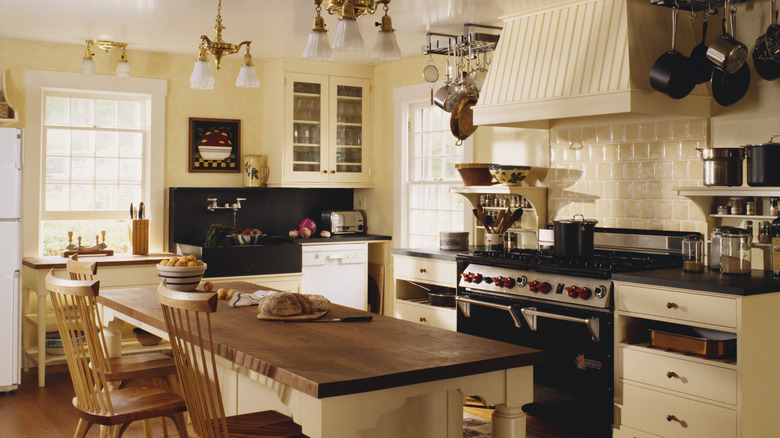
In this economy, it's only natural to want to save a few bucks in any way we can. You might not be aware, but an electric stovetop is one of the kitchen appliances that's raising your electricity bill. To give you a rough idea, it costs $0.10 per kilowatt-hour to cook your dishes on a single stovetop. Depending on where you are, it can be more expensive to use compared to using one that runs on gas.
An electric stovetop consumes 2,000 to 5,000 watts, but its exact numbers — and costs — depend on how you're using it, including the temperature. Evidently, the higher the temperature, the more power it consumes. That said, the cost shouldn't be far off, even if you change the heat settings or adjust the cooking time, but that can only be the case in day-to-day use at home. Restaurants using an electric stovetop constantly would see the difference much more.
Compared to other kitchen appliances, electric stovetops can require significantly more power to use. A refrigerator uses somewhere between 100 and 400 watts. But it can cost you more since it runs around the clock. Meanwhile, the numbers for a microwave can go up to 1,800 watts, whereas bigger air fryers can range between 1,500 and 1,800 watts. If you're looking to save on electric bills, there are ways to do it other than adjusting the heat on your stovetops, including avoiding the electric stove top mistake that wastes tons of energy.
How to use an electric stovetop the cost-efficient way
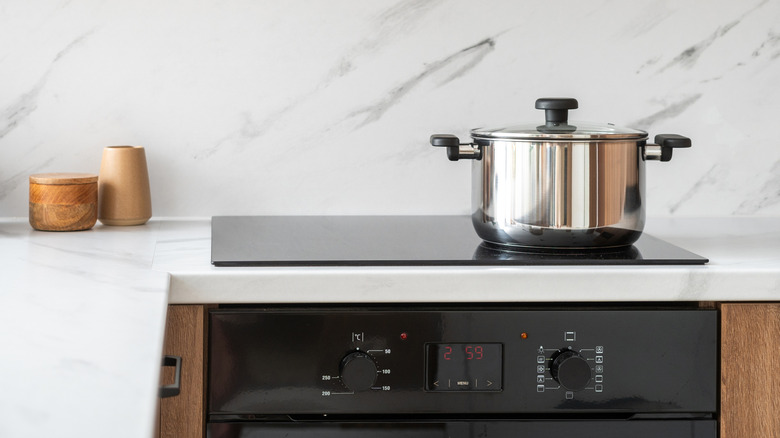
Believe it or not, if you use an ill-fitting pot that's smaller than your large stovetop, you're wasting energy, while racking up your electric bill. Solving this issue can potentially help you lower the cost of your average use by 25%. Your use of cookware also comes into play. Materials which can maintain heat for longer periods of time, such as ceramic, can help. If you can multitask and cook your appetizer and entree at the same time, even better. It's best to use flat-bottomed pots and pans as well. They allow even heat distribution, which means your stovetop churns out less energy to cook your meal.
Additionally, give your ingredients a chance to fully thaw. If you toss them into the cookware while it's still frozen, you spend more time — and money — cooking on your electric stovetop. There are a lot of ways to defrost frozen meat, specifically methods where you don't need to use any power, including leaving it in the fridge the night before you need to cook it.
If you're thinking about switching to an electric stovetop, make sure to choose one with an energy-efficient feature. It shouldn't be hard to spot the label on the appliance that says so, such as the Energy Star rating of one to four, with four being the most cost-efficient. By observing these energy-saving tips, you'd be surprised by how much they can have a positive effect on your next electric bill. After all, a little goes a long way.