

What Is The Average Lifespan Of Your Fridge's Built-In Water Dispenser?
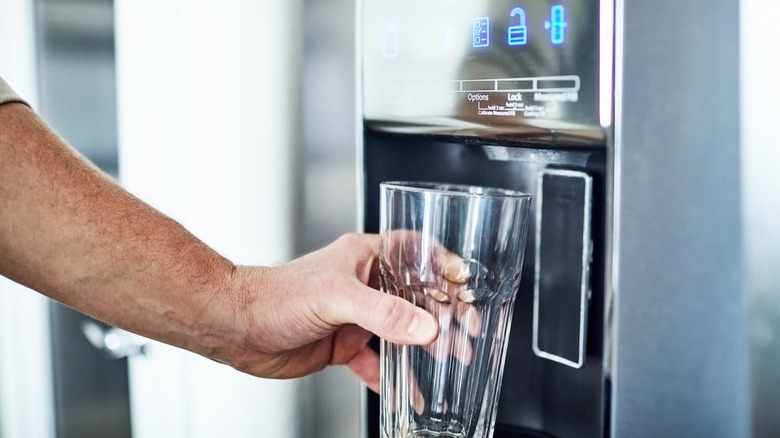
The fridge water dispensers we've learned to rely on have been a mainstream feature since the 1980s (though the first one appeared in a 1969 unit). But before you buy a new refrigerator with a built-in water dispenser, you should consider how long the dispenser lasts compared to the fridge itself. Unfortunately, the answer isn't straightforward, and the range depends largely on factors like how it's maintained, water quality, how you use it, and the quality and life of the individual components.
There are a number of things that can go wrong with your fridge's water dispenser. Damage to the water inlet valve or the water valve circuit can prevent water from getting to the dispenser, though those parts typically last 15 to 20 years. Additionally, electronic components like appliance control boards typically last eight to 15 years, depending on use, though they are subject to damage from outside sources (like power surges).
Taking into account that the average lifespan of a modern refrigerator is about 12 years, according to the U.S. Department of Energy, in practice, that means a built-in water dispenser can last as long as the individual electronics, water valves, and the unit as a whole remain functional or can be repaired.
How to increase the lifespan of a fridge's water dispenser
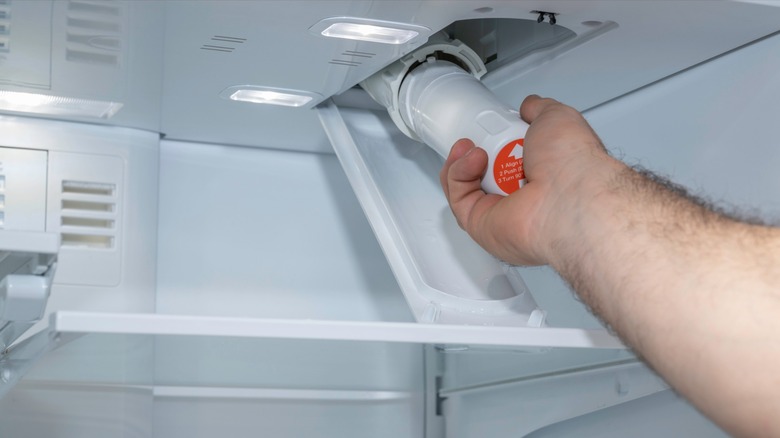
The complexity of modern appliances can make them less DIY-friendly. It's enough to make you wonder if old-school refrigerators were more reliable. However, learning how to clean your fridge's water dispenser, which includes replacing the filter at the manufacturer's recommended times (typically every six months), can help maintain its longevity. Hard water or extra sediment can clog the filter sooner, so if you notice reduced flow or ice production, you may need to replace the filter more often. Just check your refrigerator manual for replacement instructions.
There are some problems a homeowner can easily check and potentially repair before calling in a pro. For example, if the fridge's water line is restricted by frozen tubing, you can thaw it with a hairdryer. If water doesn't flow at all, you can move the unit away from the wall and check the water line for leaks or kinks, then straighten the line or remove any impediments. A clogged filter or even a dispenser child lock could also be the culprits. Look on YouTube for videos featuring your specific model to learn how to inspect or replace parts you can easily reach.
Addressing faulty valves, broken switches, or electronic control problems requires specialized tools and training. According to Angi, valve and leakage repairs may range from $75 to $200, while complex repairs like replacing a control board can run $200 to $500. When it comes to repairs like that, the cost of fixing your water dispenser might essentially total the fridge if it's nearing the end of its life, anyway. You have to consider whether it's worth fixing or whether it's better to put that money toward a new appliance that can deliver ice-cold, refreshing filtered water on demand when you need it.