

If Your Salmon Always Has A Fishy Flavor, Cook It Like This Instead
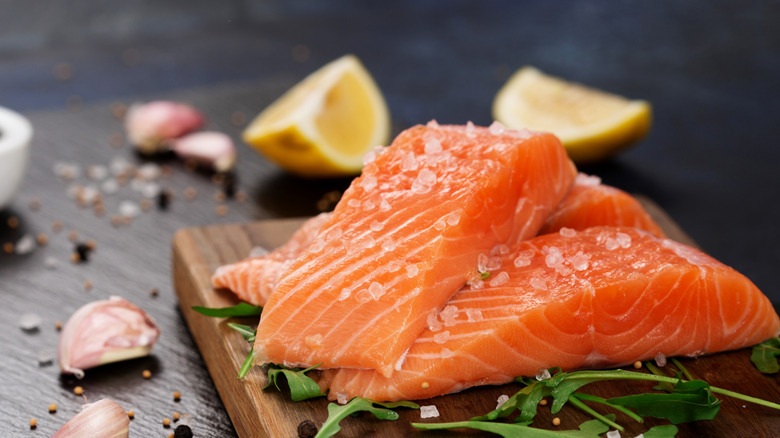
It's time to demystify the idea that salmon is supposed to give off an overly fishy flavor every time you prep it. If you've ever tried to tone down those fishy flavors when making this fatty protein — or if you're just tired of your house smelling extra fishy every time you cook it — you might want to start preparing your salmon low and slow instead.
Cooking the fish low and slow allows the fat to incrementally render, leaving you with tender fish cooked evenly that doesn't overpower the scent of your kitchen (and the rest of the house for that matter). High heat cooking releases the fish's oils more quickly, which leads to the stronger aromas being unleashed into the space. When taking the slower route, it becomes possible for you to have the best of both worlds — tasty fish and minimal overbearing smells.
The good news is that cooking salmon this way doesn't have to result in super long cooking times either. If you slice your salmon filet into single servings rather than a larger slab and bake it at around 275 degrees Fahrenheit, you can have dinner in as little as 13 minutes. If you'd like to bring the temperature down slightly, set the oven to 250 degrees Fahrenheit for a fish that cooks in around 15 minutes and has a softer texture.
Ways to prep your salmon low and slow
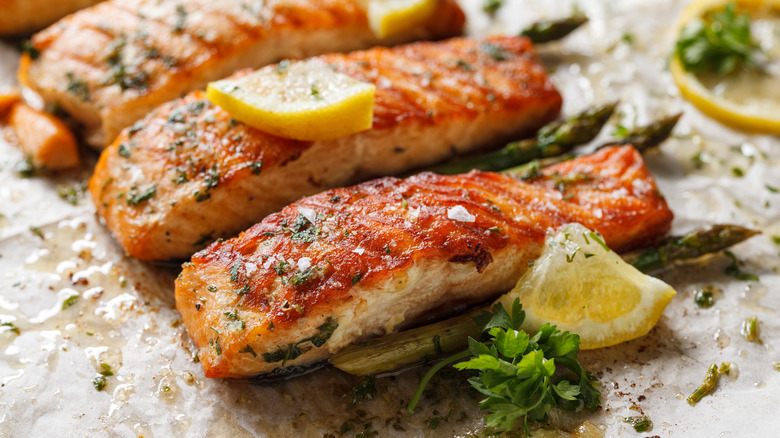
You can cook your salmon in the oven for succulent baked filets, but there are also other prep approaches you can try. (Heads up: before you make the fish, be sure to be mindful of the many mistakes to avoid when cooking salmon.) Braising is another low and slow technique that is known to produce minimal unwanted scent while cooking. Salmon tend to take well to braising, because the fish easily absorbs flavors in the pot. Braised salmon tastes great with herbs, garlic and aromatics, lemon juice, honey, soy sauce, mirin, or even a splash of wine. Generally, the process can take anywhere from 25 to 30 minutes. For the best results, simmer the salmon on low and then gradually increase the temperature for the final few minutes while adding in sauce or prepared dressing.
You can also ramp up other flavors that you might be craving. Infuse more depth into your fish by making the most of two ingredients that elevate salmon: incorporate Dijon mustard for tangy complexity or breadcrumbs (such as Japanese panko) for crunch and texture. You could also opt to rub the fish in brown sugar and salt to bring about balance and enhanced flavor, particularly before roasting. Before you get ready to enjoy your salmon, be sure to be mindful of the many mistakes to avoid when cooking salmon.