

Skip The Filet Mignon — Ask Your Butcher For This Flavorful Beef Cut Instead

Particularly fancy meat lovers may find it hard to resist finer selections, such as filet mignon and chateaubriand. But those expensive options add up fast, even when you're making them at home. Few folks understand that financial fact better than your friendly neighborhood butcher, and that's precisely who you should tap for similarly high-quality cuts with somewhat lower price tags — cuts such as the tasty ribeye filet.
Ribeye filets are essentially the center of the ribeye; a slightly smaller portion of a larger whole with the peripheral fat trimmed away. The end result convincingly approximates a standard filet mignon's dimensions, albeit with the additional marbling that ribeyes always have to begin with. Filet mignons and ribeye filets further diverge in terms of tenderness and flavor. Filet mignon is just about as yielding as a piece of meat can get. Ribeye filets have a bit more chew, but also higher concentrations of rich, beefy flavor thanks to that intramuscular fat we call marbling. Being that ribeye filets are a few bucks cheaper than the famously spendy filet mignon, it's worth seeing how they compare in your own kitchen.
Making ribeye filets at home
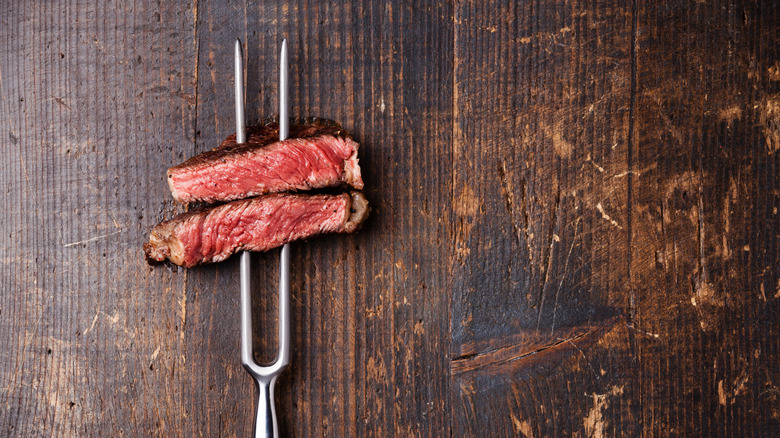
Ribeye filets are great for most cooking methods you consider for steaks, including the good ol' grill or stovetop. They may not be as tender as filet mignon, but they also aren't so tough that they require marinades or mechanical tenderization. You can, and maybe even should on your first ribeye filet, just shake on some salt and pepper and sear it on a hot pan until it reaches your desired doneness. This minimal seasoning really lets you get familiar with ribeye filets' inherent flavor, absent the bells and whistles you may wish to add next time.
Ribeye filets typically take around six minutes on each side to rise to a rosy medium-rare (about 130 degrees Fahrenheit) on a meat thermometer. Start checking for doneness sooner rather than later, but minimize movement and limit flipping to get the best steak sear. Try to poke your thermometer's probe without a ton of jostling, and follow the ribeye filet's lead. Like most steaks, the meat releases from the pan once it's properly browned. With any luck, you only have to flip it once for the ideal exterior crust and internal finish.