

For More Flavor In Tuna Salad, Don't Throw Away This Part Of Celery
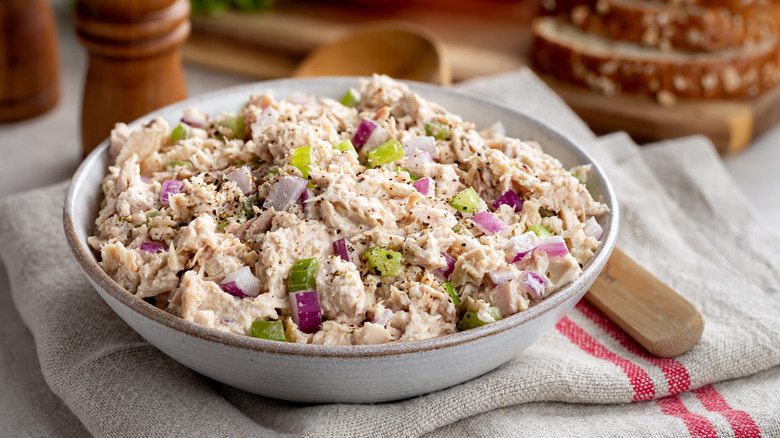
Among the list of ingredients that give tuna salad a pop of extra flavor, one of the least expected and most overlooked is celery leaves. Adding chopped celery to tuna salad is nothing new, and its lightly earthy, watery crunch adds a beautiful texture and subtle flavor to tuna's savoriness. It also adds a refreshing pop of freshness to balance heavier ingredients like mayonnaise or sour cream as well as contrasting nicely with stronger flavors like horseradish or dill.
However, most people opt to only use the stalks, slicing away and discarding the leafy ends without realizing they could be the perfect ingredient to add to that elevated tuna salad sandwich recipe. Unlike the stalks themselves, which have a reputation for being rather mild, celery leaves are jam-packed with a fresh, peppery herbaceous flavor that's surprisingly prominent. Chopped and added to tuna salad, the leaves act just like any other green, leafy herb, bringing bite and sophistication to a dish that's traditionally an afterthought.
To add them to your tuna salad, gently pluck the delicate leaves from the tops of the stalks. Lightly chop larger, darker leaves, leaving smaller, lighter ones whole and gently mix them evenly into your tuna salad. The darker leaves are older and have a stronger, more astringent flavor, while the lighter leaves are younger, more tender, and have a peppery, buttery bite. Avoid leaves that are discolored or wilted to infuse your recipe with the freshest possible flavor.
How to use celery leaves in tuna salad for an unexpected but perfect pairing
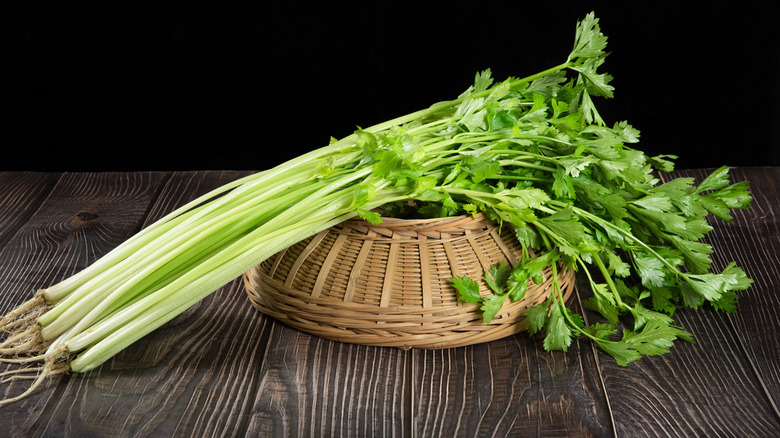
Though celery stalks are perfect for stuffing with pimento cheese and peanut butter, the leaves aren't nearly as hardy and must be treated with care to avoid wilted, limp leaves in your tuna salad instead of a fresh, lightly crunchy bite. That means it's best to add them last, right before you intend to eat or serve your salad. Once they've sat in the moist environment of tuna and mayo, their texture starts to degrade and their fibers become rubbery and a little hard to chew.
You can also simply slip them into your sandwich or sprinkle them onto a green salad with a scoop of tuna salad on top. Using them as a topping instead of an ingredient helps keep them fresh until the very last moment. Of course, this means storing your celery leaves separately from the tuna salad if you're lucky enough to have leftovers. Simply add them to a container lined with a slightly moistened paper towel to keep them fresh.
If you're set on mixing celery leaves into your tuna salad ahead of time, you can also try blending the leaves into your creamy base as a take on green goddess dressing. You might also skip the mayo altogether in favor of a pesto-style tuna salad dressing, using celery leaves in place of basil to ensure they're the main flavor.