

What It Means To Drink A Blended Scotch Whisky
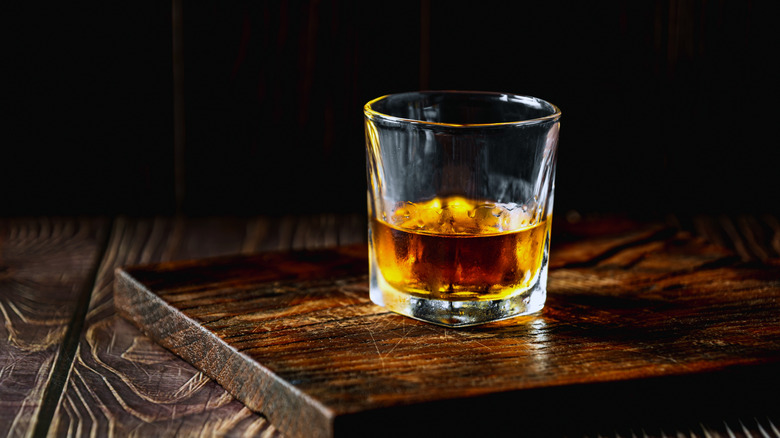
Is there a spirit that sparks more confusion than whisky? Or is it whiskey (the very first point of confusion)? Since we're talking scotch, whisky is the correct spelling. When it comes to picking up a bottle, you're likely to get stuck on the difference between a single malt and a blended whisky. Blended scotch refers to a bottle that is the product of mixing various single malt and single grain Scotch whiskies. While the blend can come from a single distillery, most of the time, whiskies from multiple distilleries are used. One exception is the Loch Lomond single-distillery blended scotch.
The other variety is single malt scotch. When comparing it to blended scotch, some people incorrectly assume that single malt automatically means it's not a blend. The reality is that single malt scotch whisky must be produced in a single distillery in Scotland, made from 100% malted barley in copper pot stills, and aged for at least three years. But the bottle you drink still comes from blending various single malt casks of different ages to achieve the desired flavor profile. So in a way, it's still a blended whisky, just not blended the same way. The final piece of the blended scotch puzzle is single grain whisky. The process for this whisky is similar to that of single malt, but it can be made from grains beyond just barley, such as corn or rye. It's also typically made in column stills, and much of this whisky is specifically meant to be used in blended scotch.
So, is single malt always better than blended scotch?
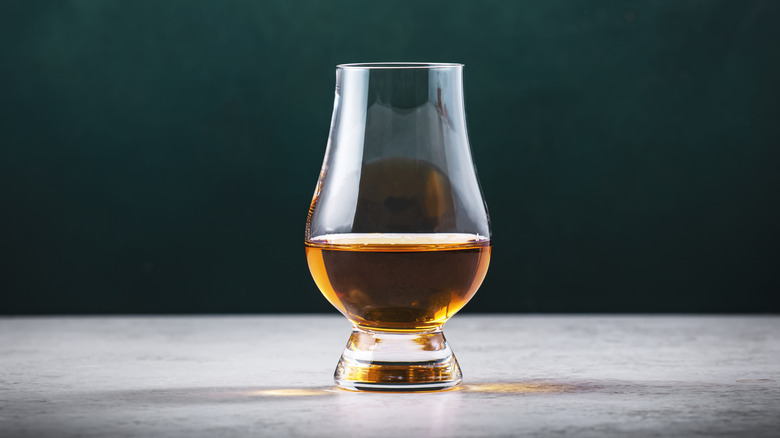
Without fully understanding the difference between single malt and blended scotch, it's easy to think of a single malt as the top whisky choice, but that's not always the case. Dewar's 15 Year Old is made from a blend of scotch whiskies aged at least 15 years, resulting in soft fruit aromas and a smooth finish on the palate. Another popular blended scotch is Johnnie Walker Black Label. Overall, blended scotch is more consistent, as the blend is meant to give a taste profile that's accessible to more drinkers. Single malt scotches tend to be complex and boast a sense of regionality because distilleries in different areas produce whiskies with distinct tastes and aromas, which can get lost when blended with whiskies from other distilleries.
Beyond single malt and blended scotch, there's also blended whiskey, a general term for a mix of several whiskeys from various distilleries, like High West Bourye (yes, a blend of bourbons and rye whiskeys). Blended whiskey is often written off because it's sometimes a mix of a little straight whiskey with cheap vodka or other spirits to keep prices low. But blended scotch must meet standards not required of blended whiskey, so much like the classic saying that all bourbon is whiskey, but not all whiskey is bourbon, not all blended whiskey is blended scotch. So, the next time you're trying to decide on the right scotch for you, don't overlook blended scotch — you may be missing out on a bottle of what could become your top whisky choice.