

What's The Average Lifespan Of A Smart Refrigerator?

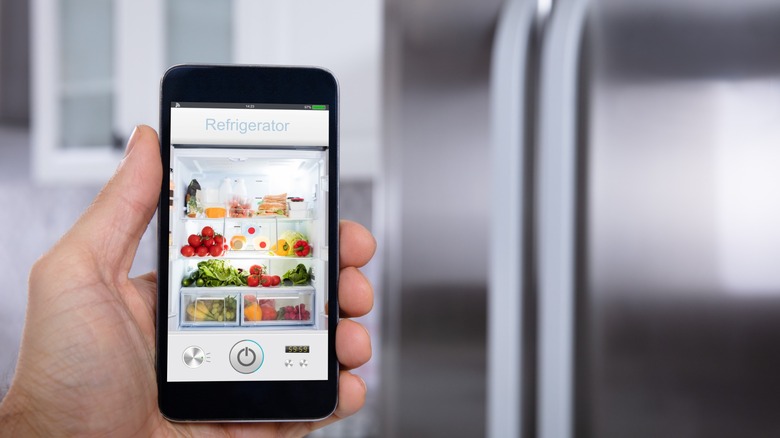
A smart refrigerator is undeniably cool and convenient. Using an internal camera and/or an app on your smartphone, you can remotely check your food inventory so you don't forget anything at the grocery store. Some fridges can track expiration dates to eliminate food waste. Certain models even allow you to stream movies, shows, and news on their touchscreen displays. But if you're thinking about purchasing a smart fridge, be forewarned that your investment could go from Einstein to Joe Schmo in as little as two years.
As far as the refrigeration itself, the appliance performs much the same way as a traditional "dumb" fridge, with the same average lifespan of roughly 10 to 15 years. But smart features tend to have much shorter lifespans of about three to seven years because they run on software that requires updates and support, which the manufacturer eventually discontinues. The same is true of mobile apps that allow you to control your fridge remotely.
Discontinuation impacts both the reliability and security of a smart fridge. Internet connectivity may become weaker and less consistent. Some features (like calendars or to-do lists) or entire apps may stop working on the display, your mobile device (making the remote control inoperable), or both, replaced by "Service Not Available" messages or disappearing from the menu. For smart fridges without displays or cameras, unsupported features could manifest as an inability to regulate temperature, make ice, or brew coffee. Even if you're not experiencing noticeable performance issues, your refrigerator could be more vulnerable to viruses or malware, which could spell trouble for other devices on your network.
Best brand bets and tips for longevity
Manufacturers vary in terms of how long they offer updates and other support for the smart features of a refrigerator, and they're not always clear on that duration. In some cases, warranties for physical components, such as the compressor, can be five to 10 times longer than warranties for digital parts.
Higher-end smart refrigerators from Miele and Bosch are probably your best options for longevity of both refrigeration functions and smart features. When it comes to basic fridge functions, Bosch boasts an overall lifespan of 14 to 19 years. As far as digital capabilities, Miele, Bosch, and GE offer long-term customer support and software updates compared to their competitors. Miele is one of very few manufacturers that guarantees security updates more than 10 years post-purchase. Be advised, though, that Bosch announced the discontinuation of its fridges' cameras due to low demand, at least in Europe; it's still unclear how this will affect the North American market.
LG and Samsung, which produce both high-end and midrange models, tend to be cagier about how long they'll provide support and enhancements for their smart fridges. LG, for instance, references software patches but doesn't always give specifics.
Regardless of which model you choose, there are things you can do to extend the life of the smart — and "dumb" — features on your fridge. Regularly cleaning your fridge minimizes dust and debris buildup on coils, in vents, and around door seals. Setting your fridge to the manufacturer-recommended fridge temperature sweet spot, which you can do remotely with some smart models, is also advised, as is defrosting the freezer annually. Additionally, by following guidelines on how to organize foods in your fridge, you can maximize the effectiveness of smart features like internal cameras while optimizing airflow (important for keeping produce fresh) and minimizing strain on the compressor and fans.