

How To Keep Store-Bought Rotisserie Chicken Extra Juicy After Shredding
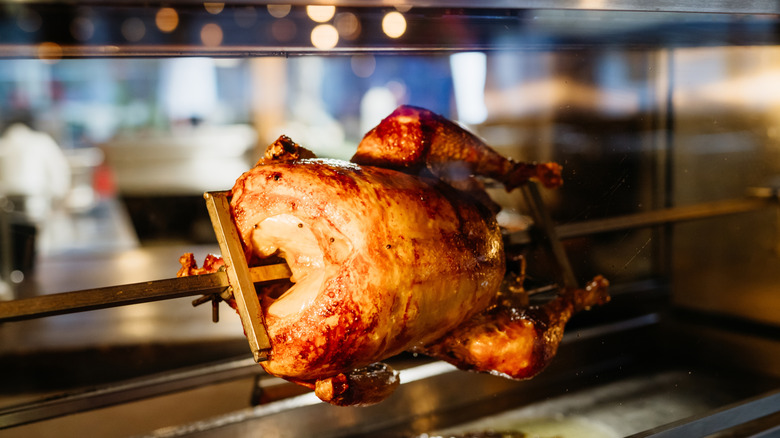
It's no secret that rotisserie chicken is one of the most beloved convenience foods in existence. Especially popular are Costco's rotisserie chickens, which yield more meat per bird than other grocery stores and have steadily maintained their $5 price tag. That low price matters even more when you consider how many meals you can get out of a single chicken, from chicken salad and various chicken-based bakes to chicken soup with broth made from your rotisserie chicken's carcass.
The only real downside to these inexpensive, precooked chickens is their tendency to dry out quickly once they've been deboned and placed in the fridge. Fortunately, the solution is fairly simple: just save the broth. After removing the chicken to another container, reserve the juices left in the bottom of the store bag or container into a bowl. Next, you can either debone the chicken by hand or use the viral TikTok deboning method of smushing your chicken around in the bag while it's still warm.
Gently massage the chicken meat from the bones, remove the bones and skin, then (most crucially) pour the juices from the store bag or container onto the freshly shredded meat. The savory broth works a little like a marinade by bathing the chicken in moisture to keep it juicier for longer. If there's not a ton of juice in the store container, make it go a little further by adding a little fat and acid to it (like you would for salad dressing) to ensure all the shredded chicken is coated.
Choosing the juiciest bird + amping up the moisture even more
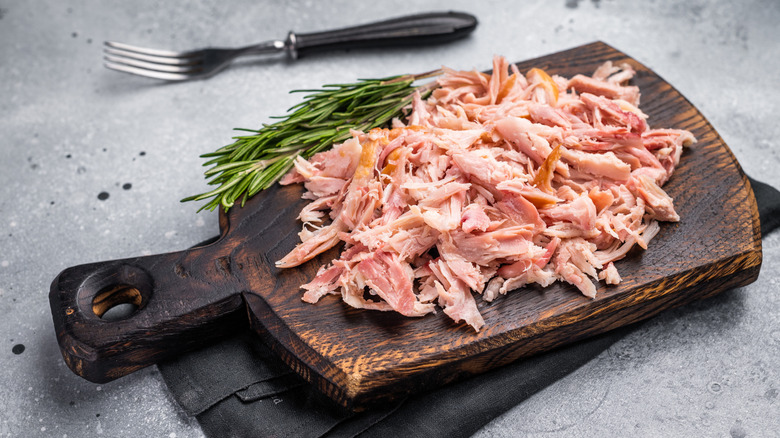
In addition to storing it in its own broth, one of the best ways to keep rotisserie chicken meat moist for longer is to choose a juicy bird at the store. Keep an eye out for chickens that have a relatively small amount of broth with them on the store shelf. Though it seems like the opposite of common sense, an excess amount of juice in the rotisserie chicken container while it's still in the store can actually be a red flag indicating that the bird has begun to dry out and release moisture. While you can still try storing the shredded meat in the juice to preserve what little moisture is left, it'll start to get mealy and dry much faster than a bird that's plump and heavy with a relatively small amount of broth in the container.
However, even a plump bird stored in its own juices will never be as moist and succulent as a freshly roasted chicken. That's why they're so often used as part of another dish instead of being served as the main entree with a separate veggie and starch. Instead, home cooks cleverly use them as protein in creamy pasta dishes, add them to cheesy hot sandwiches, and stuff them into pitas and wraps covered in velvety layers of Caesar salad dressing, hummus, or herb-infused mayonnaise.
Yet, it's still worth it to reserve that broth for keeping your meat moist, even if it'll never quite taste like the fresh stuff. Not only will it help preserve the shredded chicken's overall texture, it'll also add that much more flavor to your recipes.