

Growing Spicier Peppers Is Easy With This Gardening Tip
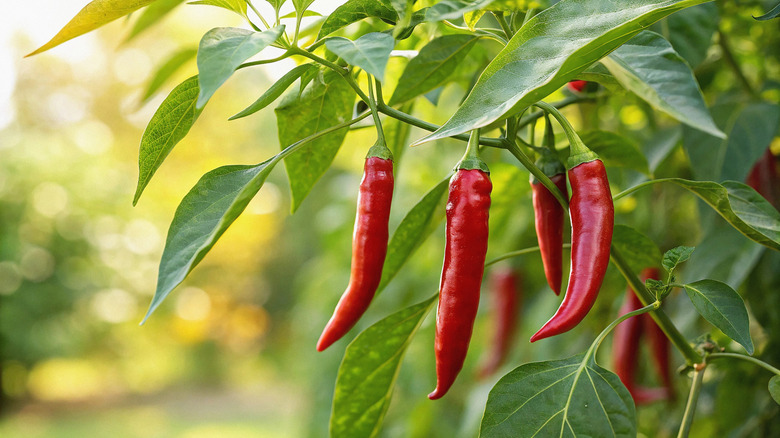
There's a reason so many people love spicy peppers. Their heat stems from an active compound called capsaicin, which interacts with the mouth's pain receptors and stimulates the release of endorphins and dopamine. These are commonly known as feel-good hormones, and create a sense of pleasure. But enjoying spicy peppers doesn't have to stop at just eating them, as the process of growing varieties that pack serious heat can be super exciting, too. If you're a passionate gardener, you'd be pleased to know that there's an incredibly simple trick to make your peppers even hotter than they already are: only water them when it's absolutely necessary.
Now, that doesn't mean you should stop watering them altogether. Water is the essence of life, after all. But timing is essential when it comes to planting peppers, and so is watering (or, to be more precise, strategic watering). The reason for this is that capsaicin, that very same compound that's responsible for a pepper's distinct heat, is produced in much higher concentrations when the plant experiences stress — particularly drought and high heat stress.
Surely, skipping a couple of watering sessions won't suddenly transform your habaneros into Pepper X, the variety that dethroned Caroline Reaper as the hottest in the world. However, it will prompt them to reach the upper level of their natural spice range. So to get the most out of the chiles growing in your garden, it's crucial to know how often they should be watered. For best results, make sure to water your spicy pepper plants about once a week. And if you reach for the hose again in between weekly waterings, make sure that the soil has fully drained before you do. This is exactly what will bring out the extra heat. Moreover, pepper plants grown in raised beds require less frequent watering than those in containers.
Soil type also affects the peppers' spiciness
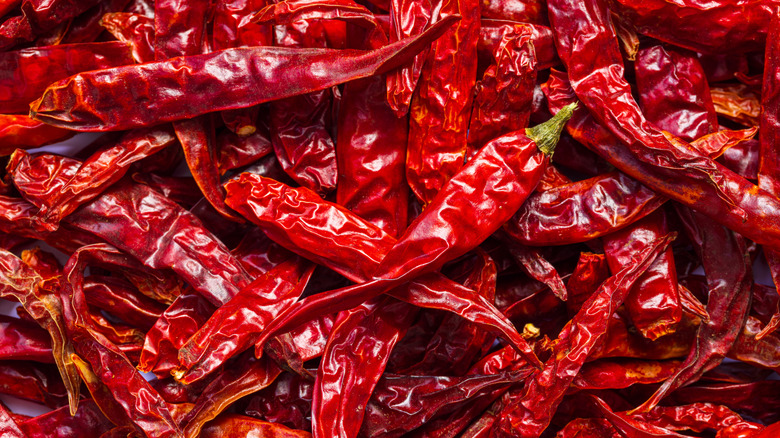
That said, watering isn't the sole factor that plays a role in a pepper's heat index. The soil type and quality are equally important. In most cases, peppers tend to develop more heat when growing in lean, sandy, and rocky soils. Lean soil contains fewer nutrients, and as a result discourages vegetative growth. And since it contains less organic matter, it struggles to hold onto moisture as effectively as richer soils.
Meanwhile, excess fertilizer can lower the concentration of capsaicin in the peppers' membranes. This will tone down their natural spiciness. Additionally, letting the peppers stay on the plant longer may also help with the heat, which intensifies as they ripen. However, capsaicin levels eventually reach a limit, and it typically happens after about 40 days of maturation. Leave the peppers on the plant too long, and the capsaicin will begin to break down. This will result in milder peppers.