

The Best Oven Temperature To Keep Food Warm Without Overcooking
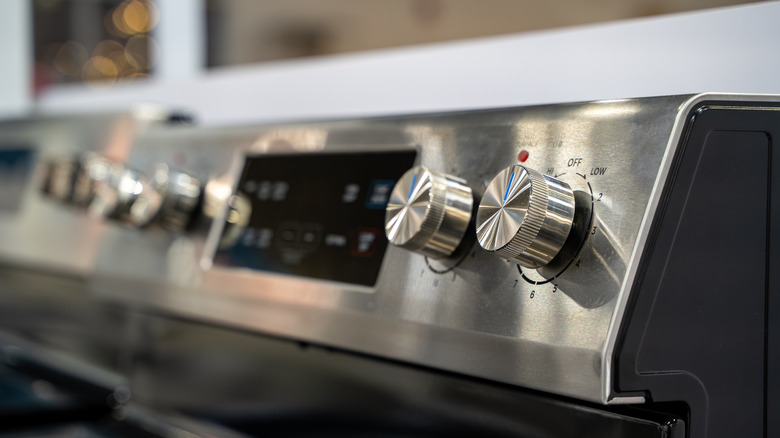
While it's important to know what temperature to set your oven to for juicy, tender brisket, it's just as vital to know how to keep your other favorite foods warm without overcooking them or allowing them to cool to unsafe temperatures. Setting your oven to between 170 and 250 degrees Fahrenheit should keep your food at the optimal eating temperature, though the higher you set the temperature, the less time you have before your food starts to overcook or scorch. So, if you need to keep your food warm for up to an hour, set it between 170 and 200 degrees Fahrenheit. For shorter durations of about 20 minutes, you can set it between 200 and 250 degrees Fahrenheit.
Temperatures above 250 degrees Fahrenheit will almost certainly overcook your food, while temperatures below 170 degrees Fahrenheit put your food at risk of cooling past the "safe zone." If your food's internal temperature falls below 140 degrees Fahrenheit, it can quickly become unsafe to eat because temperatures between 41 and 139 degrees Fahrenheit foster the perfect environment for rapid bacterial growth.
Tips and tricks to quite literally keep your food safe and warm
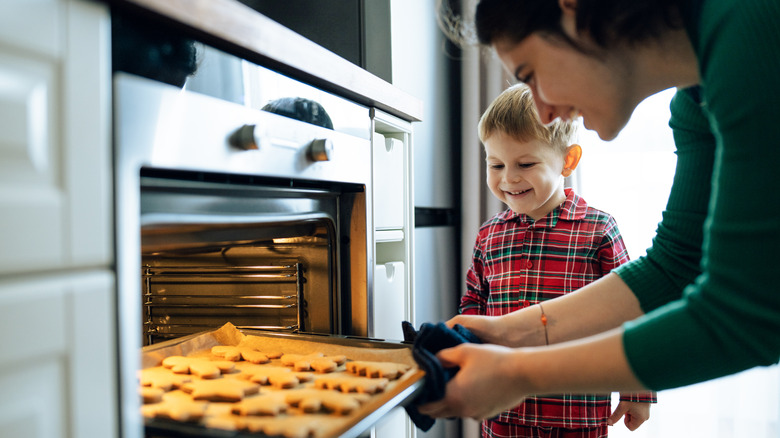
Since every oven is a little bit different, it's worth having an oven thermometer to ensure your oven is holding the correct temperature, especially when warming food rather than cooking it. An oven that fluctuates in temperature and needs adjusting is annoying while baking a cake or roasting a ham, but it can be downright dangerous when dealing with lower temperatures, since a drop in internal temperature can easily lead to spoilage. Being certain that your oven is operating correctly helps prevent that.
A food thermometer is another useful tool for determining whether your cooking is still safe to eat. To ensure the internal temperature of that brisket or casserole is 140 degrees Fahrenheit or above, simply slide the thermometer into the center of the dish, or the thickest part of the cut of meat. Since these areas heat up more slowly, you can be sure your food is safe to eat if they're at the correct temperature. When testing bone-in cuts of meat, avoid letting the thermometer touch the bone, as it's usually hotter than the meat itself.
If you're warming a dish that's in any danger of drying out, you can create a humid atmosphere inside your oven by adding water to a baking sheet and placing it on the rack below your food. As the water evaporates, it'll help keep your food moist for longer.