

Your Kitchen Knife And Cutting Board Might Be Causing Your Food To Go Bad Faster. Here's How
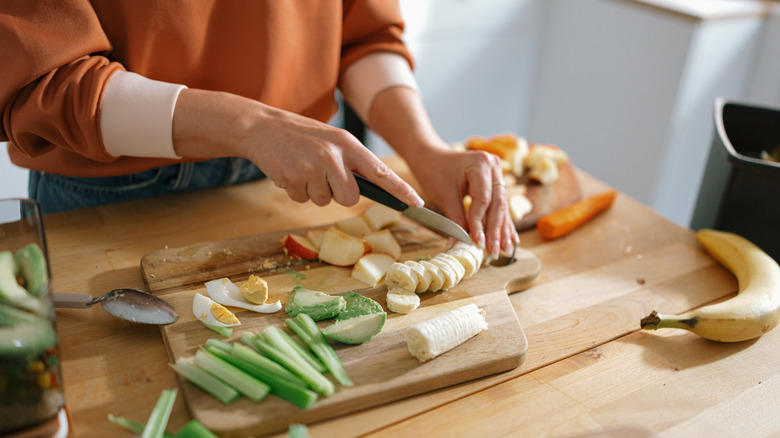
From size to material to age, there are many factors that contribute to the longevity and utility of your cutting board. Similarly, kitchen knives come in a variety of styles for different uses, and a spectrum of quality. While you may already know to avoid common cutting board mistakes like using a board too small for the job or opting for a plastic cutting board over a more natural option, you may not have considered how your knife and cutting board combo can contribute to faster food spoilage. Chowhound spoke with Amanda Wilbur, NSF's senior manager for product certification of food equipment, to learn more about food safety best practices when it comes to knives and cutting boards.
"Once produce, meat, or other foods are cut, they become more vulnerable to environmental factors such as air exposure, moisture loss, and microbial contamination," she says. Therefore, she continues, it is vital to properly clean and sanitize your knives and cutting boards before use. This will minimize the risk of bacteria exposure. To wash your board, use hot water with a mild dish soap. Always make sure the board dries thoroughly. The USDA recommends sanitizing both wood and plastic cutting boards with a ratio of one part liquid chlorine bleach to 256 parts water (1 tablespoon of bleach to 1 gallon of water).
Is knife sharpness a factor?
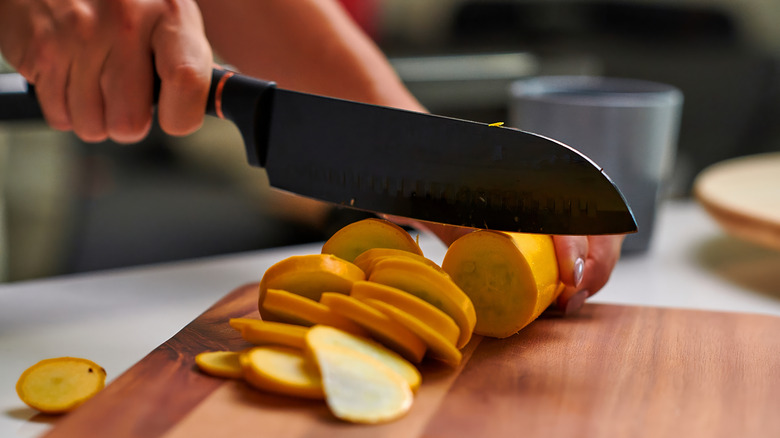
Some people may wonder whether a dull knife may be more dangerous in terms of bacteria and food safety. Thankfully, that doesn't seem to be the case. "From a food safety standpoint, cleanliness is more important than sharpness," Amanda Wilbur emphasizes. "A dirty knife can transfer microorganisms from one food item or surface to another, increasing the potential for cross-contamination." As an example, you'd never want to cut raw meat with the same knife you then use to slice a veggie you'll be eating raw.
Some products, such as apples, may turn brown after cutting due to oxidation. "[That's] because exposure to oxygen triggers enzymatic reactions," Wilbur explains. However, she says, the sharpness of your knife isn't necessarily a factor in how quickly something oxidizes. The fact that it's been cut is enough to lead to browning, a process that, while not dangerous in and of itself, can look unappetizing and cause alterations in the flavor and texture of produce. So whether you've used a sharp or dull knife, do what you can to protect your fresh-cut produce from oxidation. In the case of apples, this may involve soaking them in water, or possibly salt-, honey-, or lemon-water, and storing them in an airtight container.
Just as cleaning your utensils is important, so is cleaning your fruits and veggies before cutting. This isn't just about cross-contamination between products; the same piece of produce may cross-contaminate itself. "Consumers should also wash produce before cutting it," Wilbur explains, "as bacteria on the outside of foods such as melons can be transferred to the edible portion during slicing."