

Choose This Old-School Gadget Over An Electric Appliance For Frustration-Free Apple Pies
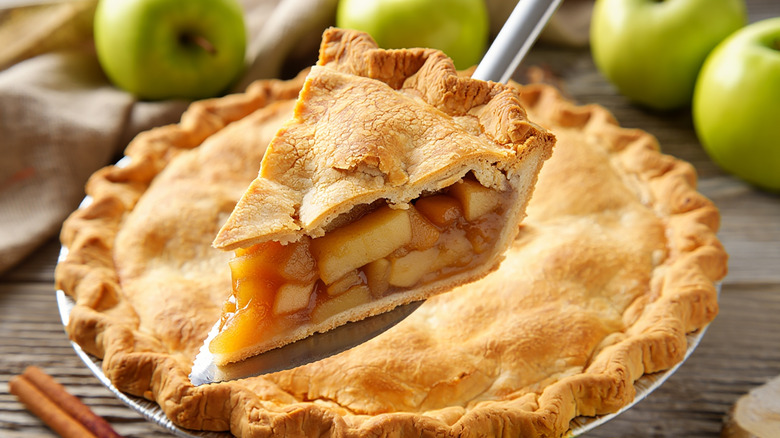
The worst part of making an apple pie is peeling and slicing the apples, especially since you need a surprisingly large number of apples to properly fill a pie. The minimum is about six medium apples, though around 10 is best. Using a paring knife and veggie peeler, processing that many apples can take quite a bit of time — unless we take a note from our grandparents' book and stick them in a manual cast-iron apple peeler. Though electric versions are on the market today, the old-school style is still superior.
First and foremost, old-school cast-iron peelers are incredibly durable, lasting literal decades with proper care. Though you have to crank this style of peeler by hand, each apple is peeled, cored, and sliced in a matter of seconds. This gives you perfect little donuts of apple that are easily halved into crescent moons for pies, or apple nachos for a tasty snack.
On the other hand, most electric models only peel your apples without coring or slicing them. They're also full of plastic parts that make them much less durable than cast-iron versions, unless you can spring for the KitchenAid mixer attachment. However, a KitchenAid mixer alone can cost up to $600, plus about $130 for the proper attachment. Compared to classic cast-iron models, which cost less than $40, the cost-savings alone are worth your while.
More reasons to go old-school over hands-free tech
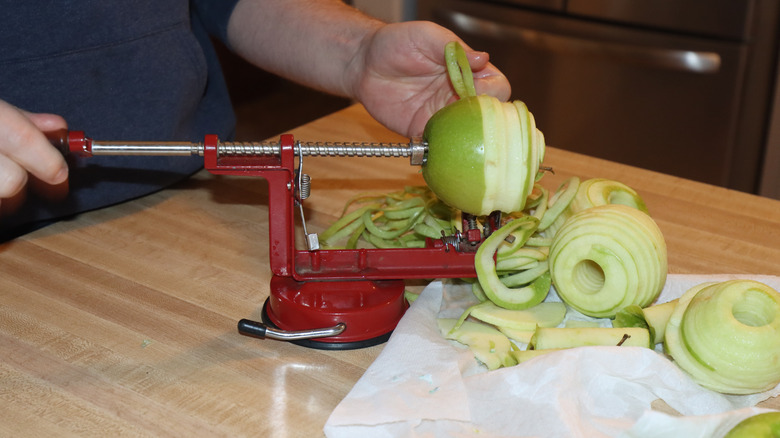
In addition to durability, efficiency, and a reasonable price, all manual cast-iron apple peelers need is a stable surface and a little bit of elbow grease. Electric versions need a power source, making them less desirable for those trying to lower their carbon footprint or who process apples in a space with limited outlets. For instance, if your butcher block island doesn't have electrical outlets, you can still use the old-school model in the same space where you're making crust and seasoning the apples.
Cast-iron peelers also seem to remove the peel more uniformly than their electric counterparts, meaning there's less cleanup and plenty of beautiful apple peel for making refreshing apple peel tea or homemade apple cider vinegar. Cast iron peelers demonstrate better tension when it comes to the blade that sits against the apple, and gently toggles as you turn the handle to accommodate each apple's unique shape.
One downside to using a manual peeler is the clamp styles require a table or counter with plenty of overhang to remain stable, relegating apple prep to the edge of your workspace. However, there are models with sturdy suction cup bases that can be stable anywhere you place them, provided the surface is smooth and free of debris. Using an alcohol wipe prior to suctioning can help it adhere more strongly.