

The Fruit That Makes Homemade Apple Pie Shine
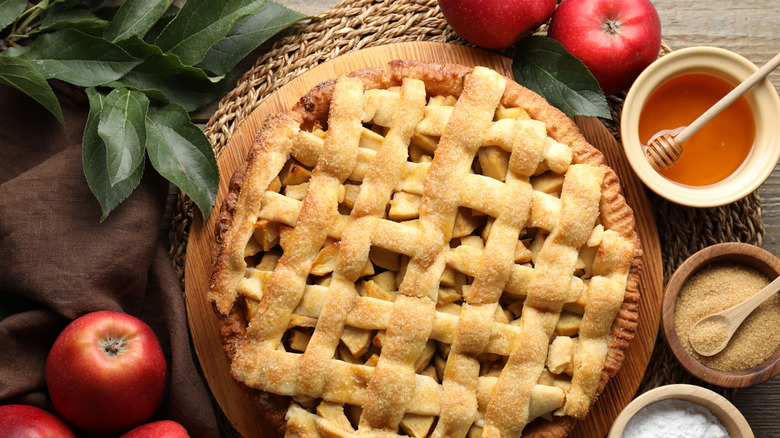
There's nothing quite as delicious as homemade apple pie. Perhaps that's because you have the luxury of using expert tips to craft the perfect flaky pie dough, season everything exactly the way you prefer, and even get creative in terms of zhuzhing up the filling with the addition of delicious, lesser-known fruits like the almighty quince. With the uninspiring appearance of a large, lumpy, golden pear, quinces are unlikely to be the first fruit you think of adding to your pie. Despite their enticingly sweet, floral aroma, they're rock hard and shockingly sour.
That is, of course, until they're cooked. Poached or baked with additional sugar, quinces not only become silky and tender, but their flesh almost magically shifts from pale ivory to garnet red. Heating also develops their aroma and flavor, creating a lush, floral bite that sits in perfect contrast to the tangy, fruity sweetness of apples. When it comes to one-ingredient upgrades for your apple pie, adding a quince or two is the best way to take your grandma's recipe from nostalgic dessert to sophisticated showpiece.
One reason quinces and apples work so well together is that they're both part of the Rosaceae family, which means they share subtle nuances in their flavors and scents. These commonalities are even more more pronounced once the fruits are cooked together. You can purchase quinces from farmers markets during apple-picking season, or look for them in Middle Eastern and Latin American grocery stores throughout the fall and early winter months.
Achieving success in making a quince-essential apple pie
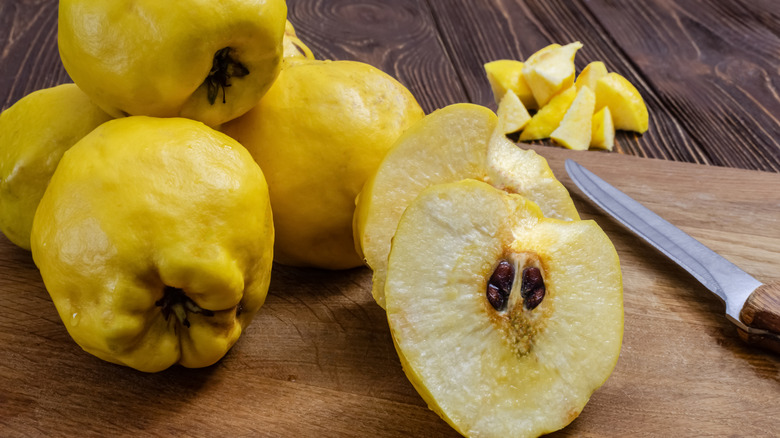
When choosing quinces to enhance your homemade apple pie, look for firm, pleasantly aromatic, uniformly golden fruit, as underripe quinces are unpleasantly bitter, which could ruin your dessert. You'll also need to cook the quince prior to adding it to the pie to achieve that beautiful ruby color and to ensure it's soft enough to achieve the classic apple pie texture. Quinces are typically poached for use in pastries, either in sugary simple syrup and water or in fruit juice. Apple juice is the obvious choice, but you can also use something like pear nectar.
Done correctly, poaching to the right texture in a standard sauce pan should only take about 10 minutes, at which point your poaching liquid should be thick and syrupy. (The poaching process is also the perfect time to upgrade your apple pie's flavor with a pinch of chai spice or a combo of whole cinnamon sticks and fresh ginger slices.) Use a gentle hand when folding the poached quince into your raw, cubed apples to help the quinces keep their shape and prevent them from turning to mush during the baking process.
From this point, you can bake your apple-quince pie as normal, whether you prefer a top crust or crumb topping. To complement the quince's subtle sophistication, we suggest serving this pie with French vanilla ice cream (also lightly floral and aromatic), or with an aged white cheddar cheese, as the sharp flavor is a beautiful contrast to this nuanced fruit combination.